




While you can't borrow money from a self-directed IRA for personal use, your IRA can legally act as a lender to unrelated third parties if the transaction stays inside strict IRS prohibited-transaction rules. That difference is the whole story behind self directed ira loan rules, and it's where many investors get tripped up.
The common mistake is assuming a self-directed IRA works like a flexible 401(k). It doesn't. A self-directed IRA can open the door to private lending and alternative assets, but it also brings hard boundaries that protect the account from becoming a disguised personal loan.
Borrowing vs. Lending: What the IRS Actually Allows
A self-directed IRA is not a personal line of credit. The IRS says loans are prohibited from all IRAs, including traditional, Roth, SEP, SIMPLE, and SARSEP IRAs, even when the account can hold alternative assets such as real estate, private investments, or precious metals [IRS retirement loan FAQs]. That is the first rule to keep straight.
Borrowing from the account is different from lending through it
If an owner borrows from the IRA, the IRS says the account is no longer treated as an IRA and the full account value is generally included in the owner's taxable income. That is a harsh result, and it is why the phrase “borrow from your IRA” usually sends people in the wrong direction.
The better question is whether the IRA can lend to someone else. In the right setup, yes. A self-directed IRA may hold a promissory note and receive interest income, but the borrower must be an unrelated third party and the transaction has to benefit the IRA, not the owner personally.
Practical rule: If the money helps the account owner personally, the IRS is likely to view the transaction very differently than if the IRA is making an investment.
That difference matters because an IRA does not get the same loan feature some employer plans can offer. A 401(k) may allow participant loans if the plan document permits them, but an IRA does not. For readers comparing retirement accounts, that distinction matters more than the investment menu does.
A self-directed IRA can be a lender, but it cannot be a personal borrowing source. Once you separate those two ideas, the rest of the IRS rules make more sense.

Navigating Prohibited Transactions and Disqualified Persons
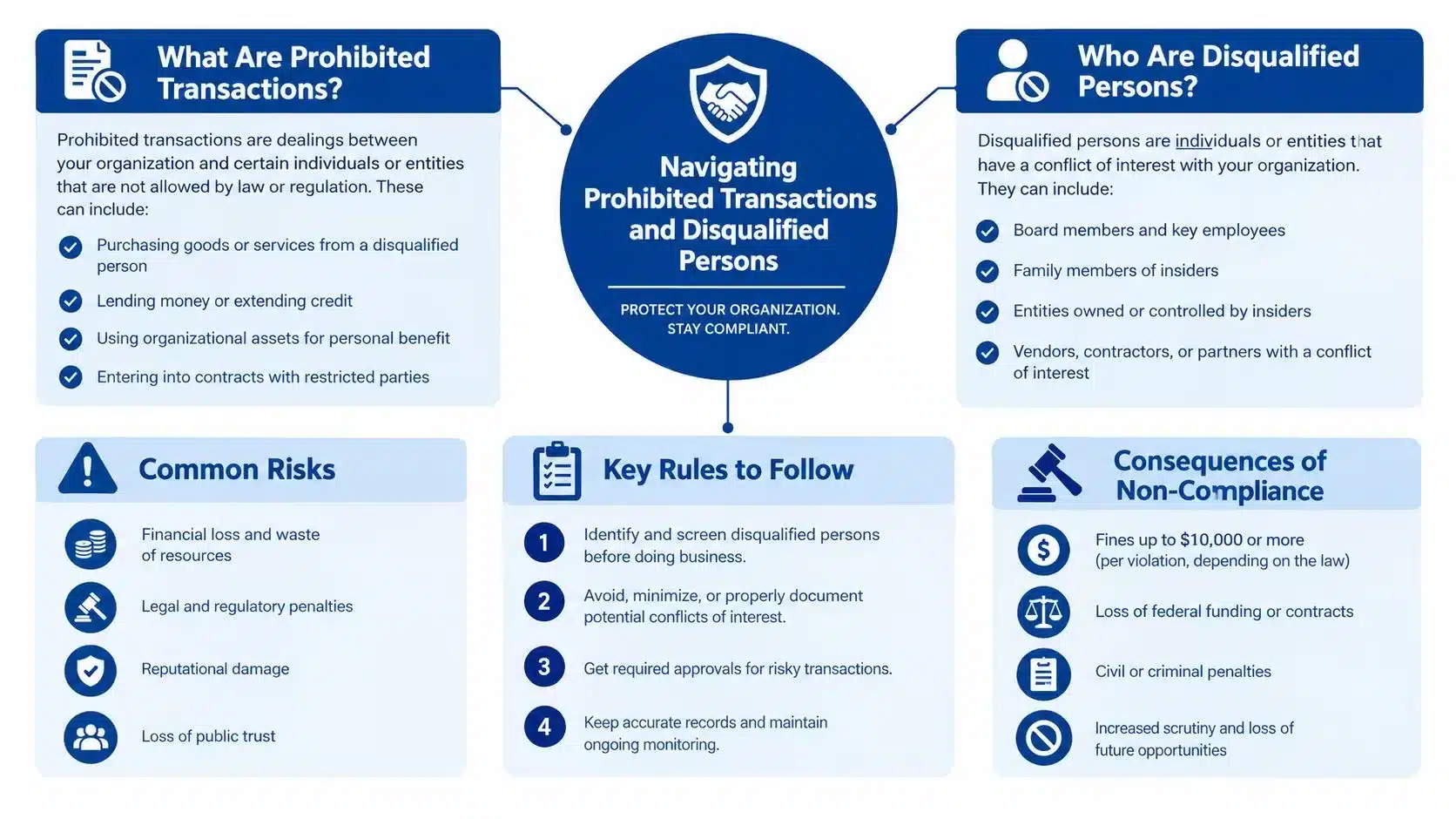

The danger isn't only borrowing from the IRA. It's lending to the wrong person, or using IRA assets in a way that indirectly benefits the owner. IRC §4975 prohibits direct or indirect lending between the plan and the account owner, fiduciaries, certain family members, and entities they control, and it also prohibits using IRA assets as security for a personal loan [Self-directed IRA overview].
Who is off limits
A self-directed IRA cannot safely lend to the account owner, a spouse, children, parents, or a business the owner controls. It also can't be used as collateral for the owner's personal debt. That means a deal that looks fair on paper can still fail if the borrower is a disqualified person.
For readers who want a plain-English breakdown of those relationships, the self-directed IRA disqualified person guide is a useful companion. The key point is simple. Independence matters more than convenience.
Why the consequences are so harsh
If a prohibited transaction occurs during a year, the IRA generally stops qualifying as an IRA as of the first day of that year, and the assets can be treated as distributed at fair market value. That can turn a retirement strategy into a tax event very quickly. The problem is especially serious in self-directed accounts because the owner often has more control over real estate, private notes, or closely held businesses, which creates more chances to cross the line.
An IRA can be an investment vehicle, but it cannot be a personal backstop.
That's why documentation matters before any private lending deal closes. The borrower should be completely unrelated, the terms should be arm's length, and the flow of money should never mix personal and retirement funds.
How IRA Lending Differs from 401k Participant Loans
A common mistake is to treat every retirement account like it can hand money to the owner. A qualified 401(k), 403(b), or governmental plan may allow participant loans if the plan document permits them and the loan meets the IRS rules in the [IRS retirement loan FAQs].
A self-directed IRA works differently. The IRA is not a personal credit line for the account owner, and it cannot be used for direct borrowing by the owner.
Side by side comparison
| Feature | Self-Directed IRA | Employer 401k Plan |
|---|---|---|
| Personal borrowing from the account | Not allowed | May be allowed if the plan document permits it |
| Lending to unrelated third parties | Can be permitted if structured correctly | Usually not the plan's main design |
| Use as collateral for a personal loan | Prohibited | May be subject to separate plan and legal rules |
| Loan limits | No participant loan feature | Generally limited to the lesser of 50% of vested balance or $50,000 |
| Repayment window | Not applicable, because personal loans aren't allowed | Normally at least quarterly over no more than five years |
The practical difference is simple. A 401(k) can sometimes act like a participant borrower's source of cash, while a self-directed IRA is better understood as a potential lender to someone else, if the structure is clean and the borrower is unrelated.
What changes in a rollover
Rolling a 401(k) into a self-directed IRA may widen the investment menu, but it can also remove access to the employer-plan loan feature. That trade-off is easy to overlook when attention is fixed on real estate or precious metals. The key question is whether having borrowing access in the old plan matters more than having more flexibility in the new account.
For someone nearing retirement, that choice deserves careful attention before the rollover. Once the money leaves the plan, the loan feature usually leaves with it.
Structuring Compliant Third-Party Promissory Notes
A self-directed IRA can act as a lender to an unrelated borrower, but only if the deal is built like a real investment, not a personal side arrangement. The safest loans are documented, priced, serviced, and paid exactly as a third-party lender would expect.

The paperwork has to match the economics
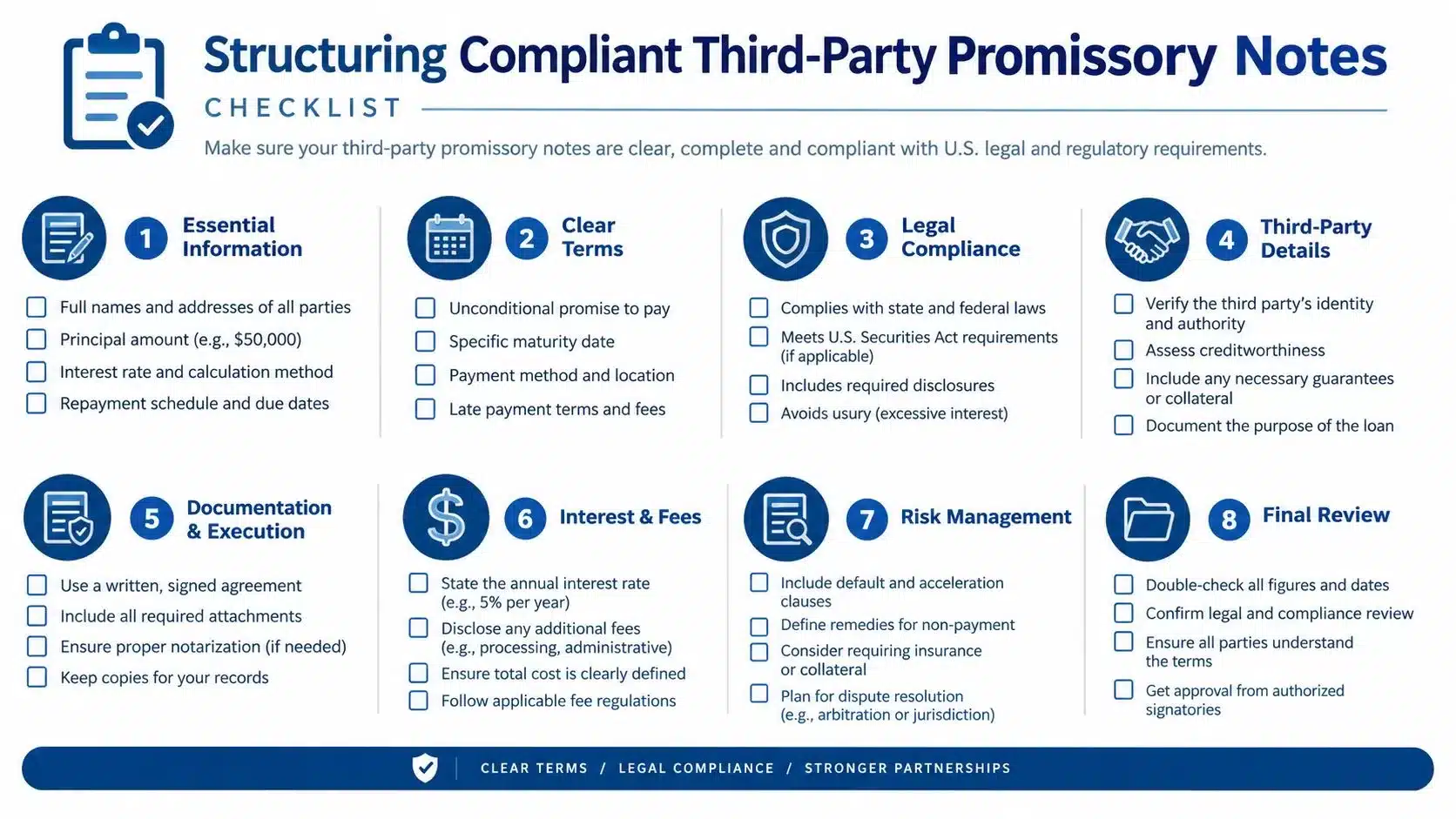
A promissory note should spell out the loan amount, interest terms, payment schedule, maturity date, and remedies if the borrower defaults. Payments need to flow back into the IRA custodian account, not to the owner's personal checking account. That keeps the investment inside the retirement wrapper where it belongs.
A useful way to think about it is this. If a bank would need the document to enforce the loan, the IRA needs that same level of clarity.
A basic compliance checklist
- Separate the parties cleanly: The borrower should be unrelated to the account owner and any disqualified person.
- Use written loan documents: The IRA needs a real promissory note, not a handshake deal.
- Keep payments inside the IRA: Principal and interest should return to the custodial account.
- Avoid personal guarantees: The owner should not rescue the loan with personal funds.
- Review collateral carefully: Any security interest must support the IRA, not the owner.
- Track servicing and records: Payment history, default notices, and statements should be kept in the IRA file.
- Check for conflicts before funding: The cleaner the structure, the safer the transaction.
- Confirm the borrower's independence: The deal should stand on its own without personal benefit to the owner.
Practical rule: If the transaction needs informal favors to work, it probably doesn't belong inside an IRA.
For readers who want to understand how custodial administration fits into the process, the IRA custodian for gold guide is a helpful reference point for how retirement assets are handled through a custodian.
The Hidden Tax Trap of Unrelated Business Income Tax
Leaning into debt inside an IRA creates a different problem from lending through the IRA. When the IRA buys an asset with debt, the IRS may treat the debt-financed portion of the income or gain as taxable. IRS Form 990-T instructions characterize property as debt-financed when acquisition indebtedness is outstanding during the tax year, and the IRA may therefore owe unrelated business income tax on the debt-attributable portion of income or gains [IRS Form 990-T instructions].
Why leverage can change the tax result
A nonrecourse loan may protect the owner from personal liability, but it doesn't erase tax consequences inside the IRA. The issue shows up most clearly in real estate or operating-business investments financed with borrowed capital, where income can be partly tied to that debt. That's why borrowing inside a retirement account deserves a tax review before the closing table, not after.
The important question isn't just whether the loan is nonrecourse. It's whether the debt creates taxable income inside a supposedly tax-advantaged account.
What needs to be tracked
A disciplined investor should know who is calculating the tax, how cash is reserved inside the IRA, and what happens if the account needs to pay the bill. If the IRA has little cash on hand, a tax liability can force the owner to liquidate assets at the wrong time. That's one reason debt inside an IRA can be more complicated than it looks.
For a broader look at how alternative assets can create tax friction, the advisors guide to MLP risks is a useful parallel resource. The common thread is simple. Tax treatment can shift when an investment carries debt or special income characteristics.
Readers who are sorting out the tax side of gold, metals, or other self-directed holdings can also use the gold IRA tax rules guide to understand how retirement-account taxes can affect account design.
Debt can be allowed inside an IRA, but that doesn't mean the tax bill disappears.
Penalties for Violating IRS Lending Restrictions
The IRS doesn't treat prohibited transactions as minor paperwork errors. IRS Publication 560 states that the initial tax is 15% of the amount involved for each year, or part of a year, in the taxable period, and if the transaction isn't corrected within the applicable tax period, an additional 100% tax may apply [IRS Publication 560]. That's a serious escalation, not a warning label.
What can trigger the damage
Using IRA assets as collateral for a personal loan is one of the clearest traps. If only part of the IRA is pledged as security, IRS Publication 590-B says the pledged portion is treated as a distribution and included in gross income. For an owner under age 59½, the 10% additional tax on early distributions may also apply unless an exception is available [IRS Publication 590-B].
That means the mistake doesn't stay neatly inside the account. It can spill into the owner's personal tax return.
Why correction still matters
The IRS says the 100% tax can be avoided by correcting the transaction as soon as possible, but correction doesn't make an otherwise prohibited loan permissible. In other words, fixing the problem is better than leaving it unresolved, but prevention is still the safer path. That's why loan documentation, borrower screening, and custodial recordkeeping matter so much in self-directed accounts.
A cautious investor treats every private lending opportunity as a compliance exercise first and an investment second. That isn't pessimism. It's retirement-account discipline.
Gold IRA Association publishes plain-English guidance on self-directed retirement rules, precious metals IRAs, and rollover decisions so readers can make cleaner, safer choices with their retirement money. If this topic is on your mind, visit Gold IRA Association to keep learning about compliant account structures, tax traps, and the steps that help protect your retirement savings.


