



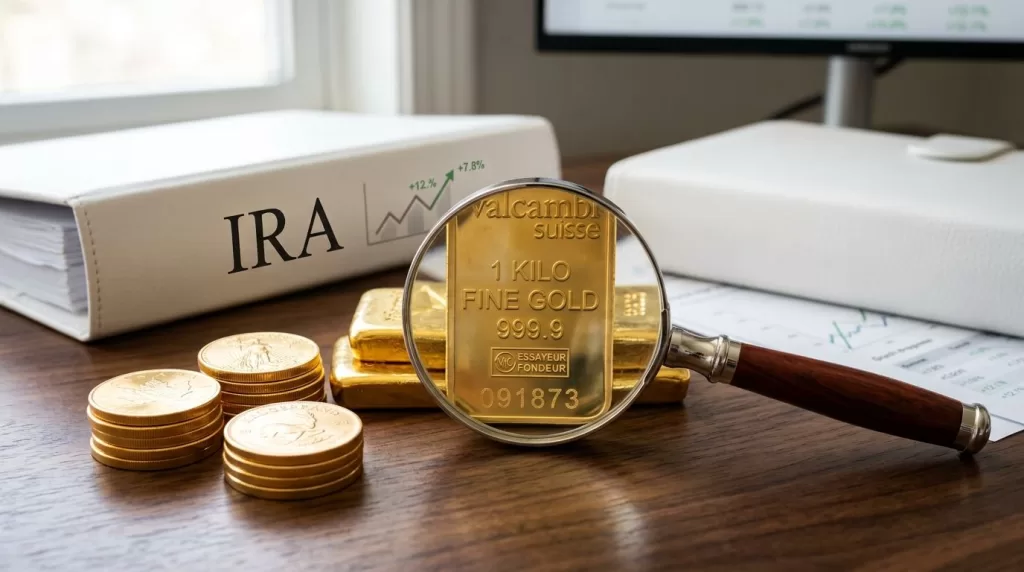
IRA-approved gold must be at least 99.5% pure, and the one key exception is the American Gold Eagle coin, which is allowed in an IRA even though it is 91.67% pure. For many pre-retirees, that simple rule is where the confusion starts, because buying gold for retirement involves more than choosing a coin or bar that looks legitimate.
A common situation looks like this. Someone reviews a 401(k) or IRA, feels uneasy about inflation, market swings, or too much exposure to paper assets, and starts looking into physical gold. Then the fine print appears. Not all gold qualifies, not all sellers explain the rules clearly, and one mistake can turn a retirement purchase into a taxable event.
What Does IRA Approved Gold Mean for Your Retirement
IRA-approved gold means gold that meets the IRS standard for inclusion inside a self-directed retirement account. In plain English, the IRS allows certain forms of investment-grade bullion in an IRA, but it doesn't allow just any gold product.
That matters because many investors assume “gold is gold.” The IRS doesn't see it that way. A retirement account is supposed to hold approved investment assets, not personal property, jewelry, or most collectible coins.
Why this matters to near-retirees
Someone nearing retirement usually isn't trying to become a coin collector. The goal is often simpler. Preserve purchasing power, diversify part of a retirement portfolio, and avoid unnecessary compliance mistakes.
The phrase what is IRA approved gold is really a question about rules and consequences:
- What qualifies: Gold must fit the IRS standard for IRA ownership.
- What doesn't qualify: Many attractive gold products still fail the rules.
- What happens if the rules are ignored: The account holder can trigger taxes and penalties.
Practical rule: If a gold product is being marketed for retirement purposes, the investor should still verify that it qualifies under IRA rules before any purchase is made.
The short version
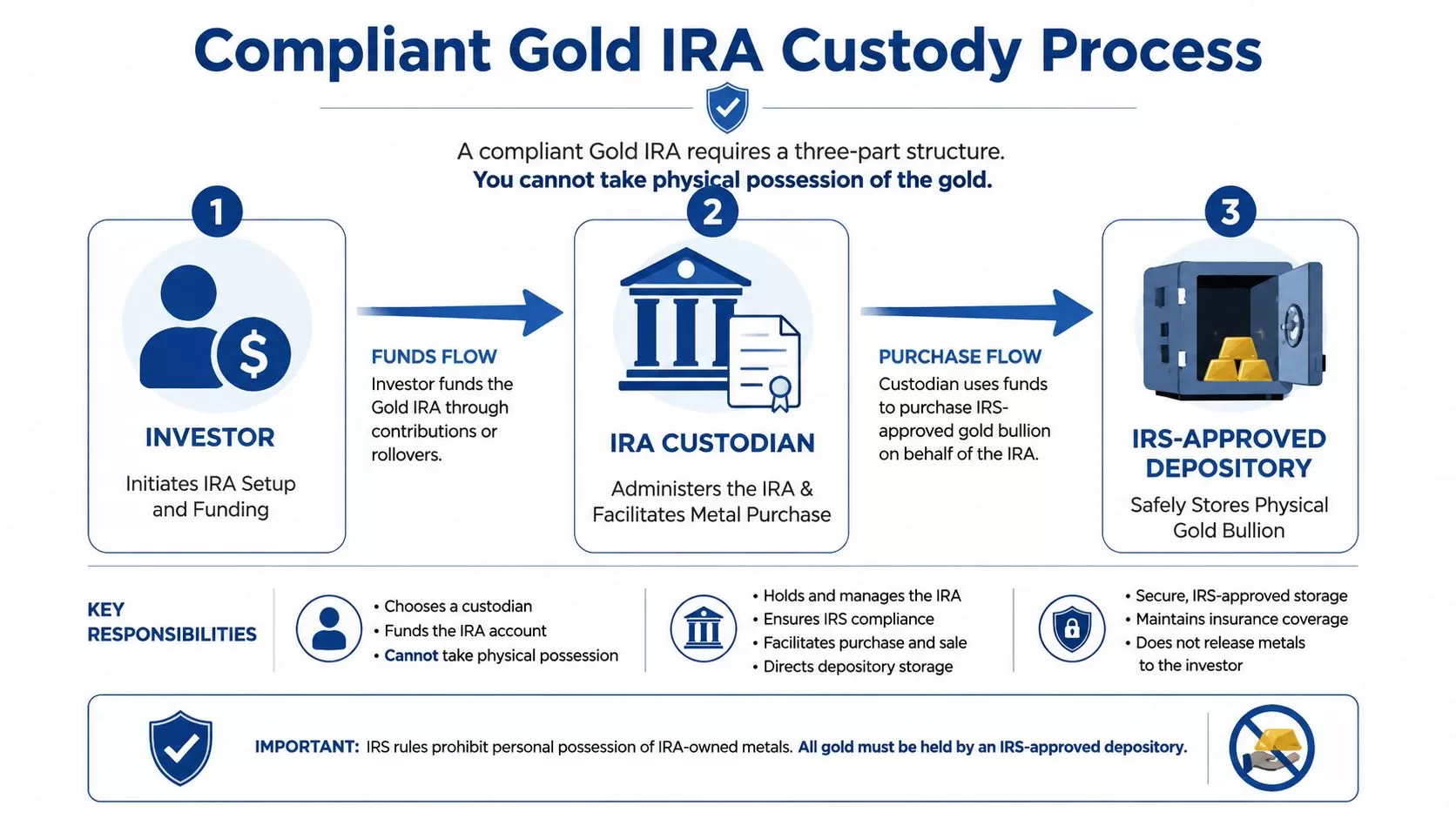
A compliant Gold IRA works as a system, not a simple purchase. The investor funds the IRA, a custodian administers the account, an approved dealer supplies eligible metal, and an approved storage arrangement holds it on behalf of the IRA.
That structure exists for a reason. The IRS wants retirement accounts to hold clearly defined investment bullion, under controlled custody, instead of drifting into collectible or personally held assets.
The Official IRS Purity and Fineness Standards
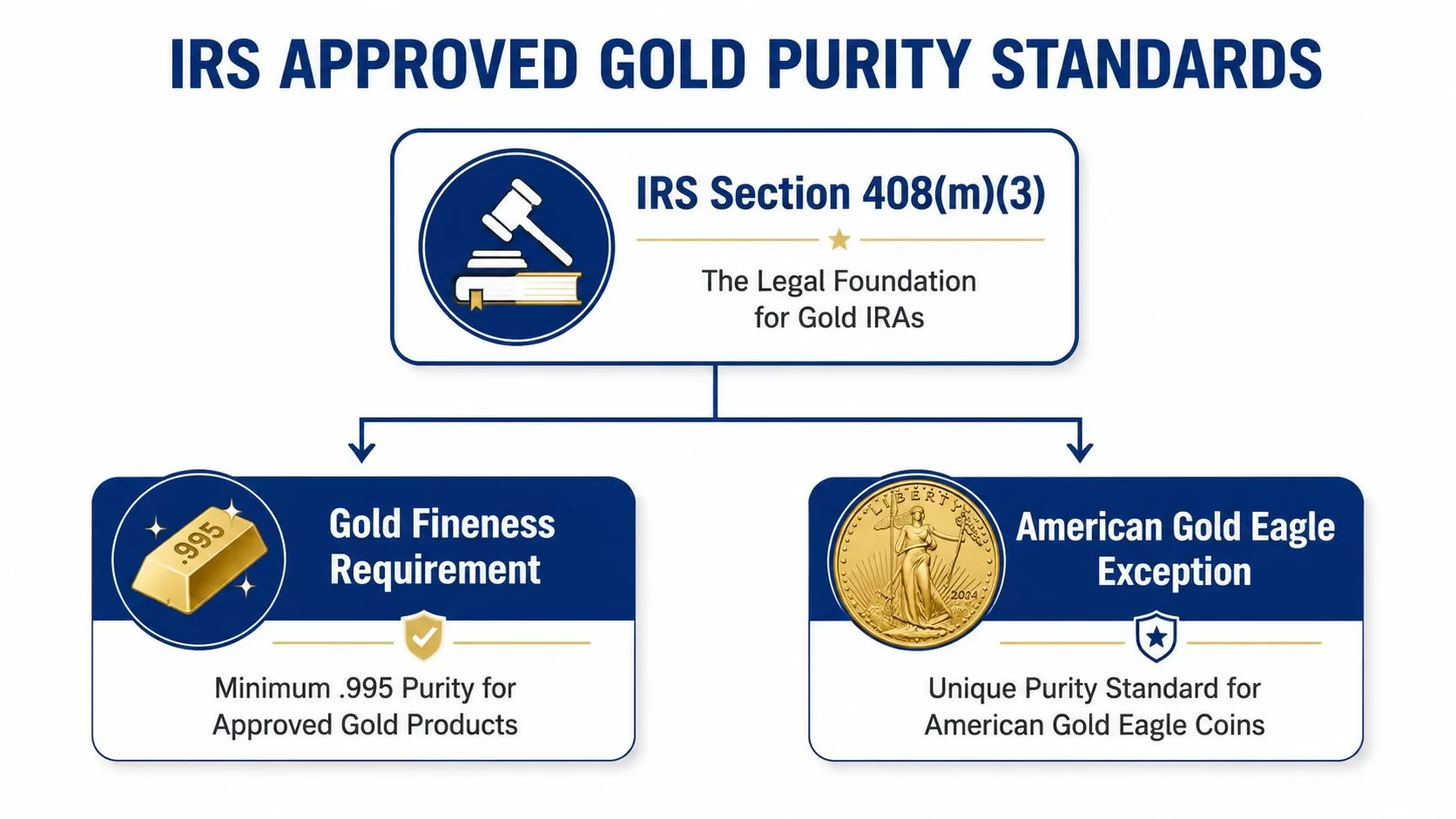
The legal foundation sits in Internal Revenue Code Section 408(m)(3). Under that rule, gold in an IRA must generally meet a minimum fineness of .995, which means 99.5% pure, and the sole statutory exception is the American Gold Eagle coin, which is permitted at 91.67% purity despite being below the usual threshold, as explained in this overview of IRA-eligible gold standards.

What fineness actually means
Fineness is just a purity measurement.
- .995 fineness means the gold is 99.5% pure by weight.
- The IRS uses that standard to separate investment bullion from products whose value depends on rarity, design, or collector demand.
- The American Gold Eagle is the unusual exception written into the rules.
A useful way to think about it is this. The IRS prefers assets whose value is tied mainly to the underlying metal, not to stories about scarcity, age, or special edition status. That's why bullion qualifies more easily than collectible coins.
Why the IRS cares about purity
This isn't just a technical requirement. It reflects the broader IRS goal of keeping IRAs focused on investment assets rather than collectibles.
If the rules didn't draw a hard line, a retirement account could drift into hard-to-value items such as rare coins, antique pieces, or other gold products with prices driven by collector demand. That creates valuation problems and opens the door to abuse.
For a broader overview of the framework, this guide to precious metal IRA rules helps put the purity standard in context.
The IRS standard isn't there to make gold investing harder. It's there to make retirement-account holdings easier to define, value, and regulate.
Why “collectible” is such an important word
In everyday conversation, a collectible can sound harmless. In IRA language, it's a danger sign.
If a gold asset fails the qualification rules, it can be treated as a collectible rather than an approved IRA investment. That changes the tax treatment immediately. Instead of remaining inside the tax-advantaged account, the purchase may be treated as a taxable distribution.
That cause-and-effect relationship is what many investors miss. The issue isn't only whether a coin is beautiful, historic, or popular. The issue is whether the IRS classifies it as permitted bullion or prohibited collectible property.
Eligible Gold Coins and Bars You Can Own
Once the purity rule is clear, the next question is practical. What can an IRA hold?
The answer usually falls into two categories. Coins and bars. Coins get most of the attention because they're familiar. Bars are often more straightforward from a compliance standpoint because the focus is less on appearance and more on purity and approved manufacturing.
Quick Guide to IRA-Approved Gold Products
| Product Type | Examples | Required Purity |
|---|---|---|
| Coin | American Gold Eagle | Special statutory exception |
| Coin | Gold bullion coins that meet the IRS standard | .995 fineness |
| Bar | Gold bars from approved refiners | .995 fineness |
Eligible coins in plain language
A few broad rules help here:
- American Gold Eagle coins: These are eligible even though they don't meet the standard purity threshold, because Congress made a specific exception for them.
- Other bullion gold coins: These generally must meet the normal.995 fineness rule to qualify.
- Collector-focused coins: Even when made of gold, they can still be disallowed if they fall into the collectible category.
Investors often like coins because they're recognizable and easier to discuss with family members. That familiarity is useful, but it shouldn't replace verification. A coin being popular doesn't make it IRA-eligible.
Bars follow a different test
With gold bars, the key issue is usually the refiner, not branding or visual appeal. Gold bars qualify for IRA inclusion only if they meet the .995 fineness requirement and are produced by a refiner accredited by NYMEX, COMEX, or the London Bullion Market Association, or by a national government mint, as outlined in this explanation of IRA rules for gold bars.
That accreditation standard gives investors a practical screening method.
- Check purity first: The bar must meet the required fineness.
- Check the manufacturer next: The refiner or mint must be recognized under the accepted standards.
- Ignore marketing fluff: Fancy packaging doesn't matter to the IRA.
Recognized examples investors may encounter
Among bars that meet the IRS fineness standards, recognized manufacturers include PAMP Suisse, Valcambi, and the Perth Mint. What matters most is that the bar satisfies the IRA purity rule and comes from an accepted refiner or mint under the recognized framework already described.
For investors who want a product-specific starting point, this list of IRA-approved gold coins can help narrow the field before speaking with a custodian or dealer.
A good verification habit is simple. Ask for the exact product name, the stated fineness, and the producing mint or refiner before any retirement funds are used.
Gold Products That Are Not Allowed in an IRA
Many of the mistakes in this area come from buying something that seems valuable, respectable, or obviously made of gold. That's not enough for IRA purposes.
The IRS framework is designed to reject products that are hard to standardize, hard to value consistently, or too closely tied to personal use and collecting.


Common categories that usually fail
- Gold jewelry: It isn't investment-grade bullion for IRA purposes, and it also raises personal-use concerns.
- Gold scrap and nuggets: These create purity and valuation problems.
- Most collectible or numismatic coins: Their price often depends on rarity, history, or demand from collectors.
- Gold below the minimum fineness standard: If it doesn't meet the threshold and doesn't fall under the narrow American Gold Eagle exception, it generally won't qualify.
Why people get tripped up here
Some disallowed items are especially misleading because they look prestigious. A historic coin, for example, may have genuine gold value and strong resale appeal. But if its market price depends heavily on numismatic interest, that's exactly the kind of item the IRA rules are designed to keep out.
The same goes for inherited gold, old coins tucked away for years, or privately held pieces bought from a local source without clear certification. They may be perfectly legitimate personal assets. They just aren't automatically eligible retirement assets.
If the product's value depends on age, rarity, artistry, or sentimental appeal, that's a sign to slow down and verify before treating it as IRA gold.
The simplest filter
When reviewing a gold product for IRA use, investors can ask three quick questions:
- Is it investment-grade bullion rather than a collectible?
- Does it meet the required purity standard or fit the narrow statutory exception?
- Can a custodian and approved storage arrangement handle it as an IRA asset?
If any answer is unclear, the safest move is to pause the purchase.
Custody Storage and Avoiding Tax Penalties
One of the costliest misunderstandings in this space is the belief that an investor can buy IRA gold and then keep it at home. That isn't how a compliant Gold IRA works.
A proper setup involves separate roles, and each one matters.
The three-part structure
- Investor: Opens and funds the account, then directs the investment decisions within the IRA framework.
- IRA custodian: Administers the account and facilitates the purchase process.
- Approved depository: Stores the physical metal on behalf of the IRA.
That separation isn't red tape for its own sake. It helps keep retirement assets distinct from personal possessions.
For readers comparing account administration options, this guide to choosing an IRA custodian for gold explains the custodian's role in more detail.
The home storage myth
Many readers searching what is IRA approved gold get a surprise. Even if the metal itself is eligible, the storage method can still break the rules.
According to this explanation of Gold IRA possession and contribution rules, even temporary possession of IRA gold, such as taking it home for inspection, is treated as a taxable distribution and can trigger income tax plus a 10% early-distribution penalty if the account holder is under age 59.5. The same guidance also explains that existing personally owned gold can't be contributed into the IRA. The metal must be purchased with IRA funds.
That means two common ideas are both dangerous:
- “It qualifies, so it should be fine to keep it in a home safe.”
- “It should be fine to move gold already owned into the IRA.”
Both can create tax problems.
A short video overview helps illustrate the compliant custody process and why personal possession changes the tax treatment.
The consequence investors should remember
The IRS doesn't just care what the gold is. It cares who controls it.
Once the account holder takes possession, the arrangement can stop looking like an IRA asset and start looking like a distribution from the retirement account. That's why temporary handling, home safes, and private storage schemes deserve extra skepticism.
This is not optional. In a compliant Gold IRA, the investor owns the asset through the IRA, but the investor doesn't personally hold the metal.
Understanding the Costs and Your Next Steps
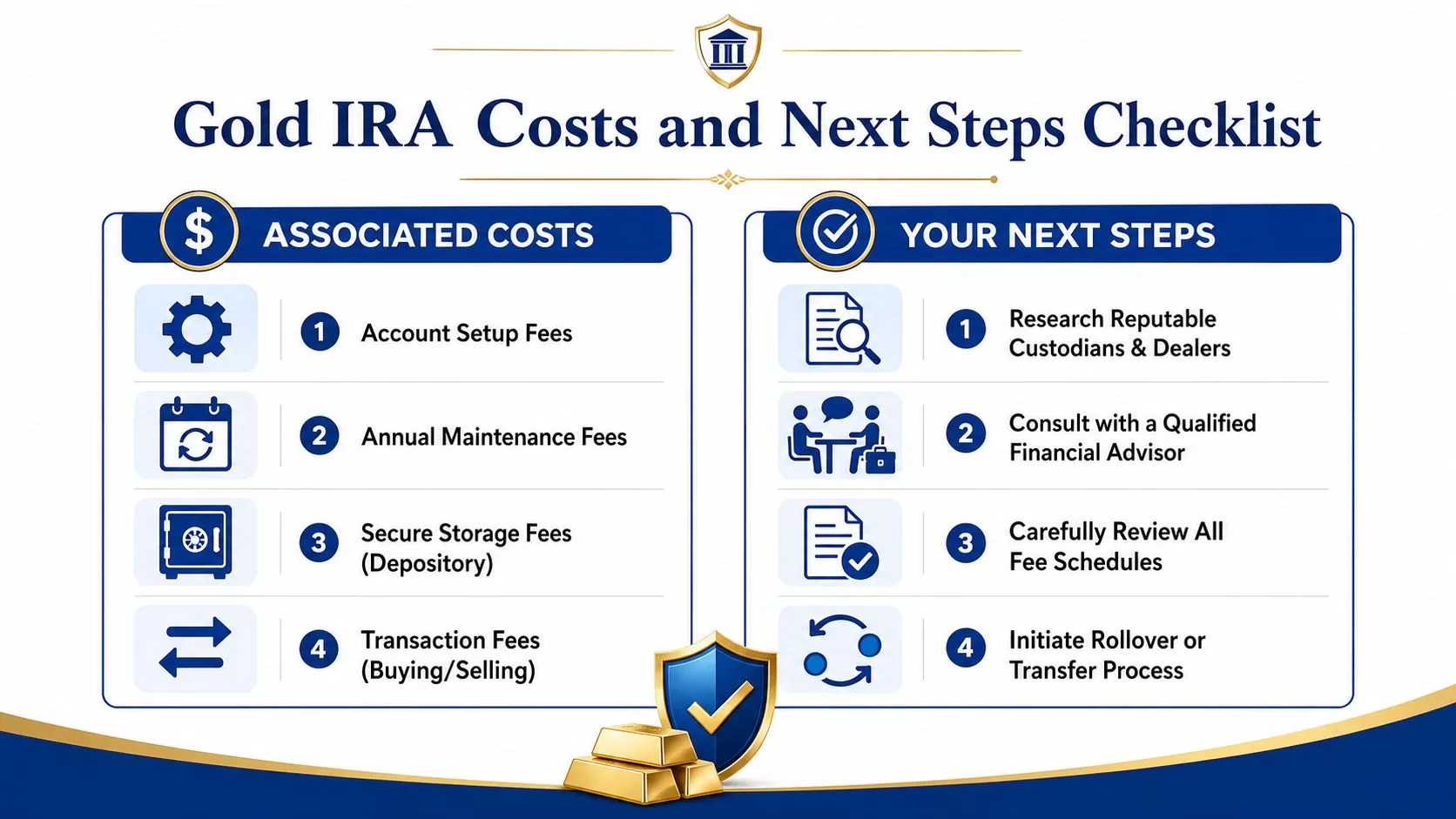
Costs in a Gold IRA are often discussed too narrowly. Many articles focus on account setup, annual administration, and storage. Those costs matter, but they aren't always the biggest drag on returns.
The expense that deserves closer attention is the dealer spread, which is the gap between the price paid for the metal and the price at which the dealer would buy it back.
The cost investors often overlook
The dealer spread is a hidden cost that can dwarf explicit IRA fees, often costing investors 3–8% immediately on purchase, while the annual custodial and storage fees most articles emphasize are often in the $200–$300 range, according to this breakdown of Gold IRA hidden costs and dealer spreads.
That doesn't mean every transaction is bad. It means investors shouldn't confuse “published annual fees” with “total economic cost.”
A practical way to review Gold IRA costs
Instead of asking only, “What's the annual fee?”, investors should look at the full picture.
- Account setup charges: These may appear at the beginning of the process.
- Custodial fees: These cover administration of the self-directed IRA.
- Storage fees: These pay for approved depository storage.
- Transaction-related pricing: This includes the buy-sell spread and can be the hardest cost to spot quickly.
A simple compliance checklist
Before moving retirement money into gold, it helps to review a short checklist:
- Confirm product eligibility: Verify that the specific coin or bar meets IRA standards.
- Verify the account structure: Make sure a custodian and approved storage arrangement are in place.
- Don't use personal gold: IRA assets must be acquired inside the IRA using IRA funds.
- Don't take possession: Personal handling can trigger a taxable distribution.
- Review all fees in writing: Ask about transaction pricing, not just annual account costs.
- Consult a professional: This is not financial advice. Consult a licensed financial advisor, CPA, or tax professional before making investment decisions.
Good Gold IRA decisions usually come from boring questions asked early. What exactly is being bought, who is storing it, and what does it cost to reverse the transaction later?
What this means in practice
The main point for a near-retiree isn't that gold can be held in an IRA. It's that only certain gold can be held, under a specific structure, with strict limits on possession and product type.
That's the heart of the answer to what is IRA approved gold. It isn't just gold that looks official. It's gold that satisfies the IRS standard for purity, classification, custody, and storage within a retirement account.
If more guidance would help, Gold IRA Association offers educational resources to compare top Gold IRA companies and understand rollover rules, eligible metals, and fee structures before taking the next step.


