



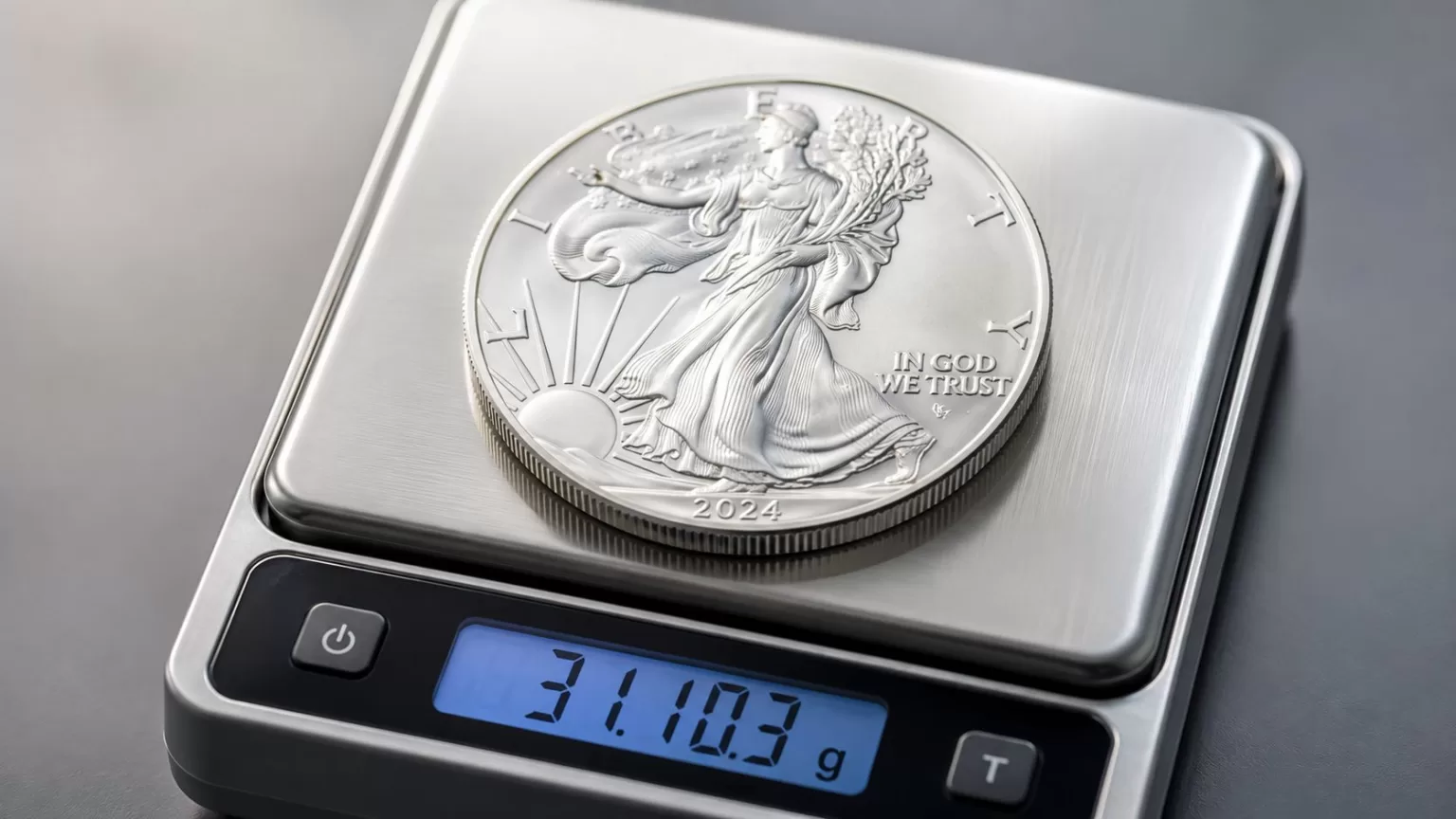
An American Silver Eagle weighs 1 troy ounce, which is 31.103 grams of .999 fine silver. That exact figure matters because it's the coin's identity, its pricing anchor, and the reason so many buyers can compare it cleanly against other bullion products.
The Official Silver Eagle Weight at a Glance
The simplest answer is also the most important one. The official silver eagle weight is 1 troy ounce, and the commonly cited metric conversion is 31.103 grams. The coin also carries a nominal $1 face value, but for buyers and retirement investors, the silver content is what defines its practical purpose and market use, not the face value (American Silver Eagle specifications).
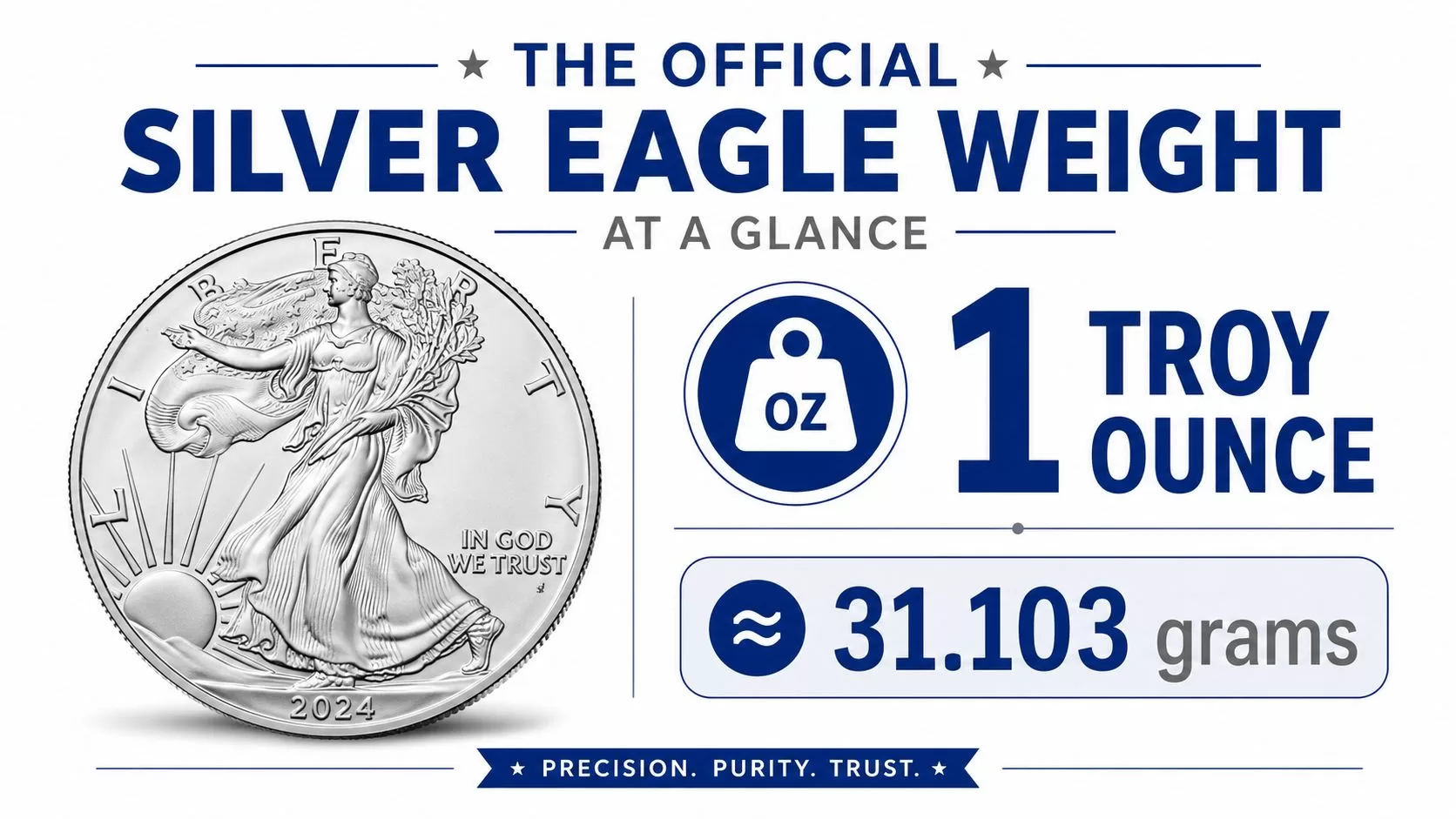

For a near-retiree, that number answers three questions at once. First, it tells you what the coin contains. Second, it shows why dealers can price it against silver spot with confidence. Third, it explains why the coin has a clear role in precious-metals IRAs, where eligibility depends on recognized bullion standards rather than guesswork.
A useful way to think about it is this, the Mint sets the standard, and the market prices to that standard. The coin is not marketed as “roughly an ounce” in a casual sense. It is a government-guaranteed bullion product with a fixed weight identity, and that fixed identity is what makes it easy to buy, sell, store, and compare across U.S. retirement and retail contexts (coin history and production overview).
Practical rule: when a Silver Eagle is described as “1 oz,” the bullion meaning is 1 troy ounce, not a household ounce.
Full Silver Eagle Specifications Explained
Once the headline weight is clear, the rest of the specification sheet makes more sense. An American Silver Eagle is 31.103 grams of .999 fine silver, with a nominal $1 face value. The troy-ounce unit matters because precious metals are measured differently from groceries or household items, so a “1 oz” bullion coin is not the same thing as a kitchen-scale ounce (troy ounce conversion reference).
| Attribute | Specification |
|---|---|
| Weight | 1 troy ounce |
| Metric weight | 31.103 grams |
| Silver purity | .999 fine silver |
| Face value | $1 |
| Weight system | Troy ounces |
That distinction is where many buyers stumble. A troy ounce is slightly heavier than the everyday ounce used in most home weighing, which is why the same coin can feel “off” if someone expects household-ounce math. The U.S. Mint and major bullion references use troy weight because that's the standard built into spot pricing and bullion trading.
Why the metric conversion helps
Metric language removes confusion for readers who think in grams. The coin's 31.103-gram standard lets a buyer compare it against a scale, a package label, or another bullion coin without needing to translate on the fly. That's especially useful when comparing any silver product with another, because the numbers can be checked cleanly rather than estimated.
A coin described as 1 oz in bullion terms is a troy ounce coin, not a coin weighing 28.35 grams on a household scale.
Why Nominal Weight and Measured Weight Are Not the Same
A Silver Eagle can show a reading a bit above 31.103 grams on a home scale and still be perfectly normal. That gap usually comes from the difference between nominal weight and measured weight, not from a problem with the coin itself. Community discussion around the coin's nominal weight versus its measured weight makes the point clearly, a consumer scale often lacks the precision needed to verify bullion down to the exact published figure (community discussion on measured weight).
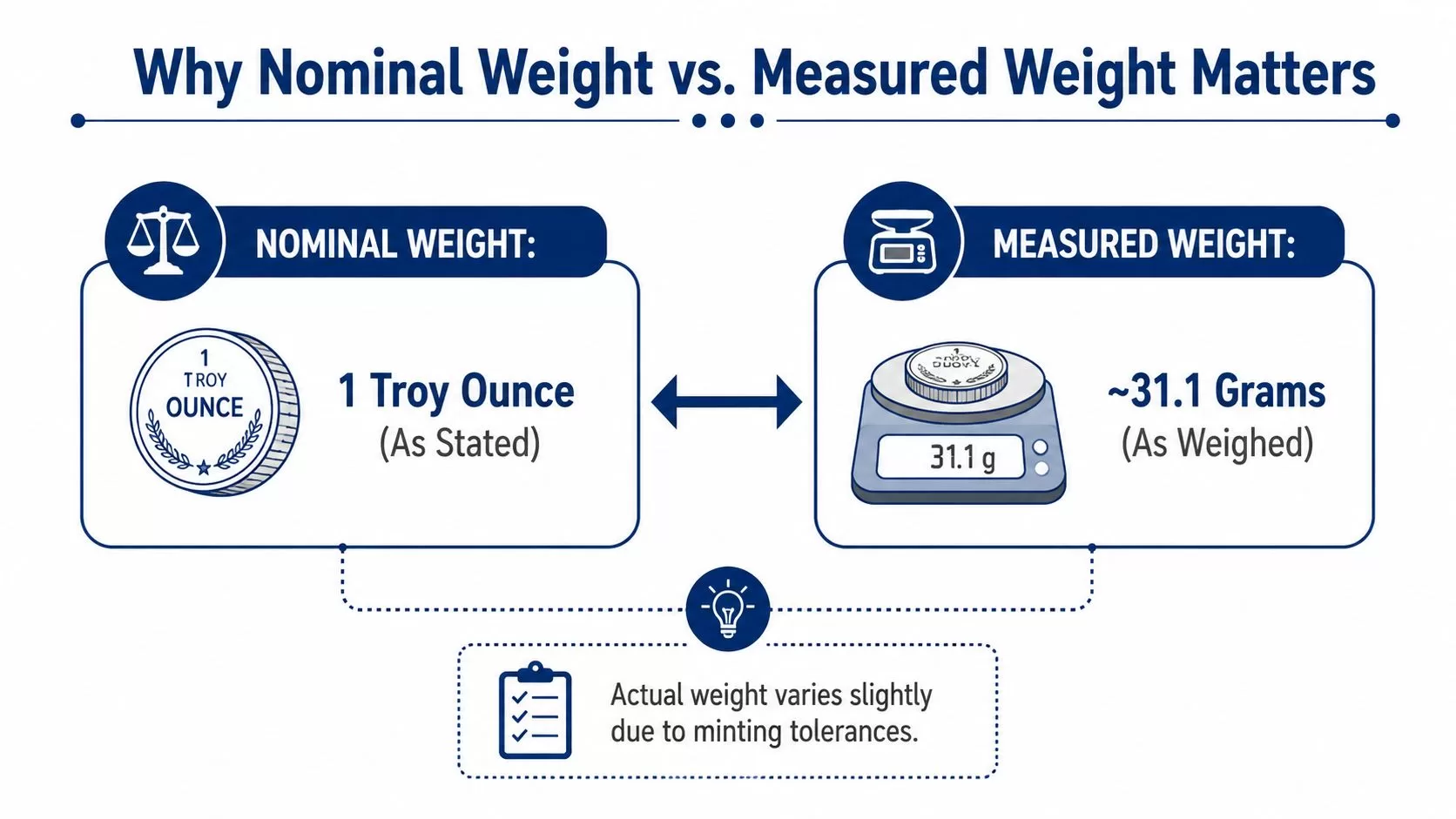
The reading depends on the scale as much as on the coin. Many household scales round to the nearest tenth of a gram, so a coin close to spec may appear as 31.2 grams or 31.3 grams because of placement, air movement, or the scale's own resolution. That number is a momentary measurement, not a final judgment about authenticity.
What a home scale can and can't tell you
A reading slightly above spec usually matters less than a reading that is clearly below it. If a coin is far off, that deserves a closer look. If the number is only a little above the nominal figure, measurement variation is the more likely explanation.
Useful standard: measured weight is a screening tool, not a proof of authenticity.
For retirement buyers, that distinction matters even more. An IRA custodian cares about whether the coin is eligible and genuine, not whether a kitchen scale lands on exactly 31.103 grams. The better habit is to use weight as one check among several, then confirm the rest with the coin's physical characteristics and custody requirements.

A broader explanation of the unit mismatch is also helpful for new buyers, especially when they compare bullion to everyday items (troy ounce vs. regular ounce guide). The difference between a troy ounce and a regular ounce is small in absolute terms, but it changes how the coin should be read on a scale and how its value should be interpreted. For that reason, the best baseline is to think in troy ounces, not kitchen ounces, and to use the scale as a guide rather than the final word.
How Silver Eagle Weight Affects Value and IRA Use
A Silver Eagle's fixed 1 troy ounce format is what makes it easy to price and compare. Dealers can line it up against live silver spot because each coin carries the same bullion content. That consistency also makes storage math easier, since every piece represents the same amount of silver in a compact, familiar form.
For retirement buyers, the weight standard matters because eligibility and comparability both depend on it. An American Silver Eagle is a widely recognized bullion coin, and its .999 fine silver content fits the purity standard used in many silver IRA discussions. The metal content, not the decorative appeal, is what gives the coin a place in a self-directed precious-metals account. For a plain-English overview of IRA-approved silver, see IRA-approved silver overview.
Why weight and pricing move together
A fixed bullion weight makes pricing easier to follow. If every coin contains the same amount of silver, buyers can compare premiums, storage costs, and resale offers without adjusting for uneven metal content. That is one reason the Silver Eagle became such a familiar reference point in U.S. bullion buying and retirement-account conversations (historical production context).
The practical result is straightforward. A coin that should contain the same silver as every other standard issue can be judged by spot value, then by premium, then by condition and demand.
What IRA buyers should remember
A standard one-ounce bullion coin is easier to evaluate than an unusual format. The weight stays predictable, so the buyer can focus on whether the coin is genuine, properly documented, and suitable for storage in an approved account.
- Bullion consistency matters: a standard one-ounce coin is easier to evaluate than an unusual format.
- Purity still counts: the coin's .999 fine silver is part of the eligibility picture.
- Custody rules still apply: IRA metals belong with an approved custodian and approved depository, not at home.
- Paperwork should match the product: the coin's specifications should be documented clearly before purchase.
That same logic holds whether the coin is bought for stacking or for retirement storage. The weight standard stays the same, so the difference is usually in use case, presentation, and premium structure rather than the metal itself.
Common Silver Eagle Variations and Collectible Issues
A Silver Eagle can look different on the surface while still carrying the same silver weight underneath. That is the first point to keep straight. Bullion, proof, and burnished are the main types, and some buyers also encounter special finishes such as Reverse Proof or Enhanced Finish issues. The finish changes presentation and collector appeal, but the coin still represents 1 troy ounce of silver. For readers who want the investment side of that choice explained in a broader way, silver coins as an investment offers helpful context.
The early years matter because collectors often value a coin for more than metal content alone. The program started in 1986, and the first-year mintage is widely discussed as about 5.4 million coins, with more than 11 million in 1987. That history helps explain why some dates draw more attention than others. A near-retiree does not need a numismatics background to follow this. It is enough to know that one Silver Eagle may be chosen mainly for bullion use, while another is bought partly for its finish, date, or scarcity.
What changes and what doesn't
- Bullion Eagles: usually chosen for metal content and broad liquidity.
- Proof Eagles: struck for presentation and collector appeal.
- Burnished Eagles: made with a distinct finish that attracts some collectors.
- Special finishes: may stand out because of appearance, not because they contain more silver.
Practical takeaway: if the goal is retirement allocation, the finish matters less than the coin's documented silver content.
That distinction helps prevent a common mistake. A buyer can see a premium finish and assume the coin must also carry extra metal value, but the silver weight stays tied to the same 1 troy ounce framework. Collectible versions may trade differently because of demand, condition, or presentation. The bullion content stays the same. Buyers should separate those two ideas before they compare prices or decide whether a coin fits a stacking plan or a collectible goal.
Practical Tips for Buyers and IRA Investors
A careful purchase starts with verification, not excitement. The safest habit is to buy from a reputable source, request a clear specification sheet, and confirm that the coin being offered matches the known 1 troy ounce and .999 fine silver standard. For readers building a retirement stack, the broader investing context is covered in silver coins as an investment.
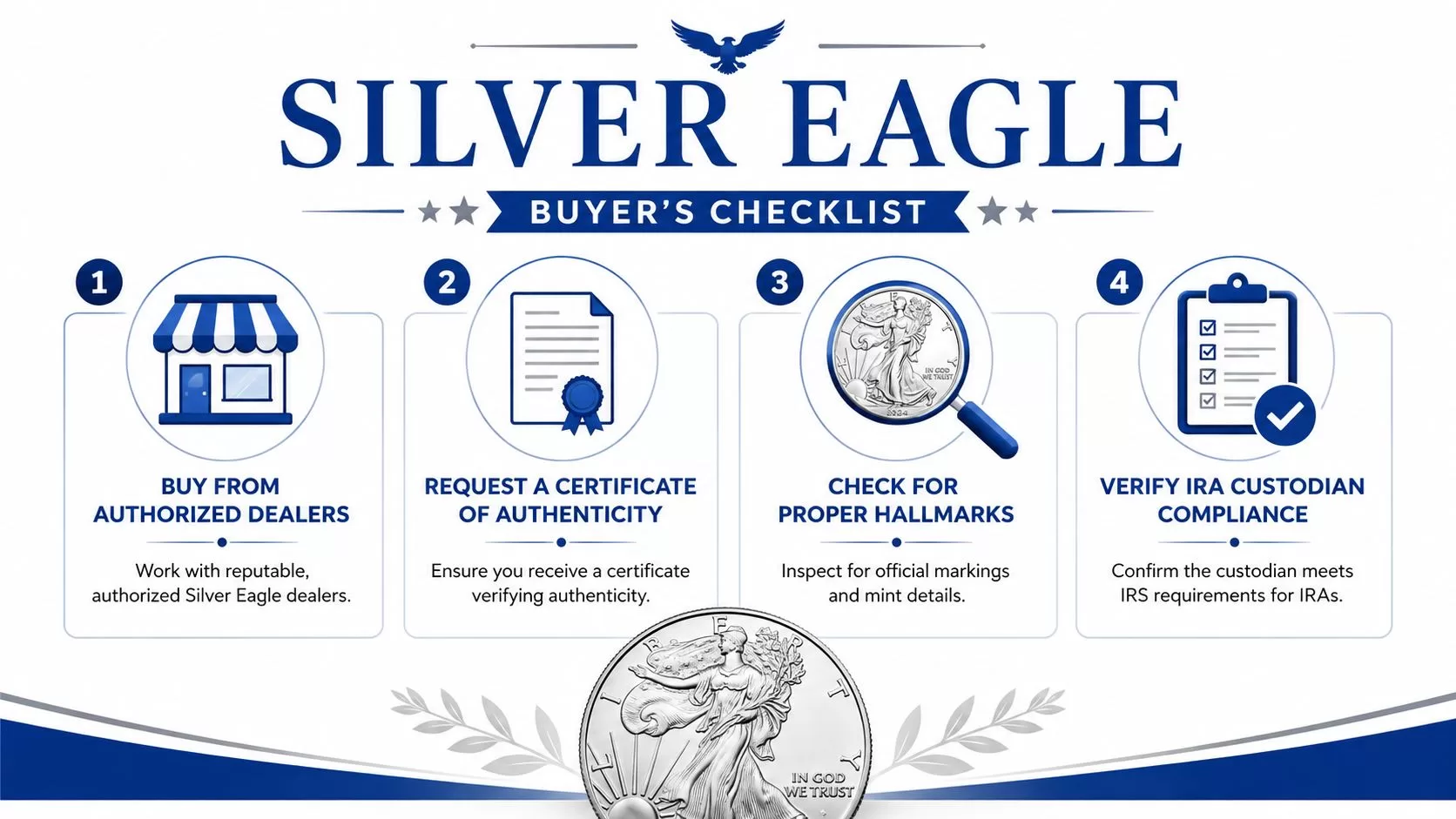
A simple buyer checklist
- Buy from authorized sources: a clear chain of custody lowers avoidable risk.
- Request documentation: a specifications sheet helps confirm the coin's silver content.
- Inspect the coin itself: diameter, thickness, edge reeding, magnetism, and design detail should all match expectations.
- Confirm IRA storage rules: IRA metals need an approved custodian and approved depository.
The most important habit is to avoid single-metric thinking. Weight matters, but it doesn't stand alone. A counterfeit can be close in weight and still fail other checks, so the full test includes more than a scale reading. That is especially important in bulk buying, where individual inspection can be rushed and surface details are easier to miss.
For IRA use, the storage side matters as much as the metal side. A coin intended for a tax-advantaged account should be handled through the proper custody chain, not held personally. Fees, minimums, and account setup terms vary by provider, so buyers should compare those details before funding anything.
Best practice: use weight as the first screen, then confirm the rest of the coin's physical identity before making a decision.
Frequently Asked Questions About Silver Eagle Weight
Why might a Silver Eagle weigh a little more than 31.103 grams at home?
Consumer scales don't always read bullion with perfect precision. Small differences can come from scale resolution, surface conditions, or normal measurement noise, so a slightly high reading isn't automatically a red flag.
Does a Silver Eagle qualify for a Silver IRA?
The coin's .999 fine silver content and recognized bullion format are the reason it is commonly discussed in IRA contexts, but account eligibility always depends on the full rules and the custodian's requirements.
Do proof or burnished Silver Eagles weigh more than bullion Eagles?
The silver content standard stays the same at 1 troy ounce. The extra weight buyers sometimes notice usually comes from packaging, not from more metal in the coin itself.
Can any version of the Silver Eagle weigh a different amount?
The official bullion standard is fixed at 1 troy ounce. What changes in real life is the reading on a consumer scale, not the coin's intended silver content.
Key Takeaways and Next Steps for Investors
The central fact is easy to remember. An American Silver Eagle weighs 1 troy ounce, or 31.103 grams, of .999 fine silver. That fixed standard is what makes the coin easy to price, easy to compare, and useful in retirement planning discussions.
The other thing to remember is that a home scale is only a screening tool. A reading of 31.2 grams or 31.3 grams can happen without indicating a fake, because nominal weight and measured weight are not the same thing. A careful buyer checks more than one feature, then uses custody and documentation rules to guide the final decision.
This is not financial advice. Consult a licensed financial advisor, CPA, or tax professional before making investment decisions. The site is an educational resource, not a metals dealer, and it exists to help readers understand the rules, the math, and the practical tradeoffs before they commit retirement money.
If Silver Eagles are part of a retirement strategy, the next sensible step is to speak with a precious-metals specialist who can walk through account structure, storage, and eligibility in plain English. Gold IRA Association can help readers sort through those basics and compare the moving parts before they decide what fits their goals.
Gold IRA Association publishes plain-English guides on Silver IRAs, precious-metals rollover basics, and provider comparisons for readers who want to understand the process before they act. Visit Gold IRA Association to explore more retirement-focused education and take the next step with clarity.


