



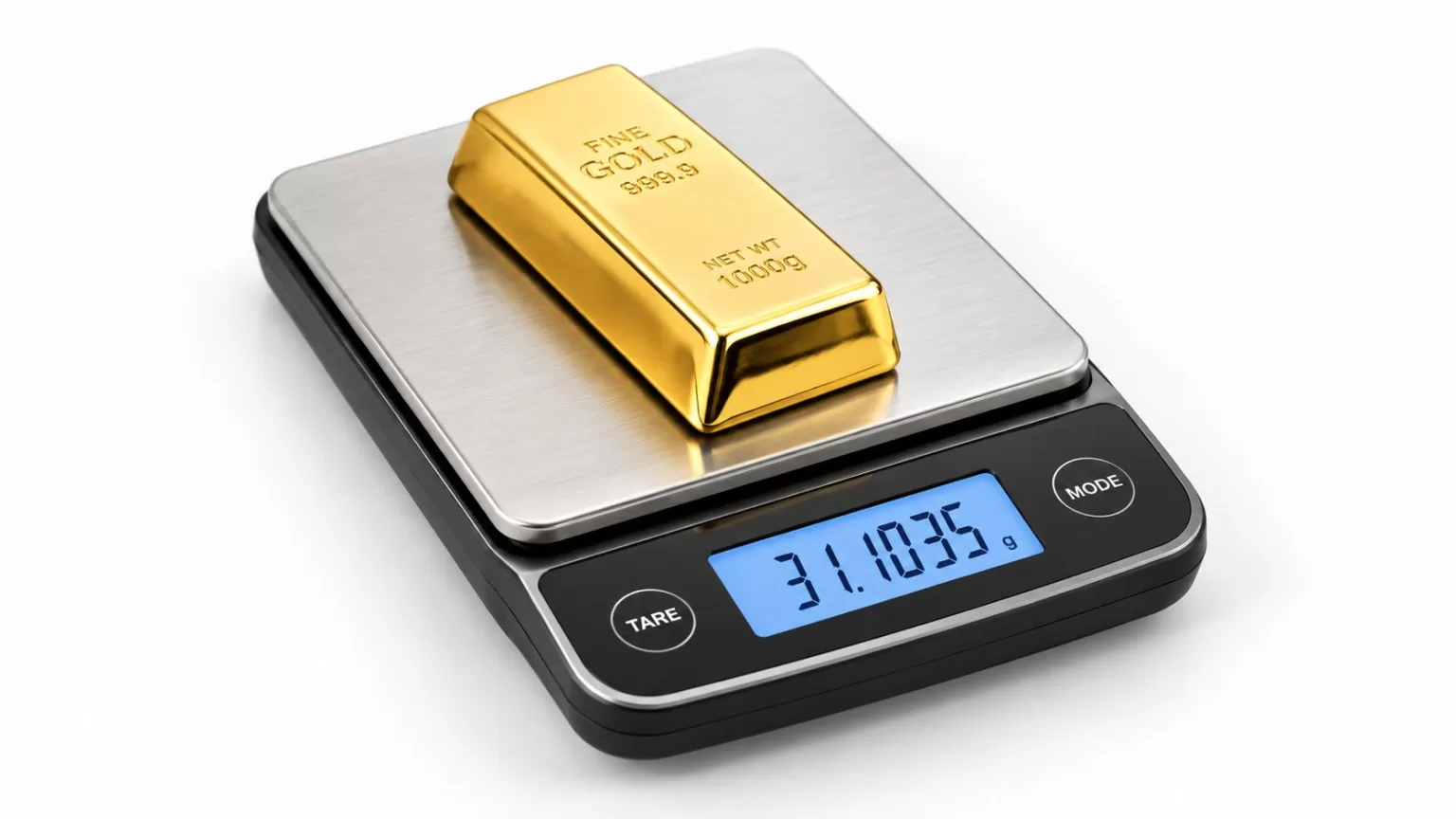
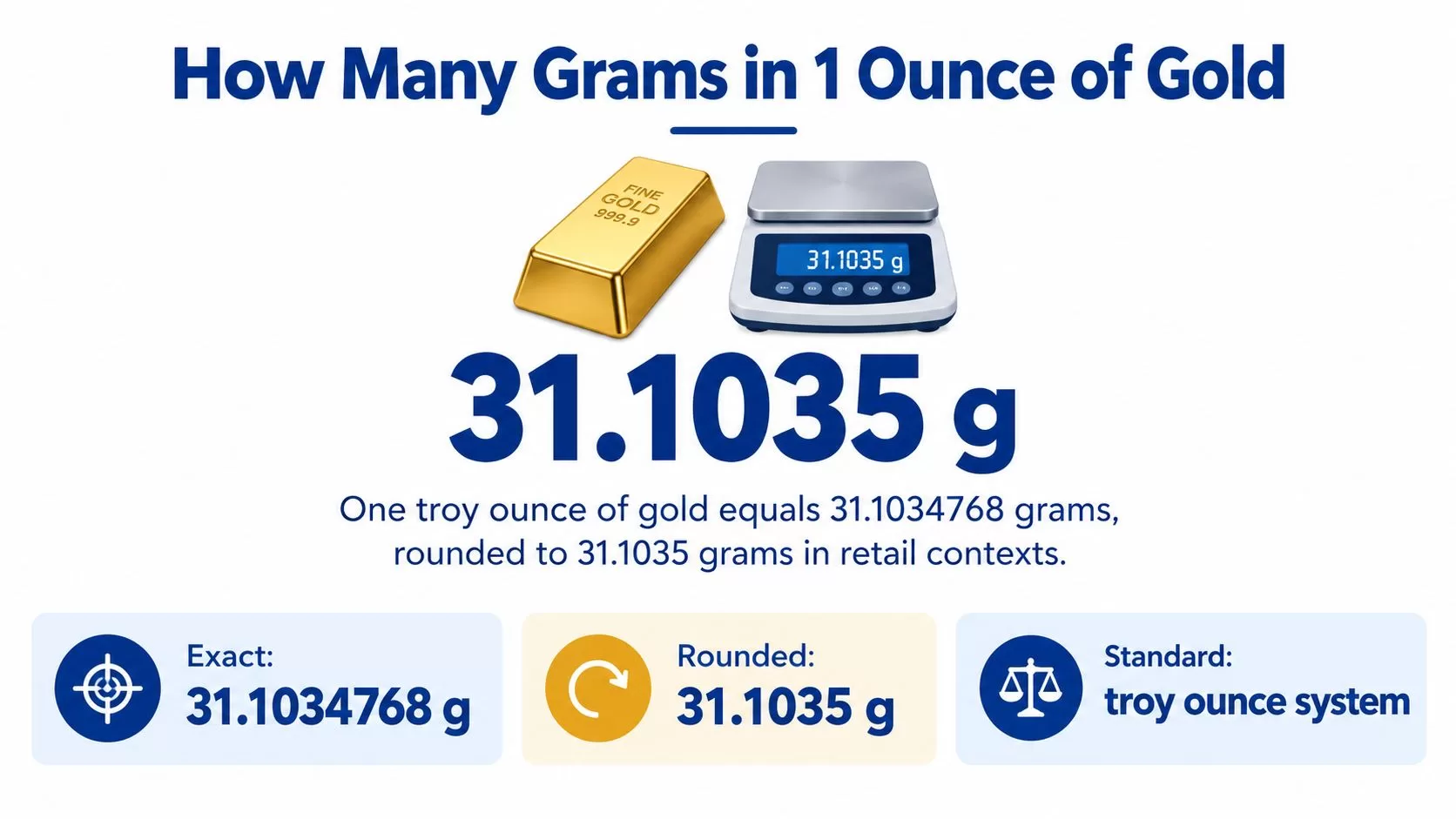
1 ounce of gold equals 31.1034768 grams, commonly rounded to 31.1035 grams, because gold uses the troy-ounce system. That differs from the 28.3495-gram everyday ounce used for ordinary commercial goods, so the ounce printed on a gold product isn't the same ounce used for groceries or household items.
For a retirement investor, the conversion is only the starting point. The product's fineness, total alloy weight, price basis, and IRA eligibility also determine how much fine gold the investment represents.
The Quick Answer for How Many Grams in 1 Ounce of Gold
31.1034768 grams make up one troy ounce of gold. Retail listings usually round this to 31.1035 grams, and that is the figure buyers commonly see on product descriptions and price calculations. Gold prices, bullion bars, coins, and professional precious-metals trades use the troy ounce, as explained in the LBMA guide to gold pricing.

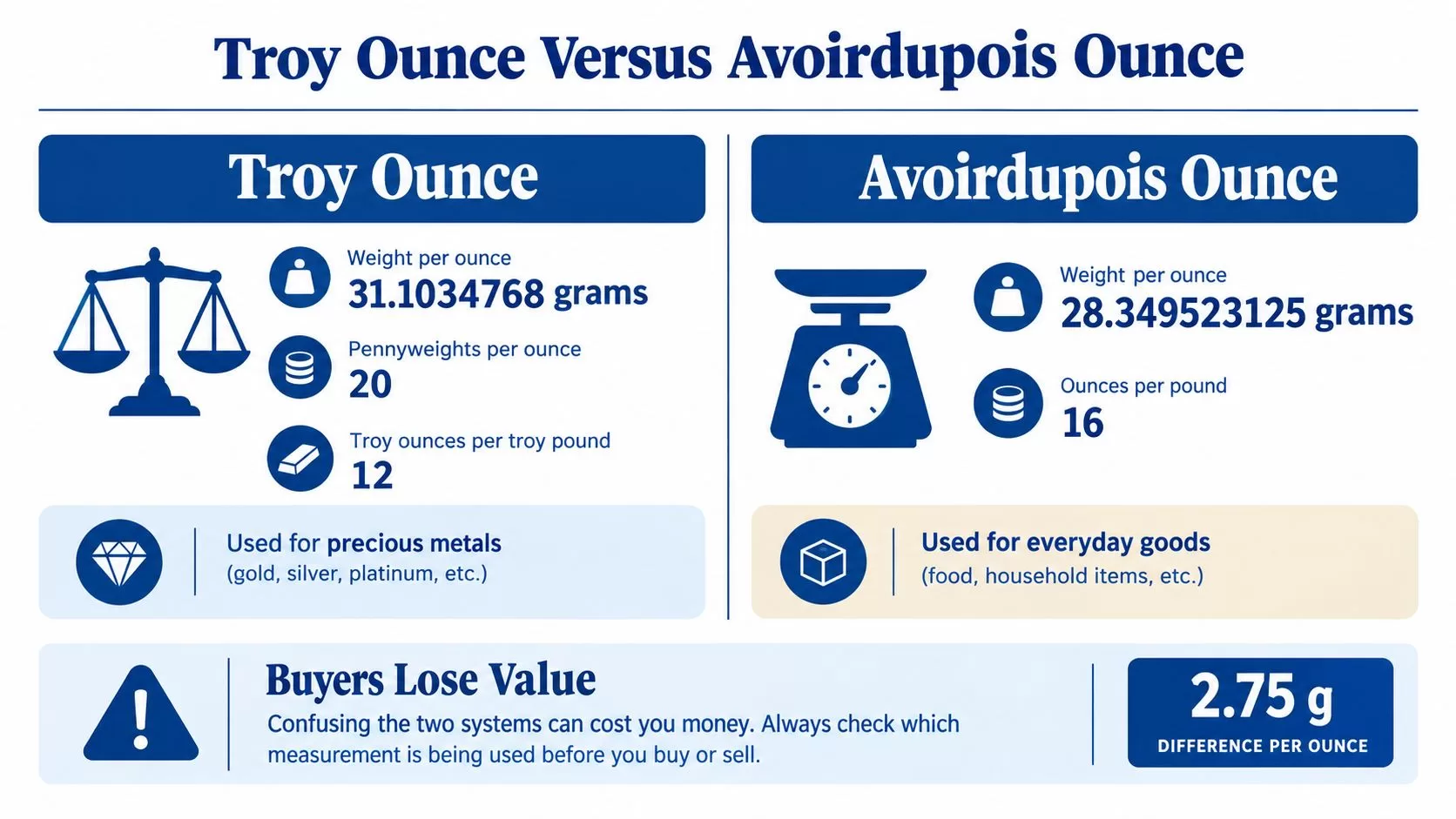
An everyday avoirdupois ounce is approximately 28.3495 grams, so it is a different measurement from the ounce used for gold.
Using the household conversion for a gold product can make the quoted quantity appear smaller than it really is. That mistake can affect comparisons between dealer prices, coin specifications, and retirement-account purchases.
One further distinction matters for investors: 31.1035 grams describes one troy ounce of total weight, but it does not automatically mean the product contains that much pure gold. A bar or coin may include alloy metals, depending on its fineness. For example, a product marked as one troy ounce can weigh 31.1035 grams while containing less fine gold than that amount.
A reliable rule is simple:
Practical rule: For gold, silver, platinum, or palladium, read “ounce” as troy ounce unless the listing clearly identifies another system.
Before judging value or IRA purity compliance, check both the product's total weight and its fine-gold content.
Troy Ounce Versus Avoirdupois Ounce
A gold ounce is about 9.7% heavier than an everyday ounce. As noted above, the troy system assigns the larger gram equivalent to precious metals, while the avoirdupois ounce is used for ordinary commercial goods. The difference is small enough to miss on a label, yet large enough to distort a price or weight comparison.
| Measurement system | Practical use |
|---|---|
| Troy ounce | Gold, silver, platinum, and palladium |
| Avoirdupois ounce | Household and general commercial goods |
The troy system also divides one troy ounce into 20 pennyweights. One pennyweight is approximately 1.55517384 grams. Avoirdupois and troy pounds follow different structures: an avoirdupois pound contains 16 ounces, while a troy pound contains 12 troy ounces. A scale set for ordinary ounces therefore cannot be applied casually to a gold bar.
The reason is practical, not promotional. Refiners, mints, dealers, and professional trading venues use the troy system so precious-metals weights and prices can be compared consistently across transactions. The convention developed from historical European trade and remains the shared measurement standard for the market.
For a purchase, check three details:
- Weight system: Confirm that an ounce means a troy ounce.
- Product specification: Review total weight, fineness, and fine-gold content separately. The ounce label alone does not prove purity or IRA eligibility.
- Price basis: Compare a market quote per troy ounce with a product priced on the same basis.
For another plain-English explanation, see Gold IRA Association's guide to the difference between a troy ounce and a regular ounce.

How to Convert Gold Prices and Weights Step by Step
A $2,500 per troy ounce gold quote equals approximately $80.376 per gram, before dealer premiums or other purchase costs. The calculation uses 31.1034768 grams, the weight of one troy ounce, rather than the lighter household-ounce standard.
Use this formula:
Price per gram = price per troy ounce ÷ 31.1034768
To convert grams into troy ounces, use:
Troy ounces = grams × 0.0321507465
For example, a 100-gram gold bar contains approximately 3.215 troy ounces by total weight. At $2,500 per troy ounce, those 100 grams represent approximately $8,037.60 in underlying metal value before any premium. The final fine-gold value still depends on the bar's purity.
| Unit | Grams | Troy Ounces |
|---|---|---|
| 1 gram | 1 | 0.0321507465 |
| 1 troy ounce | 31.1034768 | 1 |
| 100 grams | 100 | Approximately 3.215 |
| 1 kilogram | 1,000 | Approximately 32.1507465 |
To reverse a per-gram quote, multiply by 31.1034768. A listing at $80.376 per gram therefore implies approximately $2,500 per troy ounce. This lets a buyer compare products quoted in different units on the same basis.
A kilogram equals approximately 32.1507465 troy ounces. Large bars and institutional holdings may use kilograms, so convert the quoted unit before judging whether the price appears reasonable.
The invoice can include a premium above the underlying gold quote. Gold IRA Association's guide to how much one bar of gold is worth offers related context. Apply the same sequence to any listing: identify the unit, convert the weight or price, then check purity and product costs. A bar's total weight and its fine-gold content are separate figures, and both matter when assessing value and IRA compliance.
Gross Weight Versus Fine Gold Content
31.1034768 grams is the total material in one troy ounce. The amount of elemental gold can be lower because a bar or coin may include a small share of other metals. Fineness shows the gold proportion. Multiply the product's gross weight by its fineness decimal to find its fine-gold content.
For a one-troy-ounce bar:
- A .995-fine bar contains approximately 30.9480 grams of fine gold, calculated as 31.1034768 × 0.995.
- A .999-fine bar contains approximately 31.0724 grams of fine gold.
- A .9999-fine bar contains approximately 31.1004 grams of fine gold.
The calculation separates what the scale measures from the gold that supports the product's metal value. The explanation of gross weight, purity, and fine-gold content provides related guidance on fineness.
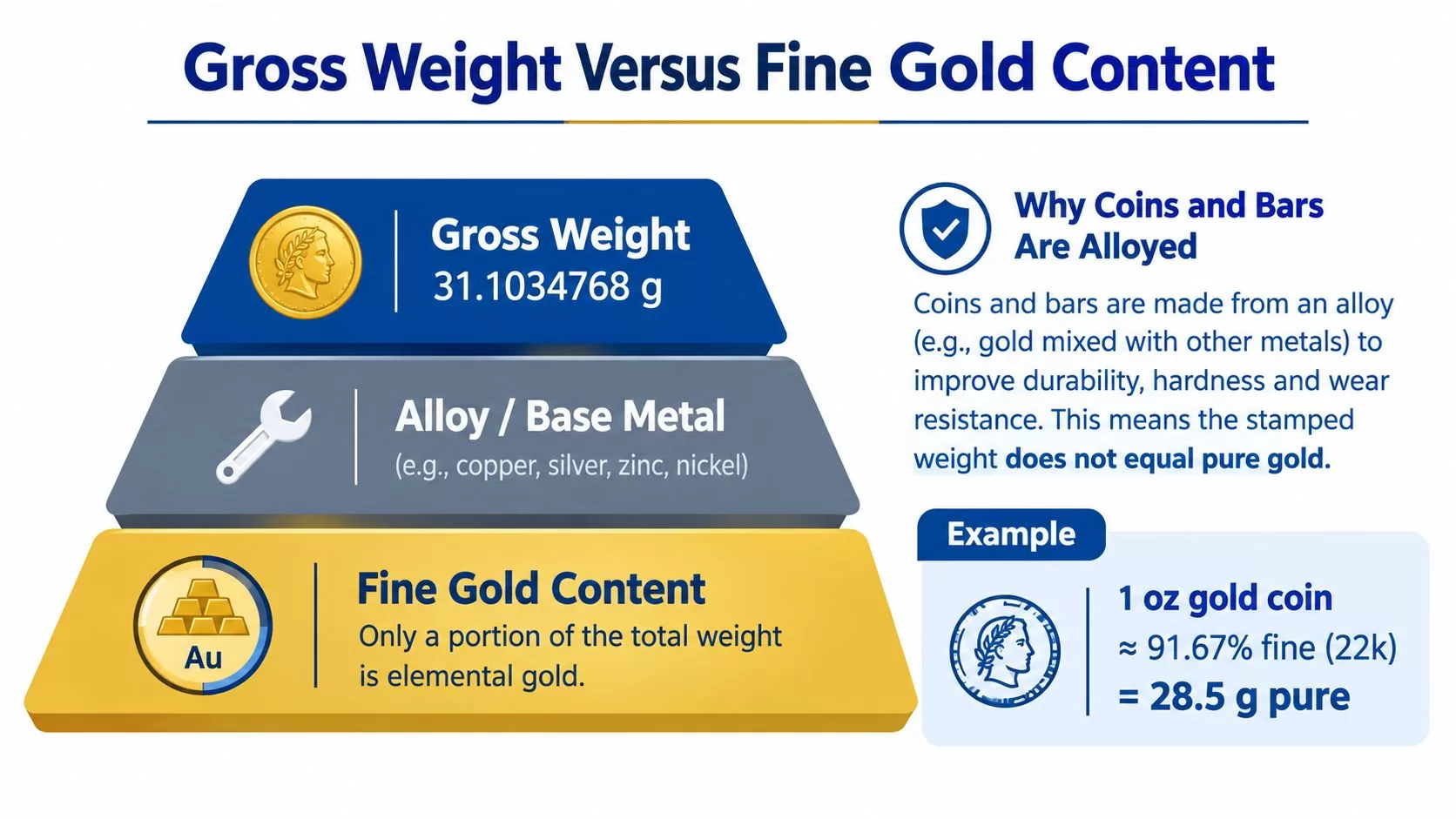
Karat measures purity on a 24-part scale. A 22-karat product contains approximately 91.67% gold, with the remaining metal helping improve durability. The American Gold Eagle is a one-troy-ounce, 22-karat coin. Its total alloy weight is one troy ounce, while its fine-gold content is approximately 28.50 grams, based on 31.1034768 × 0.9167. Check the product specification before buying.
The distinction matters in four practical ways:
- Melt value: Fine-gold grams show the elemental gold held in the product.
- Premium analysis: Similar weight labels can carry different premiums because specifications and demand differ.
- Assay review: Fineness lets a buyer compare the label with a test or certificate.
- IRA evaluation: Gross weight alone does not establish eligibility.
A product's total weight is the outside measure, like the weight of a filled container. Fine-gold content measures what is inside that matters for metal exposure. Compare both figures before assessing value, purity, or account suitability.
What This Means for Gold IRA Buyers
A one-ounce label answers only the weight question. For a U.S. retirement investor, the product also needs to meet a .995 fineness minimum and applicable production and eligibility requirements under commonly associated IRA rules. The Gold IRA Association outlines purity standards and related approval considerations.
Review the full product record:
- Gross weight, such as one troy ounce or a stated gram weight.
- Fineness, shown as a decimal or through karat terminology.
- Manufacturer or mint, including whether the item meets the applicable approval standard.
- Custody and storage, because retirement-account metals generally require approved account structures and storage arrangements.
- Transaction terms, including premiums, fees, and the basis used for the quoted price.
The second layer is fine-gold content. A .9999-fine bar labeled as one ounce contains approximately 31.1004 grams of fine gold. A 22-karat American Gold Eagle with the same one-troy-ounce alloy weight contains approximately 28.50 grams of fine gold. The shared label describes total weight, not identical gold content.
That difference affects how you assess value and purity compliance. Gross weight is the weight of the complete item, like a filled container. Fine-gold content measures the elemental gold inside. Compare both figures before judging premiums, liquidity, or account suitability.
Requirements can change, and a one-ounce label does not prove eligibility. Confirm the product's current specifications, approval status, and account arrangements before completing a retirement purchase.
Common Conversion Mistakes to Avoid
Several mistakes recur because buyers treat “ounce” as a complete product description. It isn't.
- Mixing ounce systems: Using 28.3495 grams instead of 31.1034768 grams changes the quantity calculation for gold.
- Confusing gross and fine weight: A product can contain alloy, so total material isn't automatically elemental gold.
- Comparing unlike price units: A per-gram quote and a per-troy-ounce quote need conversion before comparison.
- Ignoring the invoice basis: The invoice should identify whether the stated weight and price use grams or troy ounces.
- Assuming the label proves eligibility: A one-ounce product still needs a purity and approval review for an IRA purchase.
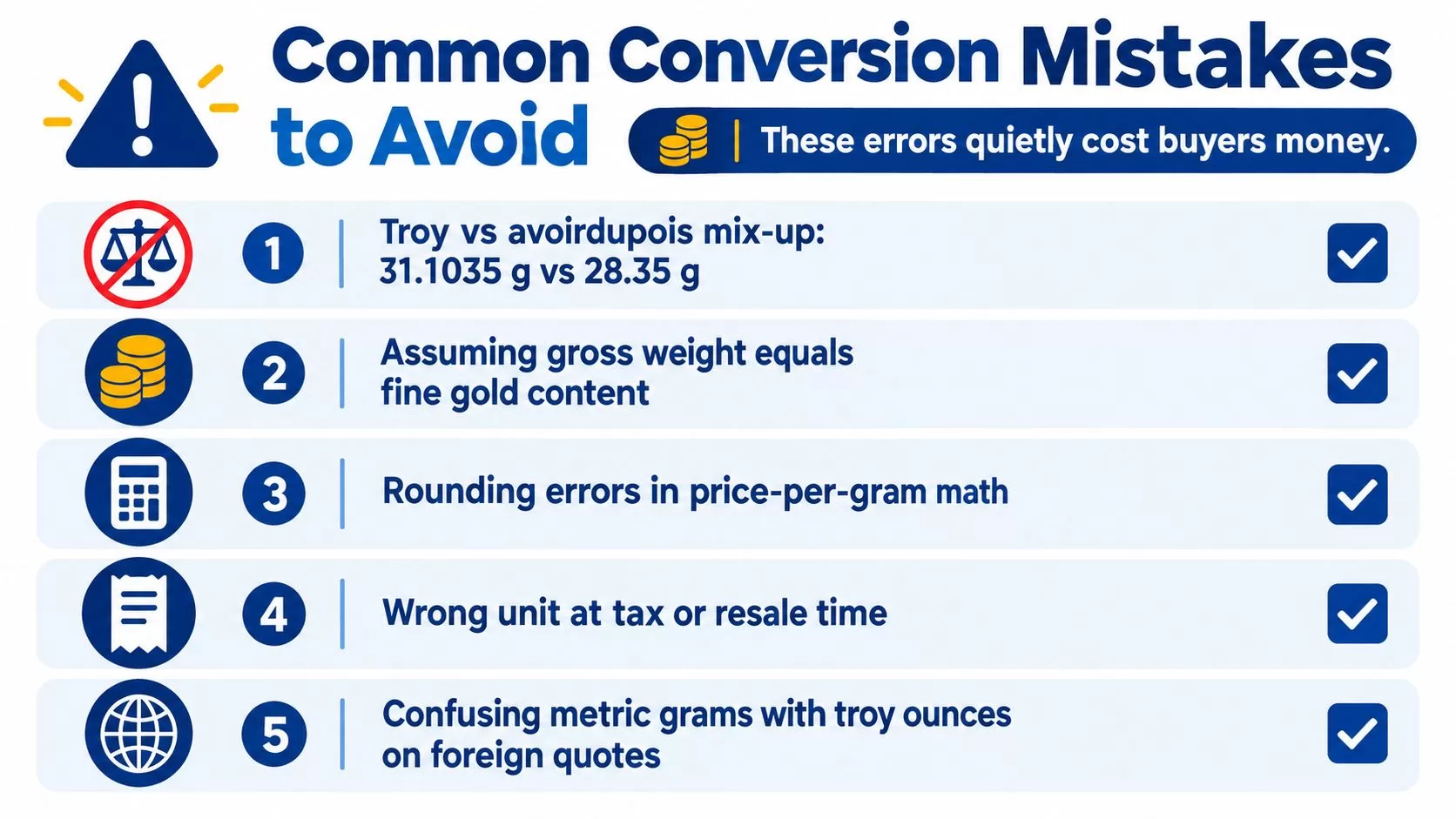
A short verification routine can prevent most errors. First, identify the unit. Next, record the fineness. Then multiply the gross weight by that fineness, convert all prices to the same basis, and confirm the product's applicable IRA status. If the invoice leaves any of those points unclear, the buyer should ask for clarification before proceeding.
Practical Questions Gold Buyers Actually Ask
Does the spot quote equal the purchase price? A market quote is a reference for the metal. The final price can include a product premium and other transaction costs. Compare the dealer's total with the item's gross weight and fine-gold content.
Why can premiums differ? Coins and bars can have different manufacturing, distribution, liquidity, and demand characteristics. A higher premium does not show that an item contains more fine gold.
How should an invoice be read? Check the product name, gross weight, fineness, unit price, and total price. These details separate the item's total material from the gold it contains. That distinction matters when comparing products or assessing IRA value and purity compliance.
Does fractional gold use the same math? Yes. A 1/10-troy-ounce item weighs approximately 3.11 grams in total, including any alloy, based on the LBMA conversion standard. Its fine-gold content depends on fineness, so gross weight alone does not establish its gold value.
Key Takeaway and Next Step
When someone says one ounce of gold, the normal meaning is one troy ounce, equal to 31.1034768 grams, not the approximately 28.35-gram household ounce. Before comparing products, check the unit, multiply the gross weight by the fineness, and verify the product's applicable IRA eligibility.
Gold IRA Association provides educational guides about precious-metals IRAs, rollover questions, eligible products, and provider comparisons. Readers can use those resources to build a clearer checklist before discussing a purchase or account decision. This is not financial advice. Consult a licensed financial advisor, CPA, or tax professional before making investment decisions.
Visit Gold IRA Association to review educational resources that explain gold weights, purity, IRA eligibility, and rollover considerations in plain English. Use the information to prepare specific questions for a qualified financial, tax, or retirement professional before acting.


