




The Canadian Gold Maple Leaf and American Gold Buffalo are among the purest widely traded gold coins at .9999 fineness, or 99.99% pure gold. But purity alone doesn't determine a coin's investment value, liquidity, or eligibility for a Gold IRA.
That distinction matters for near-retirees comparing physical gold for a retirement portfolio. A coin with an extra nine may sound automatically superior, yet a widely recognized product with reasonable premiums and dependable resale channels can be more practical than a rarer, ultra-high-fineness issue. The question isn't which coin is the purest gold coin, but which coin best fits the investor's retirement objectives, account rules, storage arrangements, and eventual exit plan.
Why the Purest Gold Coin Is Not Always the Best Investment
Chasing the highest possible purity isn't necessarily the smartest retirement strategy. The Canadian Gold Maple Leaf established an important benchmark when the Royal Canadian Mint launched it in 1979, then raised its fineness from 99.9% to 99.99% in 1982, while the standard one-ounce coin continued to contain exactly one troy ounce of fine gold. The coin's documented history shows why it became a major high-purity bullion standard.
That history demonstrates the value of purity, but it doesn't prove that every additional refinement creates a better investment result. A coin's resale prospects also depend on recognition, dealer acceptance, purchase premium, condition, certification, and account eligibility. Those factors can matter more than the difference between.9999 and.99999 fineness.
Purity is only one part of value
Gold bullion is generally priced around its fine-gold content and the prevailing market price. A standard one-ounce.9999 coin and a standard one-ounce coin with a different high-purity specification can therefore respond similarly to changes in the gold market, assuming comparable buying and selling costs.
A limited-edition five-nines coin may carry a collector premium because it's scarce or technically distinctive. That premium can help or hurt the owner. It may attract a specialist buyer, but it can also make the initial purchase more expensive and create a narrower resale audience.
Practical rule: For retirement holdings, recognizable and readily traded often matters more than theoretically perfect purity.
Retirement investors need an exit plan
A near-retiree may eventually sell coins, take an in-kind distribution, or coordinate withdrawals with broader retirement planning. A coin that dealers and custodians routinely recognize may simplify those decisions. A specialized issue can require more careful documentation and a buyer who understands its premium.
The Royal Canadian Mint's special issues illustrate the distinction. The Mint struck a 100 kg Gold Maple Leaf at 99.999% purity in 2007, and the coin set a record at the time for size, weight, and value, according to the Mint's archive describing its purest Maple Leaf. That is a remarkable refining and minting achievement, but a showcase issue isn't automatically more suitable for an ordinary retirement account than a standard, liquid bullion coin.
Understanding Gold Fineness and Purity Measurements
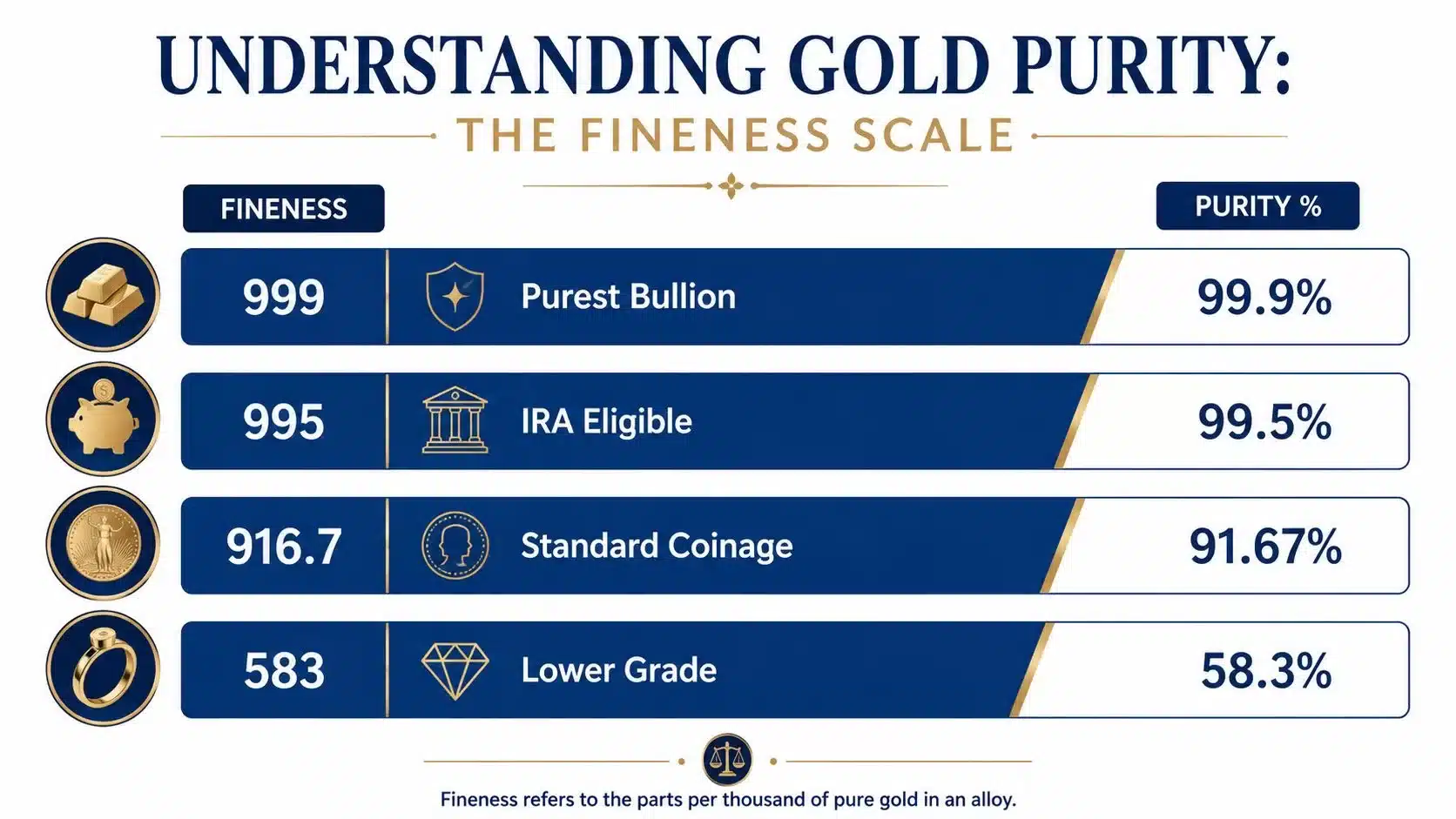
Fineness describes the proportion of a coin's total composition that is gold. A marking of.999 means that the coin is 99.9% pure gold, while.9999 means 99.99% pure gold. The remaining material consists of trace elements or alloy metals.
The karat system expresses purity in a different way. Pure gold is described as 24-karat, while a 22-karat coin contains a greater share of alloy. The American Gold Eagle, for example, is 91.67% pure gold, but it still contains one troy ounce of fine gold in its standard one-ounce format, as documented in the comparison of the American Gold Eagle and Canadian Gold Maple Leaf.

Reading the common fineness levels
The practical vocabulary is straightforward:
- .9167, or 91.67%: Often associated with 22-karat gold. Alloy metals can make a coin harder and more resistant to handling.
- .999, or 99.9%: Commonly called three-nines purity. It represents high-purity bullion with a small amount of non-gold material.
- .9999, or 99.99%: Known as four-nines purity. It's the standard used by several prominent modern sovereign bullion coins.
- .99999, or 99.999%: Known as five-nines purity. The overview of.99999 bullion describes this level as exceptionally rare.
The difference between.999 and.9999 is measurable, but it doesn't change the basic fact that both are high-purity gold products. Investors should focus on the coin's stated fine-gold weight rather than assume that a longer string of nines automatically means a proportionately better outcome.
Why mints use alloy metals
Gold is relatively soft in its pure form. A mint may add small amounts of copper or silver to improve a coin's resistance to scratches, dents, and ordinary handling. That choice doesn't necessarily reduce the amount of fine gold promised by the coin. Instead, it changes the coin's total composition and physical durability.
Assay certificates, edge markings, and mint specifications help communicate the product's purity and weight. Buyers should match those details against the invoice and the product packaging. A useful plain-language guide to the distinction between bullion and other precious-metal products is what bullion means.
Top High-Purity Gold Coins in the Bullion Market
Several sovereign bullion programs use.9999 fineness, but they don't all have identical recognition or resale patterns. The Canadian Gold Maple Leaf and American Gold Buffalo are especially important because both are documented.9999, or 24-karat, bullion coins. The American Gold Buffalo reference identifies it as the U.S. Mint's first and only.9999 fine gold bullion coin, launched in 2006.
The comparison below uses qualitative descriptions where the available verified data doesn't establish precise weight ranges, premiums, or rankings.
High-Purity Gold Bullion Coins Compared
| Coin Name | Issuing Mint | Fineness | Available Weights | Market Recognition |
|---|---|---|---|---|
| Canadian Gold Maple Leaf | Royal Canadian Mint | .9999 | Standard one-ounce version documented | Broad international recognition |
| American Gold Buffalo | United States Mint | .9999 | One-ounce version documented | Strong recognition in the U.S. bullion market |
| Australian Gold Kangaroo | Sovereign Australian mint program | .9999 | Offered in bullion formats | Widely recognized sovereign bullion option |
| Austrian Gold Philharmonic | Austrian Mint | .9999 | Offered in bullion formats | Established international bullion recognition |
| Chinese Gold Panda | Chinese sovereign mint program | .9999 | Offered in bullion formats | Recognized bullion coin with collector interest |
The Maple Leaf's one-ounce version contains exactly one troy ounce of fine gold, and its high-purity standard has been associated with the Royal Canadian Mint since the series moved to 99.99% fineness. Readers researching the coin's market context can review this guide to the Gold Maple Leaf price, while remembering that a quoted market price can include both metal value and dealer premium.
Recognition can outweigh tiny purity differences
The Australian, Austrian, and Chinese programs can appeal to investors who value sovereign minting, distinctive designs, or annual presentation changes. Those features may influence collectibility and resale premiums, but the buyer shouldn't assume that design variation guarantees a higher investment result.
For a retirement portfolio, the comparison should start with four questions:
- Can the custodian accept it? IRA eligibility depends on applicable requirements, not marketing language.
- Will multiple dealers recognize it? Broader acceptance can make future selling simpler.
- Is the premium understandable? A buyer should know how much is being paid above the metal value.
- Does the format fit the plan? Standard bullion is generally easier to evaluate than a specialized proof or limited issue.
How Purity Affects Liquidity and Investment Value
The highest purity is not automatically the best retirement investment. Purity describes the proportion of gold in the coin, while liquidity depends on whether buyers recognize it, how much premium you pay, and what you can recover when selling. A coin with slightly lower fineness can sometimes function like a widely accepted currency, while an extremely pure specialty issue may have fewer practical buyers.
A bullion coin's value is tied mainly to its fine-gold content and the current gold price. Your actual result also depends on the purchase premium, resale spread, and any costs connected with ownership. The fineness standards overview identifies.999 and.9999 as common investment standards, with.99999 representing the upper end of specialized mint programs.
Liquidity depends on recognition and trading costs
Dealers generally assess authenticity, condition, fine-gold content, current demand, and their own buyback policies. A recognized.999 coin may be easier to sell than an unfamiliar.99999 issue, even though the latter has greater technical purity. For a retirement account, that difference matters because the selling process may need to work under future market conditions, not just at the time of purchase.
Premiums can create a second problem. A limited-edition coin may cost substantially more than its metal value, yet later receive an offer based mainly on bullion content. Unless a future buyer values its design, scarcity, or other special feature, the added premium may not be recovered.
A higher purity specification can improve technical appeal without improving the owner's eventual selling price.
Avoid false precision in long-term return estimates
A responsible ten-year comparison between.999 and.9999 coins requires verified purchase premiums, buyback rates, gold prices, and selling costs. Without those inputs, a “typical” return would suggest more certainty than the available information supports.
| Coin Example | Fineness | Typical Premium Over Spot | Liquidity Rating | 10-Year Net Return Impact |
|---|---|---|---|---|
| Standard high-purity bullion coin | .999 | Varies by dealer and market | Often broad when recognized | Cannot be determined without purchase and sale data |
| Standard four-nines bullion coin | .9999 | Varies by dealer and market | Often broad when recognized | Cannot be determined without purchase and sale data |
| Specialized premium bullion issue | .99999 | May include a collector or scarcity premium | Potentially narrower | Cannot be determined without product-specific resale data |
Before buying, request the all-in purchase price, the buyback methodology, storage or transaction charges, and the process for taking distributions. These details show the likely ownership cost and future flexibility more clearly than purity alone.
Gold IRA Eligibility and Purity Requirements
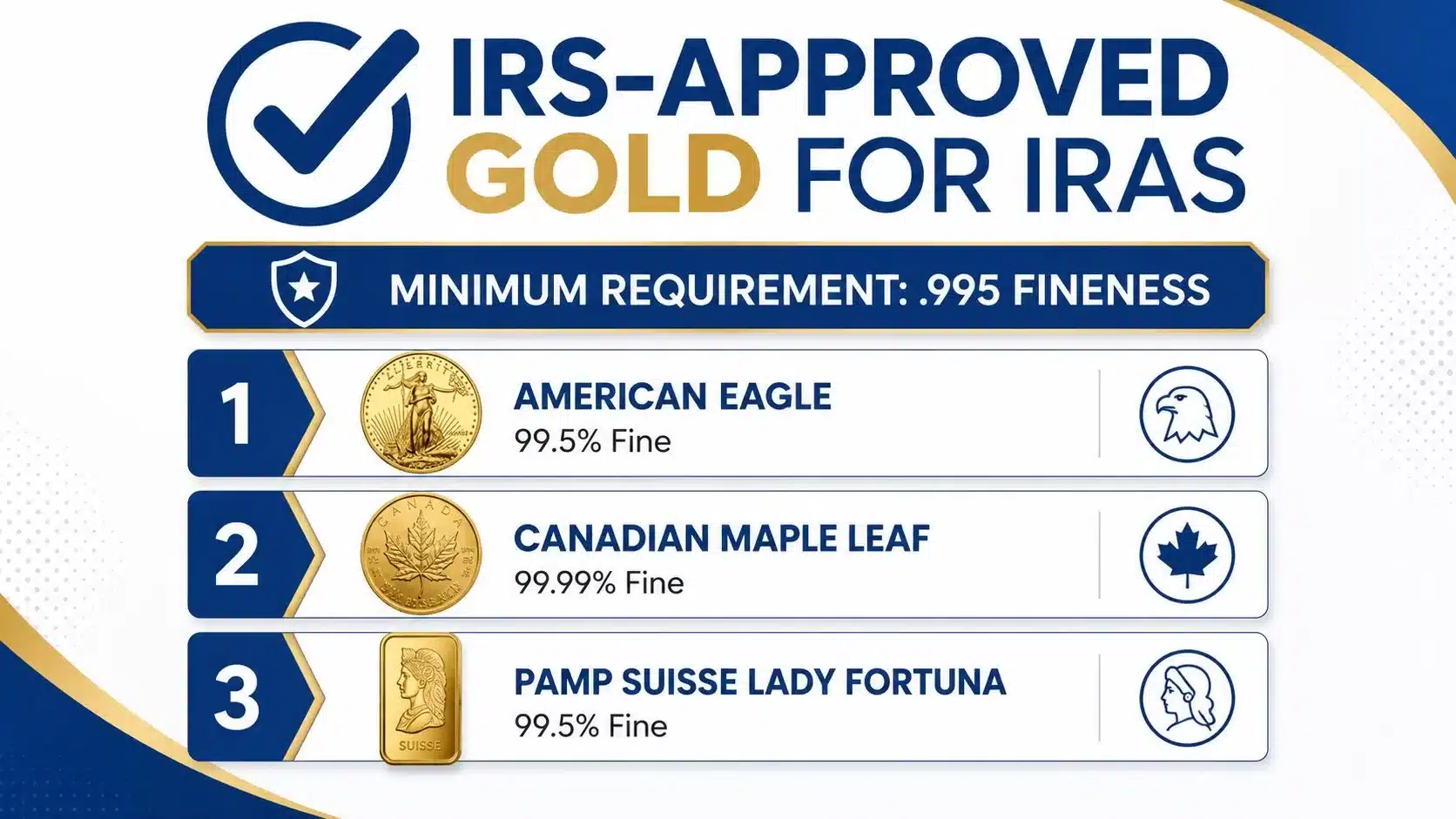
For most gold held in a self-directed IRA, the relevant minimum standard is .995 fineness, or 99.5% pure gold. High-purity coins such as the Canadian Gold Maple Leaf, American Gold Buffalo, and Austrian Gold Philharmonic meet that threshold based on their.9999 specifications.
The American Gold Eagle is a notable exception. Although it has .9167 fineness, it's expressly permitted for IRA inclusion under the applicable statutory framework. By contrast, the South African Krugerrand has .908 fineness and doesn't qualify under the ordinary Gold IRA rules described here.
Use a custodian-centered checklist
A custodian generally reviews whether a proposed coin or bar meets the account's requirements and whether it comes from an accepted sovereign mint or refiner. Investors shouldn't assume that a product is eligible merely because its advertising uses terms such as “pure gold” or “24-karat.”
Before purchasing, verify:
- Fineness: Confirm that the product meets the applicable threshold or falls within a recognized exception.
- Issuer: Check that the coin comes from an accepted sovereign minting program.
- Documentation: Match the description, weight, purity, and packaging with the custodian's records.
- Storage: Confirm that the metal will remain in an approved custodial depository rather than at home.
- Transaction process: Ask how the custodian will handle purchases, transfers, sales, and distributions.
Readers coordinating retirement decisions with broader financial planning may also find IRA planning for New Jersey residents useful as general educational background. For a focused product reference, see the guide to IRA-approved gold coins.
This is not financial advice. Consult a licensed financial advisor, CPA, or tax professional before making investment decisions.
Verifying Purity and Managing Storage Considerations
A reputable seller should provide product documentation that identifies the coin's fineness, fine-gold weight, issuing mint, and condition. Investors should compare the assay certificate or packaging with the physical coin, including serial information where applicable.
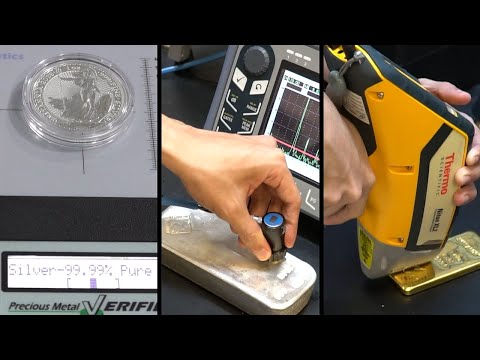
Non-destructive checks can include electronic gold testing and specific-gravity measurements, but those methods should be performed by qualified professionals. Mint hallmarks, edge lettering, and protective packaging also help establish whether the product matches its description.
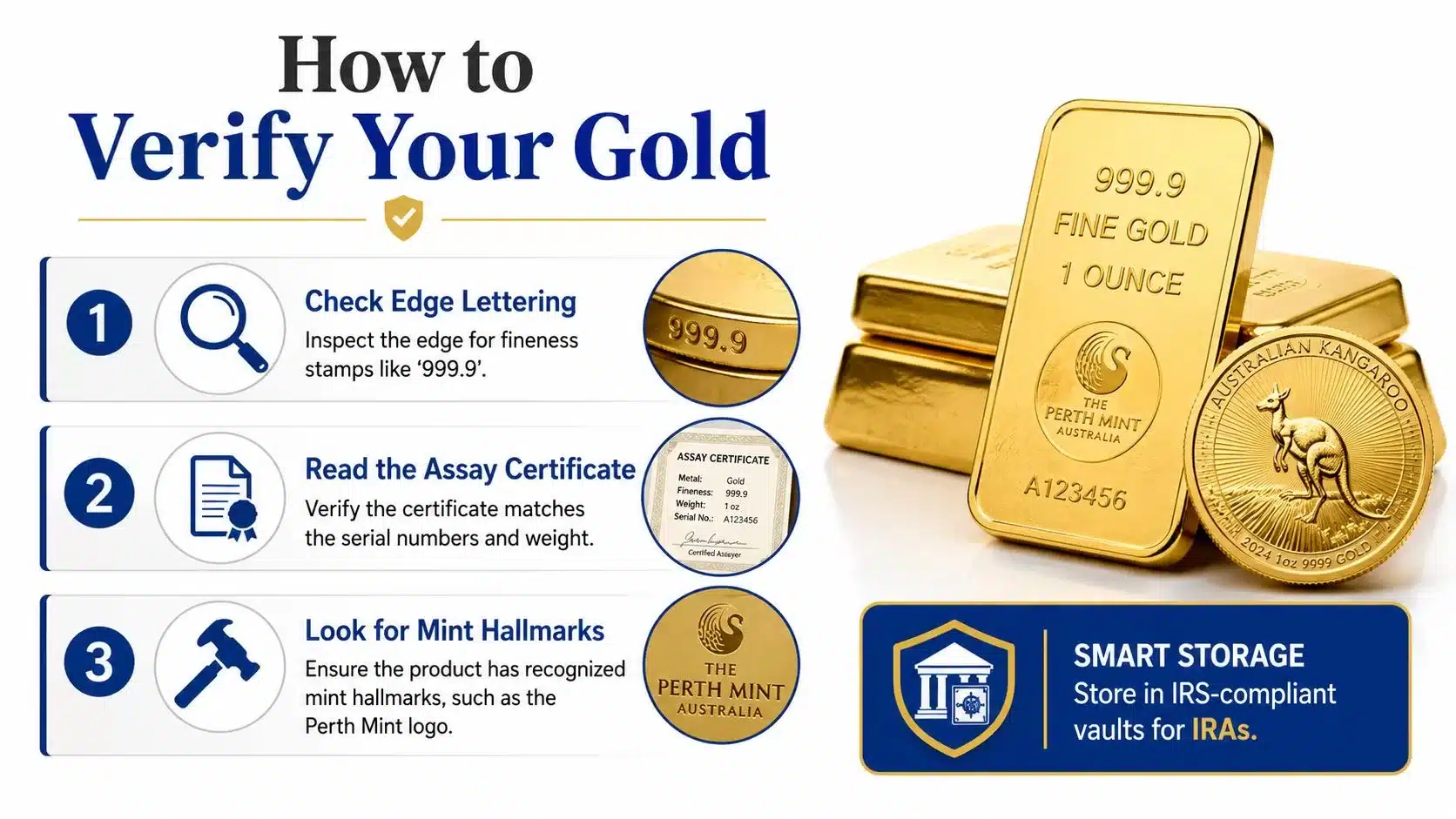
High-purity coins can be softer and more vulnerable to surface damage, so protective capsules or original packaging are sensible. Investors should photograph the coin and its documentation when acquired, then use an insured, climate-controlled depository approved by the IRA custodian for retirement-account holdings.
The following video provides additional visual context for basic verification practices:
Storage charges are generally determined by the account arrangement and the value or services involved, not by whether a coin is.999 or.9999. Damaged or poorly documented coins may face less favorable resale treatment, so careful handling protects practical value.
Making the Right Choice for Your Retirement Portfolio
The Canadian Gold Maple Leaf and American Gold Buffalo represent the high-purity end of widely traded sovereign bullion at .9999 fineness. Still, the better retirement choice balances purity with liquidity, premiums, recognized documentation, storage, and IRA compliance. The American Gold Eagle shows why lower fineness doesn't automatically disqualify a coin or make it impractical.
A qualified custodian can help confirm whether a product fits the account, while a licensed financial or tax professional can assess how precious metals fit the broader retirement plan. Investors should request a no-obligation consultation before committing funds, especially when comparing standard bullion with premium five-nines issues.
Gold IRA Association provides educational guides on IRA-approved metals, rollovers, custodians, storage, and provider comparisons for retirement investors evaluating physical gold. Visit Gold IRA Association to review the relevant resources and take a measured next step toward an IRS-compliant precious-metals strategy.


