



A complete review should verify identity and account forms, direct-transfer or rollover records, custodian and storage agreements, fee disclosures, and proof that every metal meets applicable IRA eligibility requirements. For precious-metals IRAs, commonly used fineness thresholds are 99.5% for gold, 99.9% for silver, and 99.95% for platinum and palladium.
Could a Gold IRA file prove where the money came from, who controls the account, what metal was purchased, where it is stored, and how fees and distributions were handled? A Gold IRA may involve a former employer plan or existing IRA, a new custodian, a dealer, and a depository. If one record is missing, later verification can become difficult, especially when a tax professional, beneficiary, or custodian needs to reconstruct the transaction.
This documentation review checklist follows the evidence trail in a practical order, from eligibility and funding through custody, metals, storage, reporting, fees, and beneficiaries. Figures and rules can change, so supplied thresholds and deadlines should be confirmed against current IRS guidance before action. This is not financial advice. Consult a licensed financial advisor, CPA, or tax professional before making investment decisions.
1. IRS Compliance and Eligibility Verification
Can the file show that the retirement account, its funding, and each proposed metal fit current IRA rules? Begin with the account application, identification records, plan documents, transfer instructions, and custodian materials confirming that the account is administered as a self-directed IRA. Record whether it is a Traditional IRA, Roth IRA, or another eligible structure. This creates the first link in the evidence trail, like a chain of receipts that should lead from account opening to the asset held.
Metal eligibility needs its own proof. Commonly used thresholds are 99.5% fineness for gold, 99.9% for silver, and 99.95% for platinum and palladium. Compare the product description and written purity evidence with current IRS Publication 590-A/B guidance. A precious-metals IRA purity guide and a guide to IRA-eligible precious metals may help organize questions, but they do not replace confirmation from the IRS, custodian, or qualified tax professional.
American Gold Eagle coins receive specific statutory treatment and may be eligible for IRA use even though they do not meet the usual 99.5% gold fineness standard. Confirm the current rule and the exact product with the custodian or a qualified tax professional before purchase.
Documents and verification actions
- Account application: Match the legal name, address, tax identification details, and account type across all custodian records.
- Metal eligibility evidence: Obtain written purity, product, and mint documentation for every coin or bar before ordering.
- Transfer records: Identify whether funds moved directly between custodians or through an indirect rollover, then match the amount and dates to account records.
- Current-rule review: Recheck contribution, rollover, and product requirements before relying on an older form.
Practical rule: A product list is only an index. The file should connect the exact asset to evidence supporting its eligibility.
A checklist cannot assess an individual's tax history, income, employer-plan terms, or prior rollover activity. If the account type, funding method, or metal description cannot be reconciled, pause the transaction and escalate to a CPA, tax professional, or qualified financial advisor. Readers assessing verification procedures may also find the best credential verification tool.
2. Custodian Account Setup and Recordkeeping
What should the custodian file prove? It should connect the account owner, the retirement account, the funding event, and each recorded transaction in one evidence trail. Keep the signed account agreement, account number, funding acknowledgment, transaction confirmations, statements, correspondence, and written fee schedule together.
Read the agreement for the legal relationship between the IRA and its owner. The custodian generally maintains the account records and holds legal title to assets for the retirement account. The owner therefore should not treat IRA metals as personal property or arrange private storage outside the approved custody structure. This distinction helps prevent a recordkeeping error from becoming a custody problem.
Funding records form the next link. Match a wire, check, or transfer confirmation with the custodian's ledger and statement. If the amount, date, account type, or owner details differ, ask for a written explanation before assuming the transaction was recorded correctly.
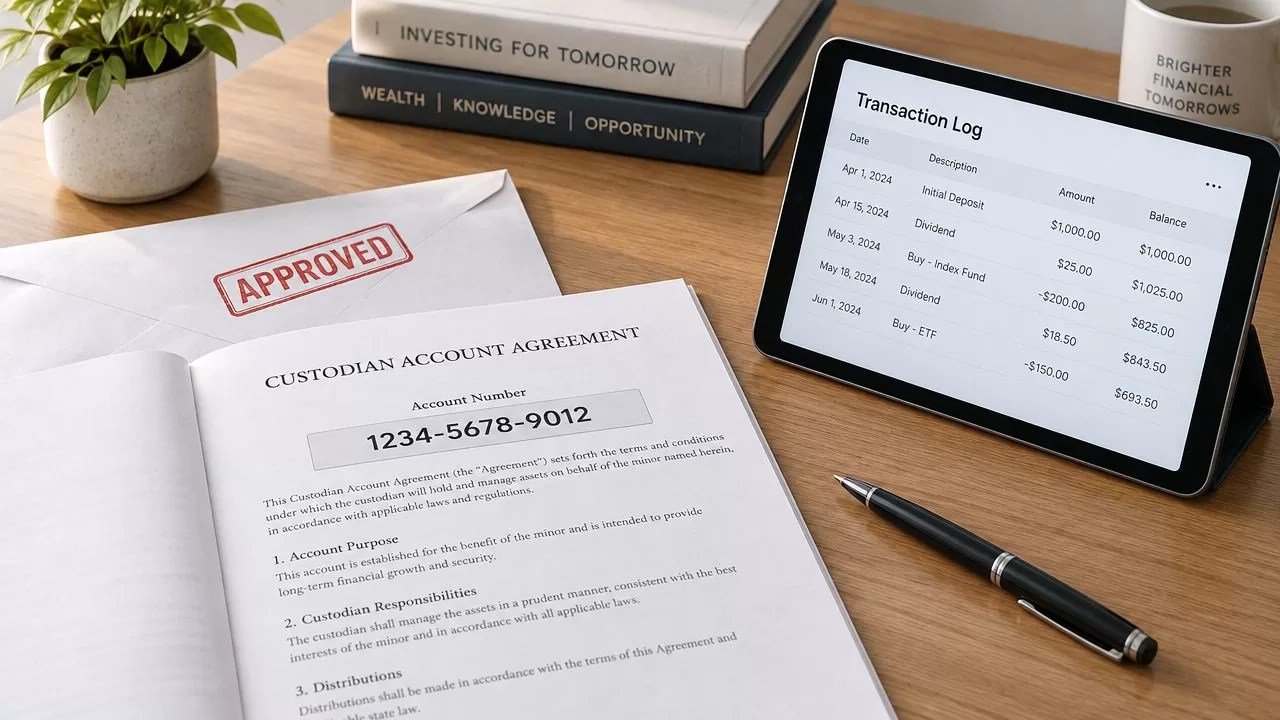
Use this short review before filing:
- Account agreement: Confirm the account owner, IRA type, authorization process, and responsibilities for approving transactions.
- Funding proof: Match the payment or transfer confirmation to the ledger, account statement, amount, and date.
- Fee schedule: Compare written setup, administration, storage, insurance, transaction, transfer, liquidation, and closure charges with each statement.
- Annual archive: Save statements, confirmations, notices, and correspondence in a secure digital and paper system.
A written fee schedule is stronger evidence than a verbal quote or sales illustration. It also gives the owner a basis for checking whether later charges match the agreed terms. A custodian statement can confirm that a transaction was recorded, but it may not independently prove every underlying dealer representation.
Before opening or transferring an account, review information about an IRA custodian for gold. If the agreement, ledger, or funding record conflicts with the owner's files, request a written transaction summary. Escalate unresolved issues to the custodian's compliance department and a qualified financial, tax, or legal professional. This checklist is general education, not personalized advice.
3. Metal Acquisition and Authentication Records
A purchase record should let you trace one piece of metal from the order to the custodian's inventory. Keep the invoice, product description, quantity, weight, purity, payment confirmation, delivery or receipt confirmation, and any serial number. Coins may not have individual serial numbers. Bars often do, so match those identifiers with the inventory record.
Start with the product description. An invoice that says only “gold” or “silver” leaves too much room for confusion. It should identify the exact coin or bar, its stated weight, manufacturer where applicable, and documented fineness. Check whether the weight uses troy ounces, grams, or kilograms, then confirm that the custodian records the same unit.
Use the records as an evidence trail:
- Invoice and payment: Match the amount and payment date with the account transaction.
- Product and eligibility: Compare the exact coin or bar with its purity and approved-product documentation.
- Identifier and inventory: For a serialized bar, compare the invoice number with the custodian's or depository's record.
- Receipt and order: Confirm that the quantity received matches the quantity ordered and shown on the account statement.
Authentication documents can support the trail. A dealer assay, grading record, or independent verification may help confirm authenticity and specifications. Each has limits. None replaces the custodian's receipt or the depository's inventory record.
A photograph can preserve a useful backup record, but it doesn't prove current custody, authenticity, or IRA eligibility by itself.
The account owner generally cannot inspect or personally store IRA metals. Ask the custodian to confirm how the metals were verified upon receipt and to provide a receipt listing quantities and identifiers. If a serial number is missing, a purity certificate conflicts with the invoice, or the product description changes after purchase, pause further transactions. Escalate the discrepancy to the custodian, the dealer's compliance team, and a qualified financial, tax, or legal professional. This checklist provides general education, not personalized advice.
4. Rollover Documentation and Tax Reporting
Can a reviewer trace every dollar from the original account into the new IRA? Build the file in sequence, like a shipping record. Start with the sending institution's final statement and distribution notice, then add the check or wire confirmation, receiving custodian's receipt, and tax forms. This sequence should identify whether the funds moved directly between custodians or reached the account owner first.
For an indirect rollover, the 60-day rule requires the full distribution to reach a qualifying IRA within 60 calendar days. If taxes were withheld from the original payment, personal funds may be needed to replace that amount and complete the rollover. Confirm current deadlines and withholding rules with a tax professional and the applicable IRS guidance.
A useful verification trail includes:
- Account origin: Record the sending plan or IRA, distribution date, amount, and method.
- Funds in transit: Preserve the check image, wire confirmation, or signed transfer request.
- Receiving record: Ask the new custodian for written confirmation of the arrival date and amount.
- Tax record: Give Form 1099-R and related documents to the CPA or tax professional preparing the return.
Direct transfers usually reduce handling risk because the account owner does not receive the funds. They still need review. The institutions may use different transaction labels, and an arriving payment can be coded incorrectly. Compare the originating statement, transfer instruction, receiving receipt, and year-end tax form rather than relying on one document.
For further education, consult this IRA rollover tax form guide. The checklist cannot determine the correct tax treatment where basis, nondeductible contributions, conversions, or employer-plan rules affect the return. Pause filing if the records conflict, and ask a CPA or tax professional to resolve the issue. Estate questions also belong with a qualified legal professional. The Law Office of Bryan Fagan on retirement offers general material for identifying questions about probate and retirement accounts. This checklist is general education, not personalized financial, tax, or legal advice.
5. Storage Location and Depository Insurance Verification
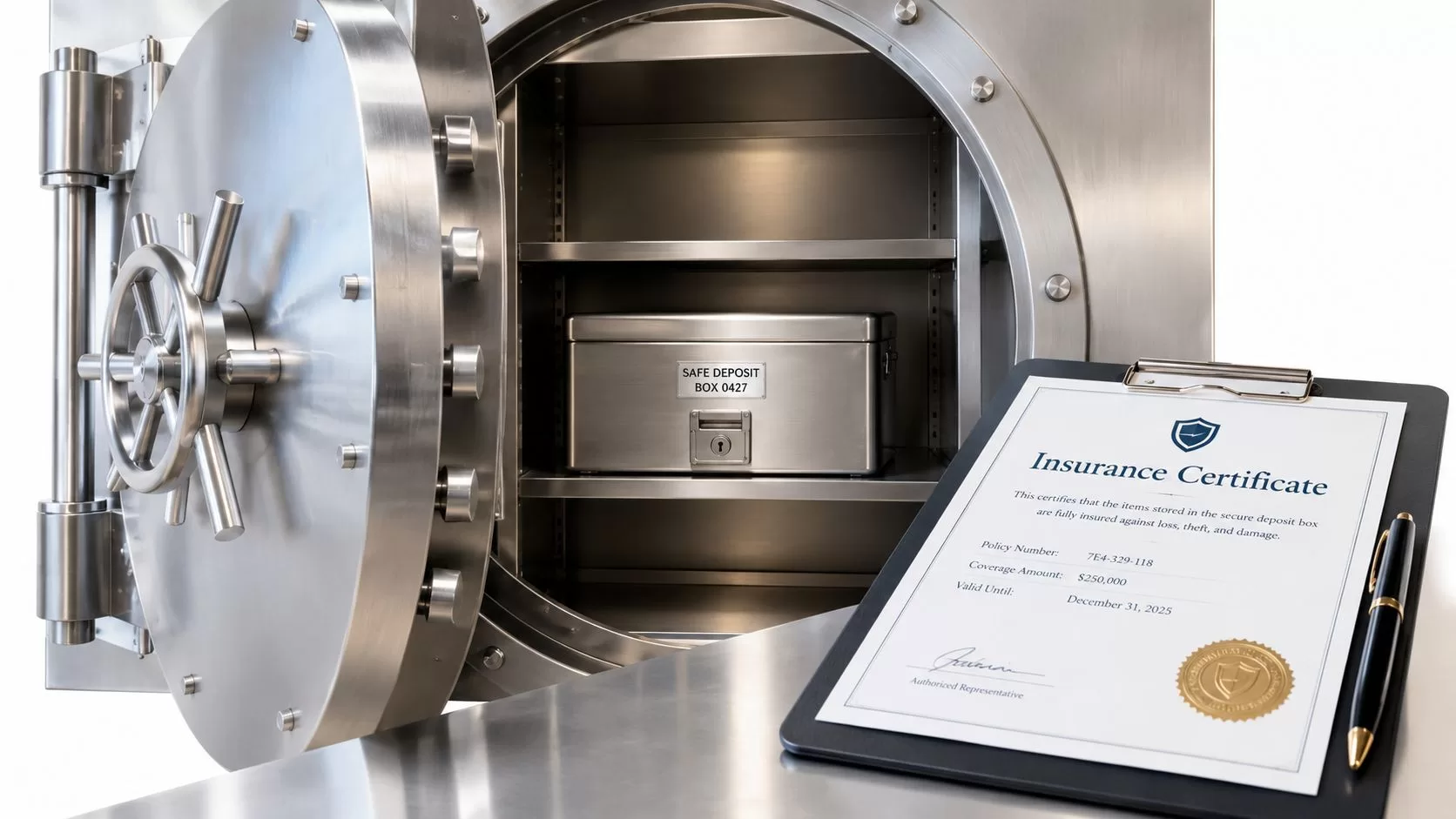
Can the storage file prove where the metals are held, who controls them, and what protection applies after a loss? Those answers form the custody evidence trail. Request the depository agreement, storage terms, insurance certificate, fee records, and current inventory confirmation. Together, these documents connect the account to a facility and show which arrangements the custodian has recorded.
Start by checking the facility's legal name and its relationship with the custodian. Then confirm whether the metals are stored on a segregated or commingled basis. Segregated storage identifies specific items for the account. Commingled storage records the account's proportional interest in a larger pool. The distinction affects how inventory is documented and what evidence you should expect.
Use this sequence:
- Custody record: Match the depository agreement to the custodian's account file, including the storage method and responsible parties.
- Inventory record: Compare product quantities and identifiers with the latest depository or custodian confirmation.
- Verification record: Request the facility's latest independent audit or available verification report.
- Insurance record: Check the carrier, covered risks, exclusions, limits, effective dates, deductibles, and claims process.
- Fee record: Reconcile storage and insurance charges with the written schedule and account activity.
- Annual status: Obtain current evidence that coverage remains active and required fees are paid.
A precious-metals storage guide can clarify how custody differs from physical storage. Its limitation is generality. An insurance certificate shows that a policy exists, but it does not promise payment for every loss. Valuation rules, exclusions, limits, deductibles, and claims procedures may reduce or delay recovery.
Home storage can leave a gap in the evidence trail because the owner may not be able to show that the IRA controls the assets. If the custodian will not identify the depository, explain the storage method, or provide current insurance evidence, request a written compliance response. Send unresolved issues to the custodian's compliance team and an independent financial, tax, or legal professional before committing additional funds or metals. This checklist provides general education, not personalized advice.
6. Annual Statements, Tax Reporting, and RMD Documentation
Could a yearly record review reveal a problem before it affects a distribution or tax return? Use the annual statement as the starting point for an evidence trail. It should show holdings, transactions, fees, contributions, distributions, and reported values. Compare those entries with purchase invoices, sale confirmations, account activity, and any current records supplied by the custodian.
Keep a separate RMD file and calendar reminder. Under rules commonly associated with SECURE 2.0, many account owners begin RMDs at age 73. A missed distribution can result in a 25% excise tax on the shortfall, subject to applicable rules and possible relief. Confirm the current requirement with the IRS and a tax professional, because the result may depend on account type, birth date, and later legislative changes.
Use this document set during the review:
- Annual statement: Check the opening and closing values, listed holdings, contributions, distributions, and fees.
- Transaction records: Match each purchase, sale, transfer, or distribution to its supporting confirmation.
- RMD worksheet: Request the calculation in writing and record whether the distribution will be paid in cash or made through an interest in the metals.
- Tax forms: Give Form 5498, Form 1099-R, and related records to the tax preparer when applicable.
- Reconciliation note: Record missing documents, unexplained differences, the date of the request, and the person responsible for follow-up.
Selling metals for cash and distributing an interest in the metals can create different valuation, delivery, liquidity, and tax questions. Ask the custodian how the selected method will be valued and reported before authorizing it.
A statement's market value may use a pricing method that differs from a dealer quote or public spot reference. If the RMD calculation, valuation, or distribution record appears wrong, request a written explanation instead of changing the figure independently. Escalate the issue to a CPA or tax professional. This checklist provides general education, not personalized financial, tax, or legal advice.
7. Fee Transparency and Cost Reconciliation
A fee review should follow the money rather than the marketing language. Separate charges from the custodian, depository, dealer, and any intermediary. Then compare every charge with the written agreement and the account statement.
Common categories include account setup, annual administration, storage, insurance, purchases, sales, transfers, liquidation, and closure. Dealer pricing also requires attention because the amount paid for a coin or bar can differ from a reference market price. The difference may reflect a spread, but the investor should know how it is calculated and whether the dealer explains buy-back pricing in writing.
Use one consistent comparison scenario
Ask each provider to explain the total cost for the same account structure, expected activity, storage method, and transaction pattern. A comparison becomes less useful when one quote excludes storage, another excludes insurance, and a third assumes a different product.
- Written schedule: Obtain a complete fee document before account opening.
- Actual charges: Reconcile statements against the schedule after every transaction.
- Dealer spread: Ask for purchase and buy-back pricing, not only the advertised sale price.
- Long-term effect: Request an illustration of expected costs over the intended holding period, without treating it as a performance forecast.
The limitation is that no fee comparison can predict investment returns or future metal prices. A lower administrative charge may come with different storage terms, service limitations, product availability, or transaction pricing. A higher fee may provide a service the account owner values, but the reason should be clear and documented.
If a charge isn't listed, ask the provider to identify the contract clause authorizing it. If the response is incomplete, escalate to the custodian's complaint or compliance process and consider independent professional advice before moving the account.

8. Beneficiary Designation and Estate Planning Documentation
The beneficiary form controls an important part of the account's transfer path after death. A will or trust document doesn't automatically replace the custodian's beneficiary designation. The file should contain the signed form, confirmation that the custodian accepted it, and the names and identifying details of primary and contingent beneficiaries.
Review the designation after marriage, divorce, the death of a beneficiary, adoption, or another major family change. A form that still lists a former spouse or omits a contingent beneficiary can create delays and disputes. Naming “the estate” may also produce a different administration process from naming an eligible individual, so the choice should be coordinated with an estate planning attorney.
Match the account with the estate plan
A surviving spouse, adult child, trust, or other beneficiary can create different administrative and tax questions. The beneficiary should know where the account records are stored, which custodian administers the IRA, and whom to contact after the owner's death. Those practical details matter just as much as the signed form.
A beneficiary designation is an account record, not a family understanding. The custodian needs the completed form on file.
The limitation is that beneficiary rules can depend on the beneficiary's relationship, account type, distribution timing, and governing law. A checklist can identify missing paperwork, but it can't design an estate plan or predict the best tax treatment. Escalate trust design, inherited IRA questions, and conflicts between a beneficiary form and a will to an estate planning attorney and tax professional. Readers seeking a related legal perspective can review this resource on Texas trust administration for retirees.
8-Point Documentation Review Checklist Comparison
| Checkpoint | Core features | User impact / Outcome | Target audience / When critical | Typical costs & risks |
|---|---|---|---|---|
| IRS Compliance and Eligibility Verification | Verify IRS-approved custodian; purity certificates (gold 99.5%, silver 99.9%); contribution & rollover rule checks; prohibited-transaction review | Prevents tax penalties, preserves tax-deferred status, strengthens audit defense | All Gold/Silver IRA holders, critical at purchase, annual review, and before rollovers | Time/coordination burden; requires annual updates; non-compliance may be discovered during tax filing or audit |
| Custodian Account Setup and Recordkeeping | Account agreement & number; written fee schedule; proof of funding; IRS determination letter; transaction log | Creates complete audit trail, clarifies costs, establishes fiduciary record, simplifies RMDs | New accounts and rollover recipients; essential at account opening | Custodian fees $150–$300+/yr; third-party storage adds complexity; careful documentation needed for custodian changes |
| Metal Acquisition and Authentication Records | Dealer invoice; assay/purity certificate; serial/lot numbers; delivery receipt; third‑party grading/authentication | Proves IRS eligibility at purchase, establishes cost basis, prevents fraud, aids insurance claims | Buyers of coins/bars and high-value acquisitions; critical at purchase and transfer-in | Grading/authentication $20–$100+ per item; possible settlement delays; conflicting reports may complicate records |
| Rollover Documentation and Tax Reporting | Original sending account statement; wire/check confirmations; Form 1099‑R; Form 8606 (if applicable); custodian receipt | Avoids withholding/penalties, maintains tax-deferred status, ensures correct IRS reporting | Anyone moving 401(k)/IRA funds to a Gold IRA, especially near-retirees | Missing 60-day deadline => taxable distribution; indirect rollovers cause 20% withholding; form coding errors trigger IRS notices |
| Storage Location and Depository Insurance Verification | Depository contract/location; independent audit certificates; insurance policy; segregation proof; custodian confirmation | Ensures secure, IRS‑approved storage; verifies physical existence; confirms insurance protection | Holders of physical metals; anyone verifying vault security and coverage | Storage & insurance $150–$300+/yr; commingled storage reduces individual tracking; insurance may have caps/exclusions |
| Annual Statements, Tax Reporting, and RMD Documentation | Annual custodian statements; year‑end valuations; RMD worksheets; distribution confirmations; Form 5498‑R | Ensures RMD compliance (avoid 25% penalty), preserves audit trail, aids beneficiary planning | Account holders age 73+ (RMDs) and beneficiaries; critical each year-end | RMDs complex with multiple accounts; metal distributions may incur liquidation costs; custodians may not auto-calc RMDs |
| Fee Transparency and Cost Reconciliation | Written, itemized fee schedule; annual fee reporting; dealer markup disclosure; storage/insurance breakdown; reconciliation tool | Reveals hidden costs, enables total-cost comparisons, supports provider selection or consolidation | Cost-sensitive investors; smaller accounts where fees materially reduce returns | Hidden spreads/markups; per-transaction charges can add up; fee schedules can change annually |
| Beneficiary Designation and Estate Planning Documentation | Signed beneficiary form on file; primary & contingent details; backup copies; attorney review; post‑death distribution options | Facilitates smooth transfer outside probate, clarifies beneficiary RMD obligations, reduces disputes | Retirees and those with heirs; essential during estate planning and after life events | IRA designation supersedes wills (risk of mismatch); SECURE 2.0 limits for heirs (10‑year rule); must be updated after major life changes |
Make Verification an Annual Habit
A documentation review checklist works best as a repeatable file review, not as a folder assembled once and forgotten. Start with identity records, account applications, and custodian agreements. Match the funding record from the former employer plan or existing IRA to the receiving custodian's acknowledgment. Then confirm that the metals purchased are described accurately, meet applicable eligibility requirements, and appear in the custody and storage records.
The next pass should reconcile the depository arrangement, insurance evidence, annual statements, fees, and distributions. Keep questions specific. Instead of asking whether the account is “in good standing,” ask the custodian to confirm the account type, holdings, storage method, charges, transaction history, and any pending compliance issue in writing.
Annual review also gives near-retirees a chance to update beneficiaries and check whether the account still fits the broader retirement plan. A Gold IRA may provide one diversification option, but it also carries custody, storage, liquidity, pricing, tax, and administrative considerations. The documentation should make those trade-offs visible rather than leaving the owner to rely on a sales conversation.
A sound escalation path has several people. The custodian can address account records, transaction processing, storage confirmations, and statements. The dealer can address invoices, product specifications, premiums, and buy-back terms. A CPA or tax professional can review rollover reporting, basis, distributions, and RMD treatment. A licensed financial advisor can help evaluate how a precious-metals allocation fits the rest of the retirement portfolio, while an estate planning attorney can review beneficiary and trust coordination.
The file should also preserve the reason for each decision. Record the question asked, the document received, the person who answered, and any unresolved limitation. That trail can help beneficiaries and advisers understand the account without reconstructing years of scattered emails and calls.
This is not financial advice. Consult a licensed financial advisor, CPA, or tax professional before making investment decisions. Gold IRA Association provides educational articles, rollover materials, provider comparisons, fee explanations, and practical checklists, but it isn't a metals dealer or custodian. Readers should confirm current IRS requirements and individual circumstances before acting.
Gold IRA Association offers educational resources that help readers organize rollover records, review eligible metals, understand custody and storage, and compare provider documentation. Visit Gold IRA Association to compare top Gold IRA companies and continue building a clear, evidence-based file for retirement-account decisions.