



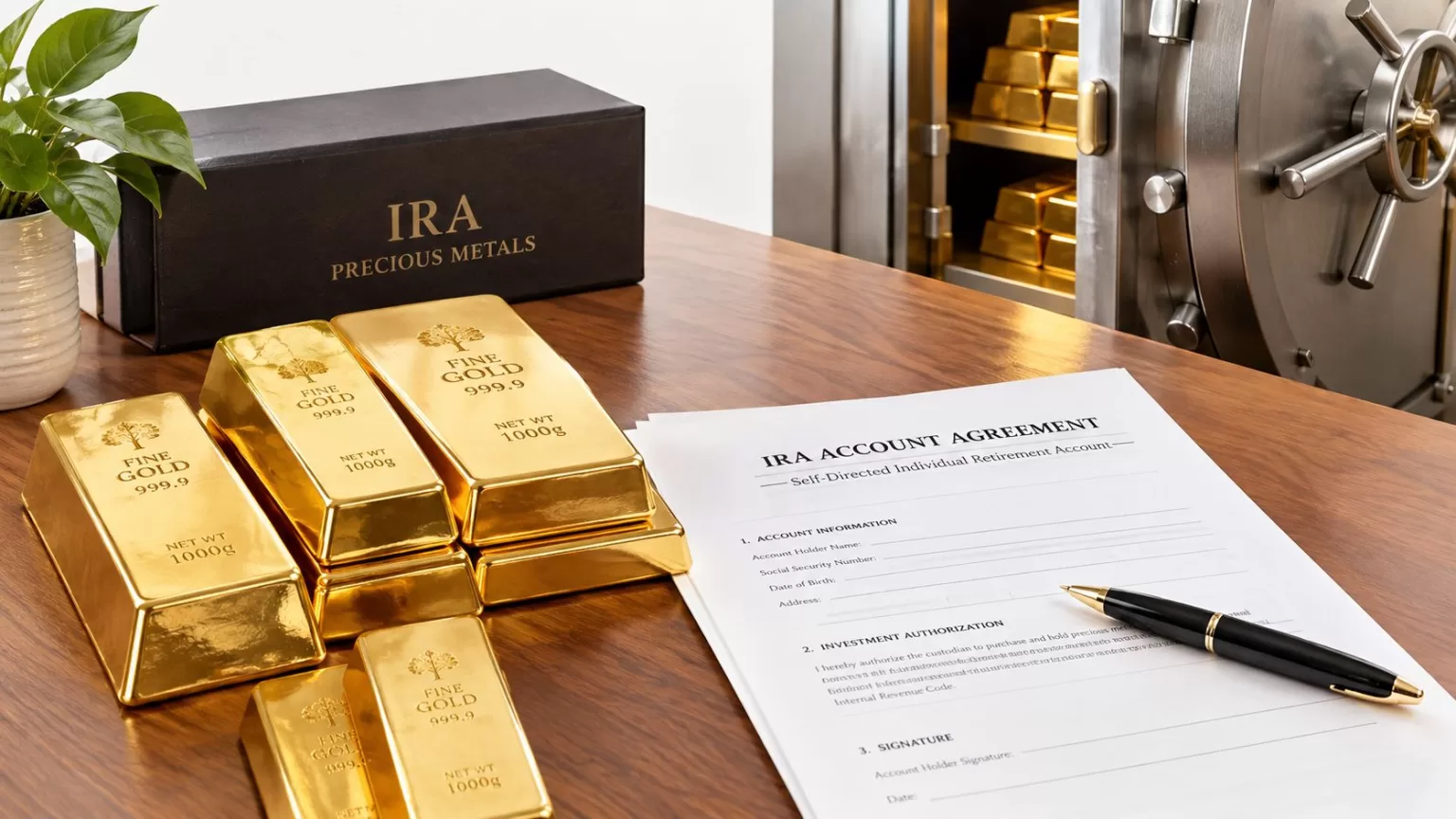
A reader nearing retirement may already own a traditional IRA or an old 401(k), yet still feel unsure about what happens if physical gold enters the picture. Buying bullion personally and placing precious metals inside a retirement account are not the same process. This guide explains how to open a Gold IRA, fund it correctly, choose eligible metals, and identify the fees and compliance mistakes that can create unexpected costs.
Understanding the Gold IRA Process
A common misunderstanding starts with a simple purchase. An investor buys a gold coin, keeps it in a home safe, and assumes the coin can later be placed inside an IRA. That approach confuses personal ownership with a self-directed retirement account.
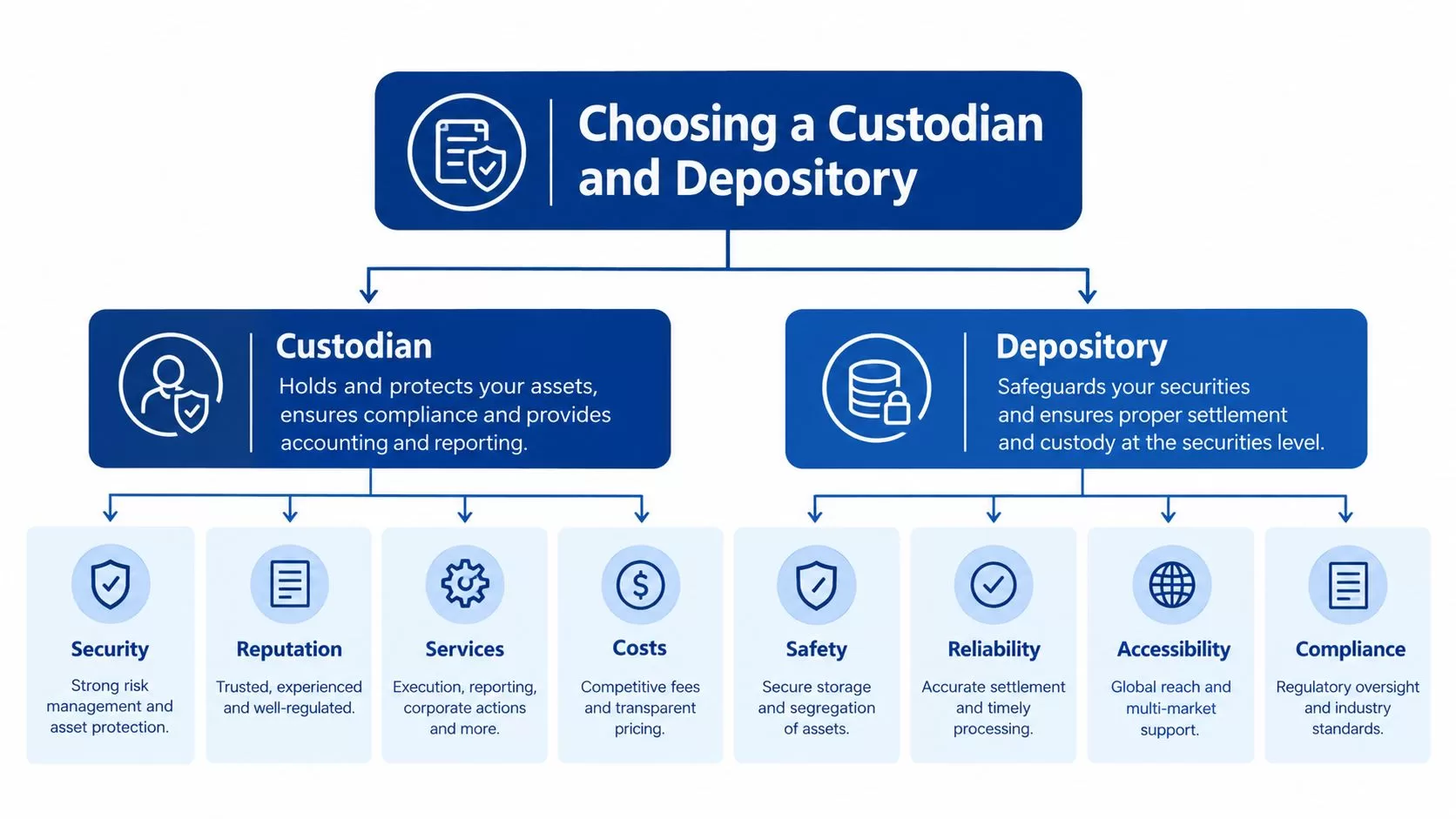
A Gold IRA is still an IRA, but it uses a custodian and an approved depository to hold eligible precious metals. The account owner makes the investment decisions, the custodian administers the retirement account and its records, and the depository stores the metal. The separation matters because the account owner generally can't take personal possession of IRA-owned metals while preserving the account's intended tax treatment. Guidance on holding gold in an IRA describes the required custody structure and the role of approved storage.
The people and institutions involved
The account owner chooses the strategy and provides the money. The custodian opens the self-directed IRA, processes contributions or transfers, and coordinates the purchase. The depository receives and safeguards the metals under the account's ownership.
A regular bullion purchase gives the buyer direct possession. A Gold IRA purchase follows a controlled chain from account funding to custodian approval, dealer transaction, and depository storage. That difference is why home storage isn't a shortcut. It can turn an intended retirement investment into a distribution that requires separate tax analysis.
Practical rule: If the account owner can personally take the IRA metal home, the arrangement deserves immediate scrutiny.
The account itself may be traditional or Roth, depending on the structure and the investor's circumstances. The available metal, custody arrangement, funding method, and withdrawal treatment all remain subject to applicable rules. A Gold IRA can offer another way to diversify retirement assets, but it doesn't remove ordinary IRA responsibilities.

Choosing a Custodian and Depository
The first practical decision is not which coin to buy. It's which self-directed IRA custodian will administer the account and which IRS-approved depository will store the metal. IRA-owned precious metals must remain in the physical possession of a qualified trustee or custodian, rather than with the account owner, as described in guidance on IRA precious-metals storage requirements.
Start with the custodian
A careful comparison should cover:
- Self-directed experience: Confirm that the custodian regularly handles precious-metals IRAs, not only conventional investments.
- Written fee schedule: Request setup, annual administration, storage, insurance, wire, and transaction charges in writing.
- Transaction process: Ask who approves purchases, how funds move, and how the custodian confirms that a product qualifies.
- Service responsibility: Identify which party handles paperwork, account statements, beneficiary updates, and distribution requests.
- Provider relationships: Determine whether the custodian limits the investor to particular dealers or depositories.
A provider may present a simple opening process, but convenience shouldn't replace documentation. Investors should know whether storage is segregated or commingled, how insurance is arranged, and whether fees are flat or asset-based. The answers can affect the account's long-term economics.
Then verify the depository
The depository should be identified before funding begins. The custodian should confirm that the facility is approved for IRA storage and explain how the metal is recorded. Investors should also ask how the depository handles audits, insurance, transfers, and eventual liquidation instructions.
The Gold IRA custodian selection guide can help readers organize questions before speaking with providers. A sound process compares written disclosures rather than relying on a verbal promise that all storage and administration details are included.

Funding Your Account via Rollover or Transfer
Funding creates the greatest operational risk because the wrong movement of money can create a taxable distribution. Investors generally compare a direct trustee-to-trustee transfer with a 60-day rollover, but these routes don't place the same responsibilities on the account owner.
A direct transfer moves funds from the existing retirement custodian to the new custodian without the account owner receiving the distribution. This approach usually reduces the risk of missed deadlines and avoids the complications that can arise when retirement money is paid directly to the investor.
A rollover works differently. The existing plan distributes money to the account owner, who then redeposits it into an eligible retirement account. The IRS rollover guidance states that the redeposit generally must occur within 60 days of receiving the distribution for the transaction to remain generally non-taxable when completed correctly.
Comparing the two funding paths
| Funding method | Who receives the money first | Main operational concern |
|---|---|---|
| Direct transfer | The receiving custodian | Confirm that both institutions process the transfer correctly |
| Rollover | The account owner | Redeploy the distribution within the applicable 60-day window |
A rollover can be useful when the existing plan requires that process, but it demands close attention to dates and paperwork. Missing the window can make the distribution taxable and may lead to an additional 10% tax for an investor under age 59.5, according to the rollover guidance in this rollover process explanation.
Contributions are a separate path
Annual contributions and rollovers aren't interchangeable. For 2026, the combined contribution limit across traditional and Roth IRAs is $7,500, or $8,600 for an investor age 50 or older, according to IRS Publication 590-A. A rollover from a traditional IRA or employer plan generally doesn't count against that annual contribution limit.
That same IRS guidance explains that waivers of the 60-day rule may be available in certain situations, including automatic waiver, self-certification, or a private letter ruling. Those exceptions shouldn't be treated as a planning strategy. A direct transfer is often the cleaner choice when the existing plan permits it.
Selecting IRS-Approved Precious Metals
A metal's appearance, popularity, or market price doesn't determine whether it belongs in an IRA. Eligibility depends on purity, form, sourcing, and acceptance by the custodian. The account should be funded and the purchase approved before an investor assumes that a particular bar or coin qualifies.
Purity standards matter
The core fineness thresholds are:
| Metal | Minimum Purity |
|---|---|
| Gold | 99.5% |
| Silver | 99.9% |
| Platinum | 99.95% |
| Palladium | 99.95% |
These standards are summarized in the guide to IRA-approved gold. Gold generally must meet 99.5% fineness, while silver must meet 99.9%, and platinum and palladium must meet 99.95%. The American Gold Eagle is a notable statutory exception to the ordinary gold-purity threshold.
Purity alone isn't enough. Custodians and their approved dealers may review the producer, mint or refiner, assay documentation, serial numbers, and sourcing records. A product that appears to meet a purity standard can still require approval before purchase.
Avoid buying first and asking later
The safer order is to provide the exact product description to the custodian before placing an order. The custodian can confirm whether the product is permitted and whether the selected depository can accept it.
Potential trouble often comes from assuming that every collectible-looking coin, graded item, or attractive bar is retirement eligible. A rejected purchase can delay the transaction, create return costs, or raise tax questions if the investor has already treated the item as an IRA asset.
Before funding, verify the custodian, the depository, and the exact metal. A missing approval at any one of those points can disrupt the entire transaction.
The account owner should retain invoices, approval records, assay information, and account statements. Documentation gives the custodian a clear audit trail and helps the investor understand what the retirement account owns.
Understanding Total Ownership Costs
The purchase price is only one part of a Gold IRA's cost. A realistic comparison includes setup charges, annual custodian fees, storage, insurance, wire fees, dealer markup, and the bid-ask spread. A provider that emphasizes a low opening charge may still be expensive if recurring or transaction-based costs receive less attention.
Neutral fee coverage places annual custodial costs commonly in the $75 to $300 range, with storage commonly around $100 to $300, although storage may also be charged as a flat fee or as a percentage of assets, as explained in this discussion of Gold IRA custodian costs. These figures are general ranges, not a quote for any particular account.
Build an all-in cost picture
Ask each provider to separate:
- Initial setup: Any account-opening or establishment charge.
- Administration: The recurring fee for maintaining the self-directed IRA.
- Storage and insurance: The cost of holding and protecting the metal.
- Transactions: Dealer markup, wire charges, shipping-related charges, and the spread between purchase and sale prices.
- Future activity: Distribution, liquidation, transfer, or account-closure charges.
Fixed fees can take up a larger share of a smaller account than of a larger one. That doesn't automatically make a Gold IRA unsuitable, but it does make break-even thinking important. An investor should compare the expected role of physical metals in the broader retirement plan with the total recurring drag, rather than focusing only on the metal's quoted price.
A written fee schedule should explain whether costs are charged per account, per transaction, per storage arrangement, or as a percentage of assets. Investors should also ask whether fees change when the account balance or metal holdings change.
Timeline and Next Steps
Opening a Gold IRA is a sequence of approvals, not a single purchase. The account application comes first. The custodian then confirms the account structure, coordinates the funding method, and establishes the storage arrangement before the investor selects eligible metal.
A practical sequence
- Review the retirement objective. Determine whether physical metals fit the investor's diversification plan and risk tolerance.
- Compare custodians and depositories. Request written custody, storage, insurance, and fee information.
- Complete the application. Provide identification, beneficiary details, account instructions, and any transfer paperwork requested by the custodian.
- Choose the funding route. A direct transfer usually keeps the account owner out of the money flow. A rollover requires careful tracking of the applicable deadline.
- Obtain product approval. Submit the exact coin or bar details before purchase.
- Confirm storage. Ensure the depository has accepted the metal and that the custodian's records reflect the transaction.
The final review
Before signing, the investor should be able to answer several basic questions:
- Who administers the IRA?
- Where will the metal be stored?
- Which products are approved?
- What does the account cost at setup and annually?
- How will future sales or distributions be handled?
- Which professional can review the tax implications of the chosen funding route?
The process may feel slower than buying a coin directly, but each checkpoint protects the retirement-account structure. Delays are easier to manage when the custodian explains which document or approval remains outstanding.
This is not financial advice. Consult a licensed financial advisor, CPA, or tax professional before making investment decisions. Rules can vary with the account type, employment plan, age, tax status, and transaction details, so current requirements should be confirmed before funds or metals move.
Gold IRA Association provides educational guides, rollover resources, fee explanations, and company comparisons for investors evaluating precious-metals retirement accounts. Readers can review its practical checklists and account-opening information by visiting Gold IRA Association before speaking with a custodian or tax professional.


