


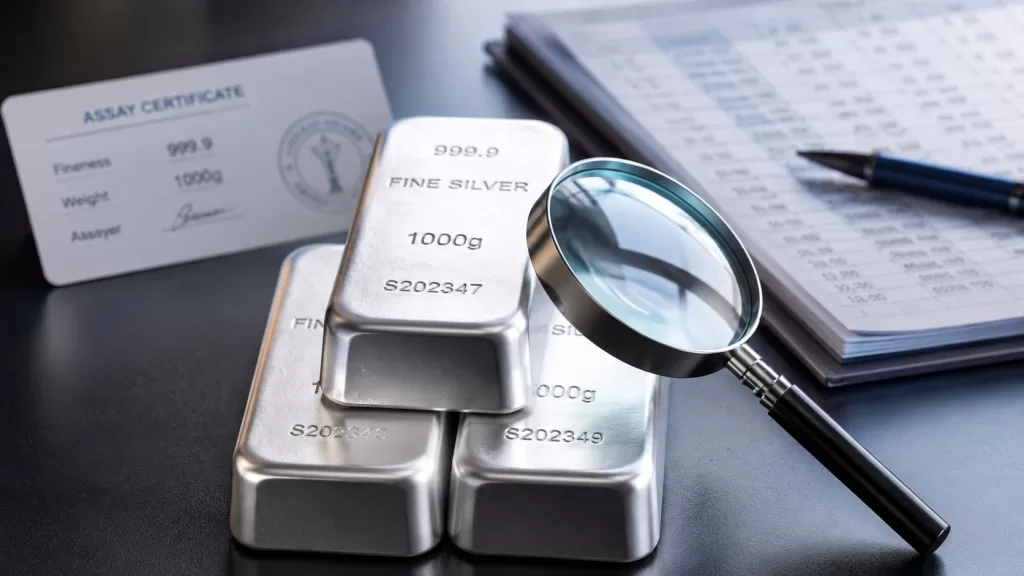
Someone nearing retirement may want physical silver inside a self-directed IRA, yet the label on a bar or a dealer's product page doesn't prove that the IRS will accept it. IRA-approved silver bars must pass more than one test: the metal must meet the required purity, the producer must satisfy applicable approval standards, and the bar must move through the custodian and depository correctly. This guide provides a practical verification process to use before funding a purchase, without treating silver as a guaranteed outcome or ignoring its volatility.
What This Guide Covers and Why It Matters
The central question is simple: which silver bars can legally remain inside a tax-advantaged retirement account? The answer depends on details that are easy to overlook, especially when a product appears to be investment-grade but lacks a recognized refiner or custodian approval.
The most important threshold is .999 fineness, meaning at least 99.9% pure silver. That requirement comes from the precious-metals IRA framework associated with Internal Revenue Code Section 408(m)(3)(B), as explained in this overview of silver IRA eligibility. Purity is only the first gate. The bar's manufacturer, the custodian's product list, the storage arrangement, and the purchase records also matter.
The practical questions investors need answered
This guide addresses:
- Purity: Why.999 is the dividing line and why sterling silver or older coin silver fails on purity alone.
- Refiner recognition: Why a pure bar can still require confirmation from the custodian.
- Weights and formats: How commonly available bar sizes affect handling, resale, and storage.
- Verification: What to check before money is wired.
- Storage: Why IRA-owned silver must remain with an approved trustee or depository rather than at home.
- Documentation: Which records should match the custodian's ledger and the depository's receipt.
- Purchase workflow: How funding, ordering, shipping, and allocation fit together.
Practical rule: A dealer's description is a starting point, not the final eligibility decision.
Silver prices can move sharply, and adding silver to a retirement account creates costs, administrative requirements, and market exposure. IRS rules and custodian policies can also change. The purpose of careful verification is informed compliance, not a promise that silver will preserve or increase retirement wealth.
The IRS Purity Standard for IRA Silver Bars
For silver held in an eligible precious-metals IRA, the core purity standard is .999 fineness, or 99.9% pure silver. In practical terms, a bar must contain at least 999 parts silver for every 1,000 parts of total weight, according to the explanation of the standard in this precious-metals IRA eligibility guide.
That rule separates investment-grade bullion from many silver objects found in the consumer market. Sterling flatware, for example, is commonly marked .925, which means it contains less fine silver than the IRA threshold. Pre-1965 U.S. 90% silver coins also fall below.999 and therefore don't qualify based on purity alone. Silver-plated décor, jewelry, commemorative objects, and novelty pieces create an even greater mismatch because their value may depend on design, collectibility, or a thin layer of silver rather than bullion content.
The purity test in plain language
| Silver Form | Fineness | Meets IRA.999? | Notes |
|---|---|---|---|
| IRA-grade silver bar | .999 | Yes, if other requirements are met | Contains at least 99.9% fine silver |
| Sterling silver | .925 | No | Common in flatware and jewelry |
| Pre-1965 U.S. coin silver | 90% | No, on purity alone | Historical silver content doesn't meet the bar standard |
| Silver-plated item | Not comparable to bullion fineness | No | The silver layer isn't the same as investment-grade bullion |
Purity doesn't grant automatic eligibility. The product must also satisfy the applicable source and custody requirements. The bar needs a credible producer, and the IRA must hold it through an approved custodian or depository rather than through the investor's personal possession.
Why the rule matters
Section 408(m) treats precious metals as collectibles unless they fall within specific statutory exceptions. The purity and product requirements help distinguish standardized bullion from collectible or decorative assets. That distinction matters because a retirement account isn't designed to hold whatever item happens to contain some silver.
An investor should therefore read the hallmark, assay information, and product description together. A .999 stamp is necessary, but it isn't the complete answer.
Approved Refiners and Mint Recognition
A silver bar can meet the purity threshold and still require another review. Custodians commonly look for bars made by recognized refiners, accredited assayers, or sovereign mints. The practical standard described across industry guidance includes producers connected with major bullion-market systems such as LBMA, COMEX, or NYMEX, as well as recognized sovereign mints. This custody and product rules overview explains that approval involves both the metal and the manufacturer.
LBMA recognition is best understood as a marketplace shortcut, not as a substitute for the IRS or the custodian. A refiner's appearance on a major market list can support credibility, but the custodian's own approved-product process still controls the account's administration. A custodian may accept a particular bar, reject it, or require advance review based on its procedures.
Two approval paths
Investors generally encounter two practical paths:
- Major accredited lists: The refiner appears on a recognized market or accreditation list used by bullion professionals.
- Direct custodian acceptance: The custodian confirms that the exact producer and product can enter its approved depository network.
Sovereign mints can also provide a clear manufacturing identity. However, a recognizable name doesn't eliminate the need to confirm the specific bar, size, and depository requirements. Approved lists can vary and can change.
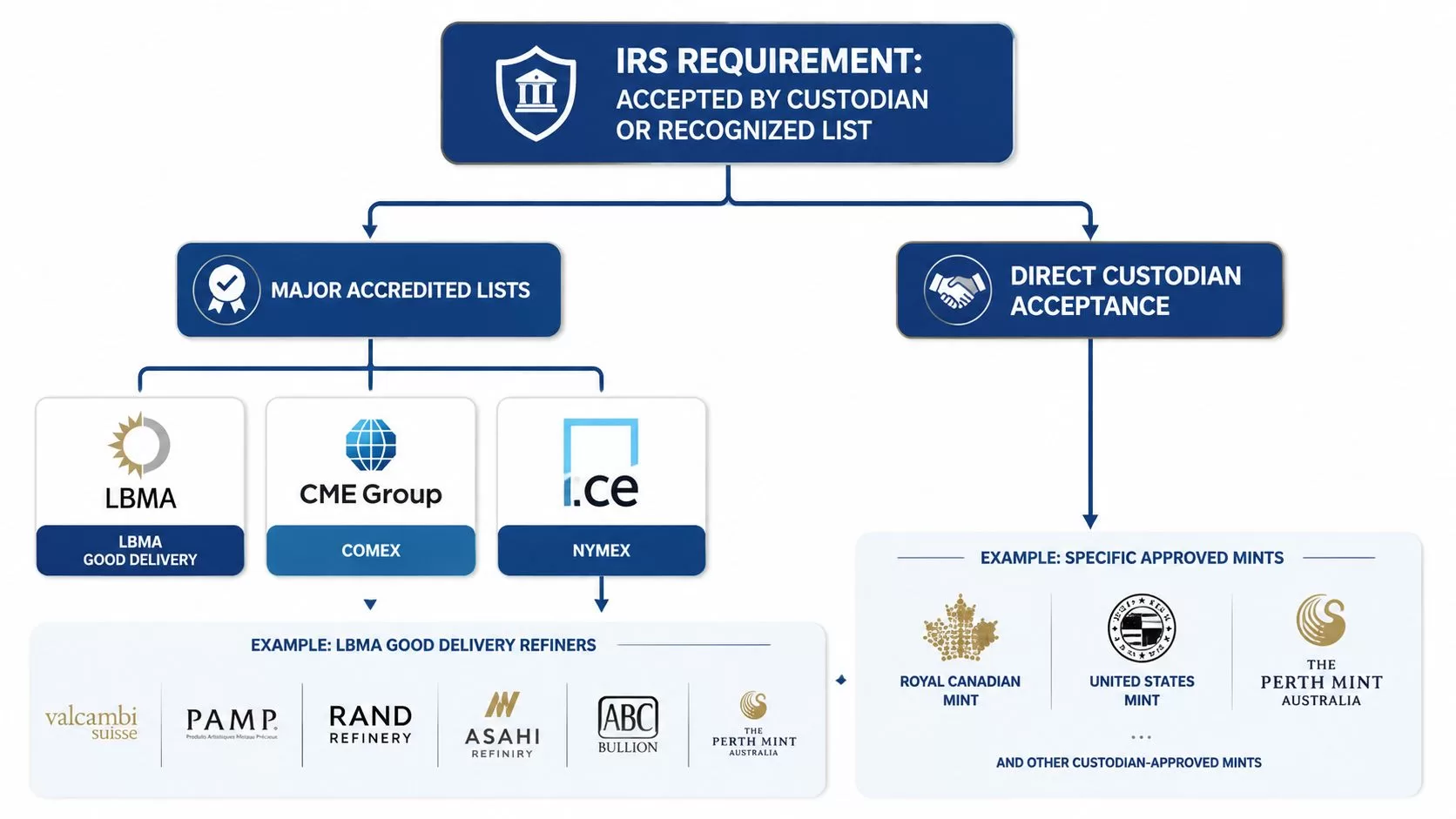
The safest sequence is to identify the exact bar first, then ask the custodian to confirm it in writing before purchase. Investors shouldn't assume that every product from a familiar producer qualifies, or that a bar displayed beside an eligible coin automatically shares the coin's status.
Common Weights and Sizes of Eligible Silver Bars
Size affects how easily an investor can count, store, and eventually sell silver, but weight alone doesn't determine IRA eligibility. The.999 standard and recognized producer requirement remain the foundation. Standardized sizes can still make depository allocation and recordkeeping more manageable.
Commonly encountered formats include:
| Weight | Common Format | Typical Investor Use |
|---|---|---|
| 1 oz | Struck bar | Smaller units and easier partial resale |
| 5 oz | Cast or struck bar | A middle ground between flexibility and bulk |
| 10 oz | Cast or struck bar | Practical balance of handling and efficiency |
| Kilo | Cast bar | Larger holding with fewer individual units |
| 100 oz | Cast bar | Bulk allocation for investors prioritizing storage efficiency |
Smaller fractional products can be harder to source through recognized channels, and their flexibility may come with less attractive pricing. Larger bars reduce the number of individual pieces, but selling or distributing one large unit can be less flexible than working with several smaller bars.
Serial numbers and assays
Struck bars often carry clear markings that simplify identification. Larger cast bars may use lot-level documentation or an assay certificate rather than the same kind of individual packaging found with smaller products. The exact practice depends on the producer and depository, so investors should ask what information will appear on the custodian's records.
For additional context on dimensions and handling, see this guide to the size of a 10 oz silver bar. The useful question isn't just “Which bar is biggest?” It's whether the chosen format fits the account's intended purchases, storage arrangement, and future distribution needs.
How to Verify a Silver Bar Before You Buy
A disciplined buyer can reduce avoidable mistakes by verifying the exact bar before sending funds. The process should involve the custodian, not just the dealer, because the custodian administers the retirement account and coordinates the approved storage arrangement.
Use this five-part workflow
Confirm the producer. Check whether the refiner or mint appears on a recognized accreditation or market list, such as an LBMA, COMEX, or NYMEX-related list. This is evidence of market recognition, not a complete eligibility decision.
Ask the custodian directly. Provide the exact producer, product name, weight, and form. Custodian lists vary, so confirmation for one bar doesn't automatically approve every product from that producer.
Read the fineness marking. Look for .999 or higher on the bar and compare it with the assay certificate or other product documentation.
Verify the shipping destination. The purchase should move through the IRA's custodian and approved depository. It shouldn't be shipped to the investor's home, personal safe, or private safe-deposit box.
Create the record before purchase. Capture the bar's weight, serial number where applicable, producer hallmark, fineness, assay details, order information, and intended depository allocation.
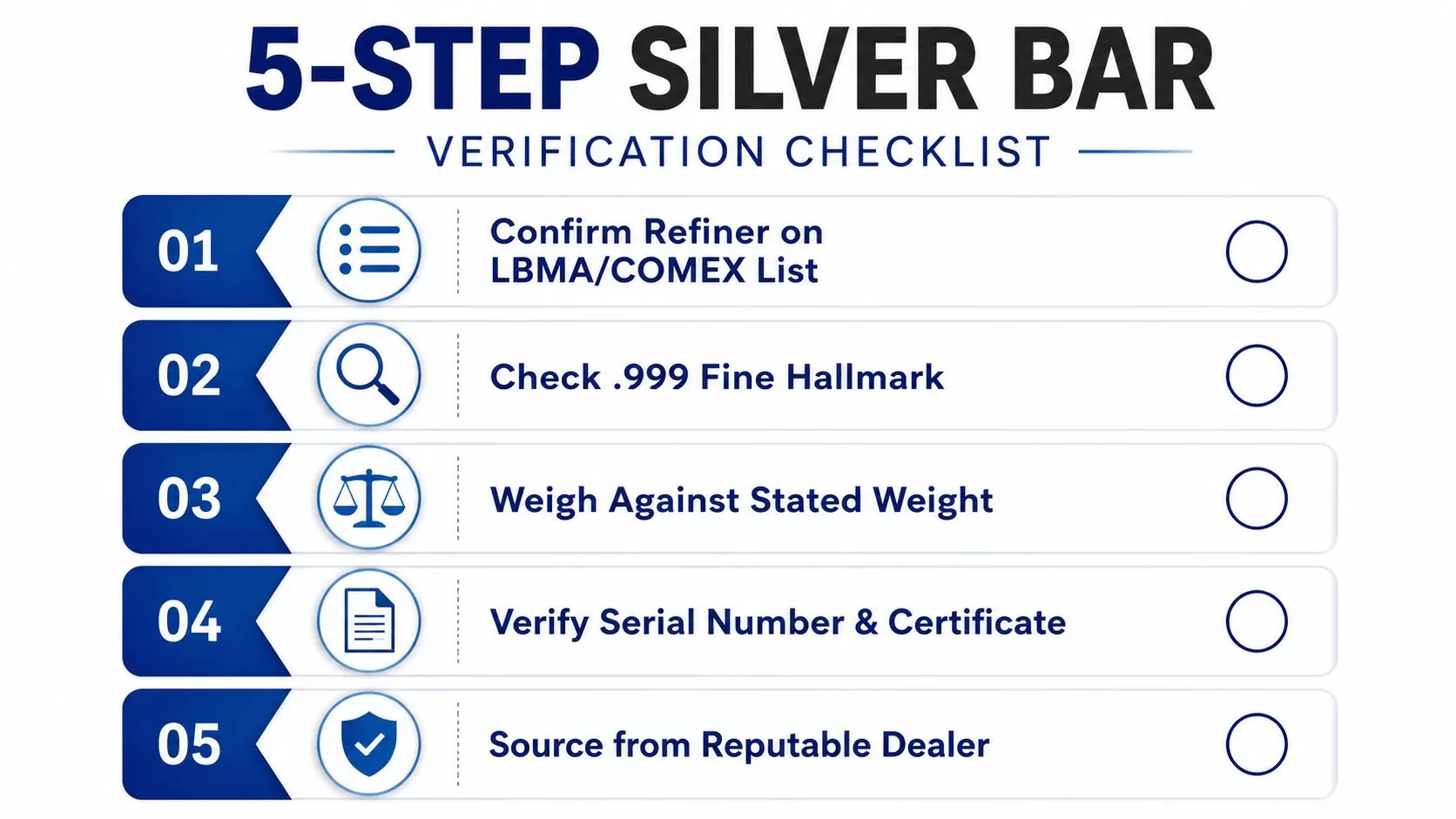
The most common failure is relying on a retail page that says “IRA eligible” without checking the custodian's current list. Another is treating authenticity and eligibility as the same thing. A genuine bar can still be unsuitable for the account if its fineness, producer, documentation, or delivery path doesn't satisfy the custodian's requirements.
Silver That Does Not Qualify for an IRA
Some silver products fail because they contain too little fine silver. Others fail because the producer, product type, or custody arrangement doesn't meet the account's requirements.
The clearest purity failures are sterling silver at.925 and pre-1965 U.S. coin silver at 90%. Neither reaches the.999 threshold. Silver-plated objects and jewelry also don't become IRA bullion because they contain silver.
Common source and product failures
- Privately minted bars: A bar from an unverified producer may not satisfy the custodian's approved-refiner requirements, even if its label claims high purity.
- Unrecognized refiners: A producer that doesn't appear on a recognized list or receive direct custodian acceptance needs further review before purchase.
- Collectible or numismatic items: Products valued mainly for rarity, design, or scarcity may not fit the statutory exception for qualifying bullion.
- Personal possession: A compliant bar held at home isn't being held through the required IRA custody structure.
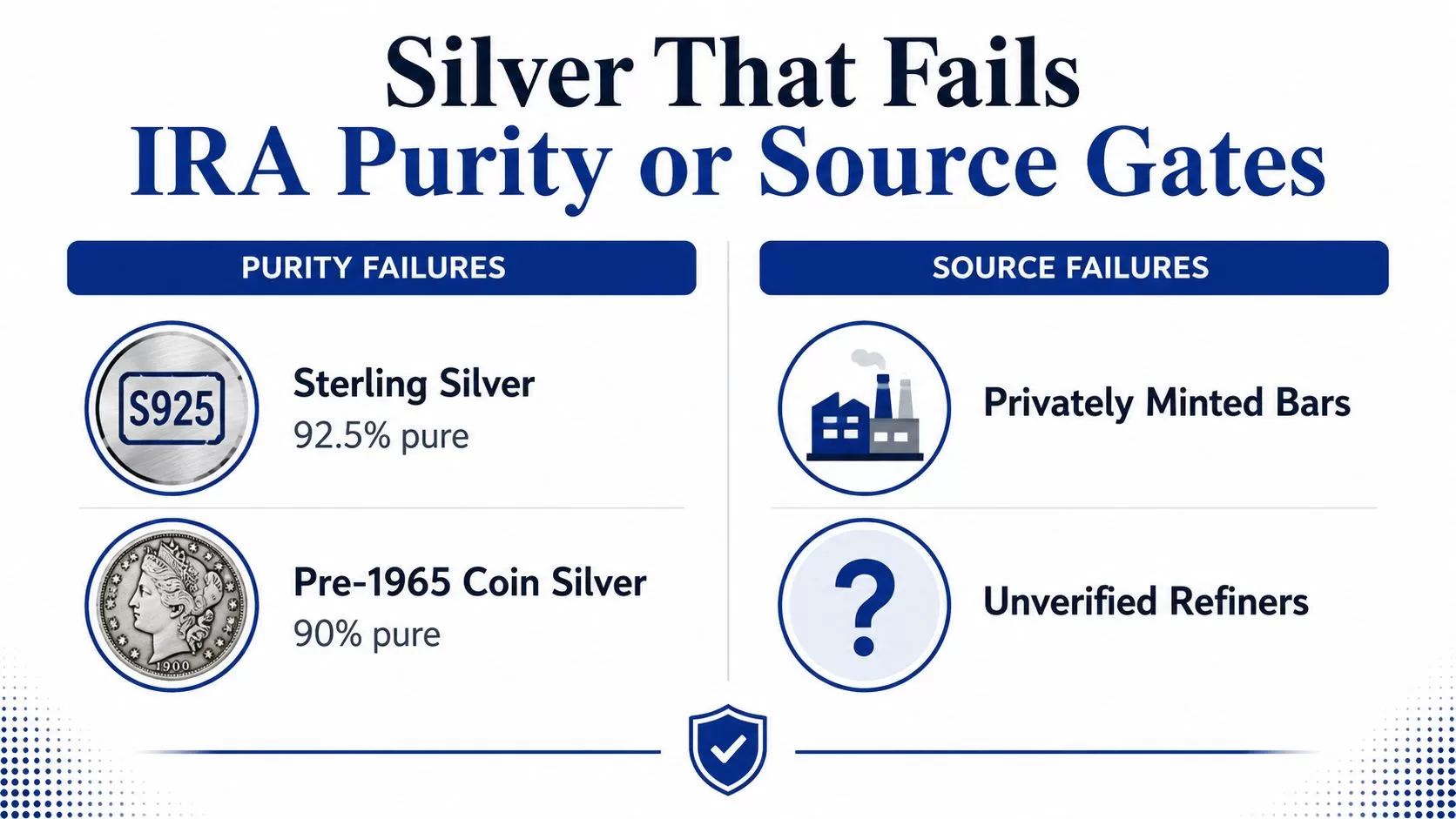
A home-storage arrangement can create distribution treatment, with potential ordinary income tax and a 10% penalty for an owner under age 59½, as described in this silver IRA storage guidance. The tax result can depend on the account and individual circumstances, so a tax professional should review any suspected error promptly.
A quick red flag is enough to pause a purchase. If the bar lacks.999 fineness, recognized production, custodian confirmation, or approved delivery, it shouldn't be funded until the issue is resolved.
Custodians and Approved Depository Storage
Physical silver inside an IRA doesn't sit in the investor's home. The account uses a self-directed IRA custodian, and the metal remains with an approved depository until a permitted distribution. Custodians can include banks, trust companies, and specialized self-directed IRA administrators. The depository handles physical storage, while the custodian maintains the account records and reporting.
The typical process is straightforward:
- The custodian opens and administers the self-directed account.
- The investor directs an eligible purchase.
- The depository receives the silver.
- The depository records the allocation as segregated or commingled storage.
- The custodian reflects the holding in the IRA ledger and statements.
Storage choices
Segregated storage keeps the investor's bars identified separately from other holdings. It can provide a clearer audit trail, though it may cost more. Commingled storage places qualifying metal within a shared pool of like-kind holdings, with the account receiving a documented entitlement rather than a separately marked space.
The investor receives statements and documentation, not personal delivery. A safe at home or a personal safe-deposit box doesn't replace the approved depository arrangement. This silver bar custody explanation describes the requirement that IRA-held silver remain with an approved trustee or depository.
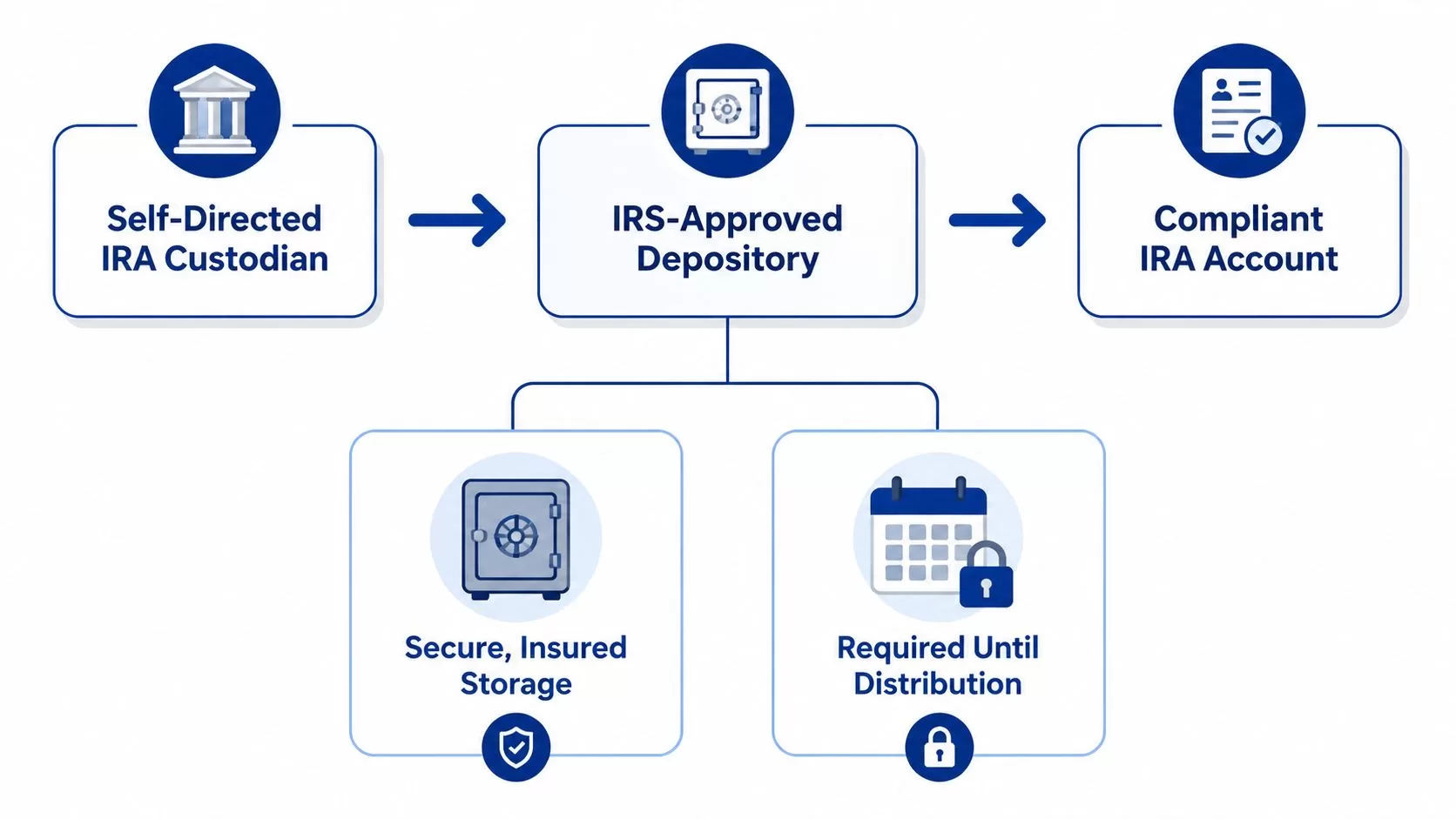
Before choosing a bar, the investor should ask which depositories the custodian already uses and which refiners those facilities accept. That step can prevent a situation where a product meets the investor's expectations but cannot enter the selected storage network.
Silver Bars Compared to Rounds and Coins
Bars, rounds, and government-minted coins can all serve different operational purposes. The decision usually turns on the relationship between purchase premium, resale recognition, divisibility, and storage efficiency. Legal eligibility still depends on the applicable purity and producer requirements, not on whether the item is called a bar or a coin.
| Silver Format | Typical Premium Over Spot | Resale Liquidity | Storage Efficiency |
|---|---|---|---|
| Sovereign-minted coins | Often higher | Broad recognition | Less efficient per ounce |
| Private rounds | Often lower | Depends on producer recognition | Efficient |
| Silver bars | Often efficient, especially in larger standardized formats | Depends on producer and size | Usually most efficient for bulk holdings |
Coins can be easier to identify and divide into smaller units, while bars often make better use of depository space. Rounds may offer a middle ground, but the producer's reputation matters because buyers need confidence in authenticity and weight.
The choice is operational rather than automatically superior. An investor prioritizing flexible partial distributions may prefer smaller units. Someone focused on reducing the number of stored pieces may choose standardized bars. The comparison of silver coins and silver bars provides additional format context.
A practical rule is to match the product to the future task. Choose smaller, widely recognized units for flexibility, and larger approved bars when straightforward storage and consolidated holdings matter more.
Step-by-Step Purchase Workflow Inside an IRA
The transaction should run through the retirement account from beginning to end. Buying silver personally and trying to contribute the bar afterward can create a contribution and tax problem rather than a compliant purchase.
The account-to-depository sequence
Open the right account. Use a self-directed IRA custodian that permits precious metals. A standard brokerage account may not provide the same physical-metal administration.
Fund the account correctly. The account may receive an eligible contribution, transfer, or rollover. The investor should ask the custodian and tax professional which method fits the existing retirement plan.
Give the purchase direction. The custodian or its approved transaction process places the order. The investor shouldn't buy the bar personally and hand it over.
Recheck the product. Before payment, match the producer, weight, fineness, serial number, and documentation against the custodian's approved information.
Confirm allocation. The depository receives the metal and records it for the IRA. The custodian then reflects the holding in the account record.
The guide to buying silver for an IRA can help investors organize the questions that arise before placing an order. The key control is simple: the custodian must remain involved at every stage.
Recordkeeping and Documentation Essentials
Good records give the custodian, investor, and tax professional the same version of the holding. Every bar should have an identifiable file, even when several bars arrive in one shipment.
Record these details:
- Producer and hallmark: Write down the refiner or mint and the exact marking on the bar.
- Purity: Save the.999 fineness information from the bar and its assay documentation.
- Weight: Record the exact stated weight, using the unit shown in the purchase documents.
- Serial or lot information: Match the serial number or lot identifier to the depository record.
- Transaction details: Keep the purchase date, order ticket, trade confirmation, and cost basis.
- Storage evidence: Save the depository receipt, allocation statement, and storage-fee entries.
- Correspondence: Retain written custodian confirmation about product approval or exceptions.
A digital folder for each holding can contain the assay card scan, purchase confirmation, depository receipt, and relevant messages. Before an annual statement is accepted, the investor should compare the custodian's book-entry record with the bar or lot details in the depository documentation.
These files can become important during an in-kind distribution, beneficiary transfer, sale, or account review. Consistency is the objective. If the serial number, weight, or producer differs between records, the discrepancy should be resolved before another transaction occurs.
Frequently Asked Questions on IRA Silver Bars
Can a private mint be added to a custodian's approved list?
Possibly, but the answer depends on the custodian's procedures and the depository's acceptance standards. The investor should submit the producer and exact product for written review before placing an order. A dealer's approval statement isn't a substitute for custodian confirmation.
Can a refiner lose approved status?
Approval isn't something an investor should assume is permanent. Lists and policies can change, so a later purchase should be checked against current custodian requirements rather than relying only on an older statement or prior transaction.
How is silver taxed when distributed?
The tax treatment depends on the IRA type, the owner's circumstances, and whether the distribution is cash or metal. An in-kind distribution can create taxable income in the same general way as a cash distribution from a taxable retirement account, but a CPA or tax professional should confirm the result.
How do silver bars affect required minimum distributions?
For an account subject to RMD rules, the owner still needs a distribution plan even when the account holds physical silver. The custodian can explain available cash or in-kind procedures, while a tax professional can address the amount and reporting.
Are storage fees deductible outside the IRA?
Investors shouldn't assume that account-related storage or administration costs are personally deductible. Treatment depends on current tax rules and individual facts, so the custodian and tax professional should be consulted before claiming a deduction.
What happens when the owner dies?
Inherited IRA procedures depend on the beneficiary designation, account type, relationship to the owner, and current law. The beneficiary should contact the custodian promptly rather than taking possession of the bars without instructions.
Do foreign refining marks create a problem?
Foreign marks don't automatically answer the eligibility question. The investor should identify the producer, verify the fineness, confirm recognition, and obtain custodian approval for the exact bar. Unclear markings justify additional documentation or a different product.
This is not financial advice. Consult a licensed financial advisor, CPA, or tax professional before making investment decisions.
Gold IRA Association offers educational guides on eligible silver products, custodians, depository storage, and precious-metals IRA procedures. Visit Gold IRA Association to review the relevant checklists and compare the questions that should be answered before purchasing IRA-approved silver bars.