


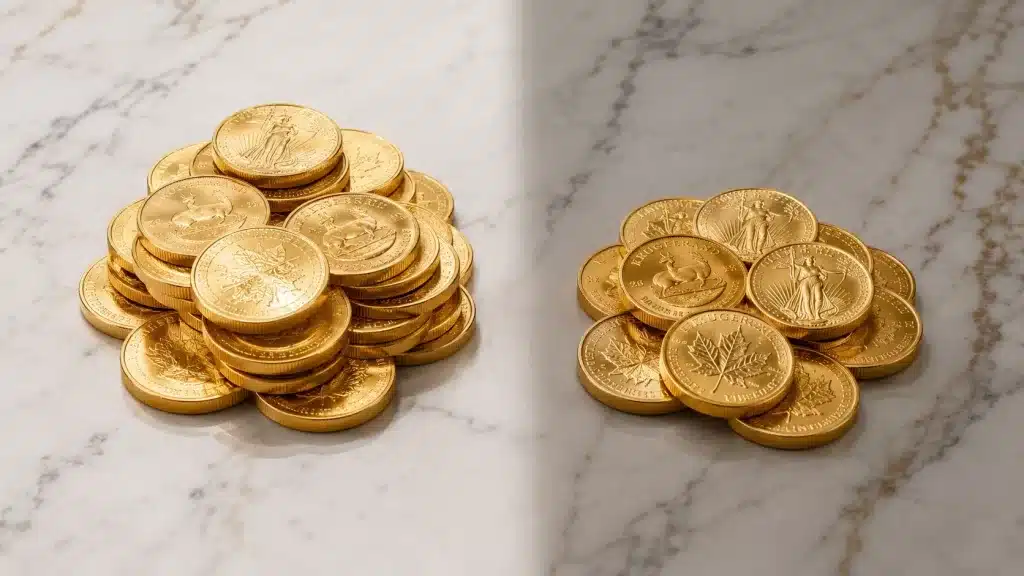
A troy ounce weighs 31.1034768 grams, while a regular avoirdupois ounce weighs 28.3495 grams. That makes the troy ounce about 10% heavier, and because precious metals are priced in troy ounces, understanding that difference is essential for anyone investing in physical gold.
A common retirement-investing moment goes like this. Someone starts comparing gold coins or bars online, sees prices listed “per ounce,” and assumes that ounce means the same thing as the one on a kitchen scale. In precious metals, it usually doesn't.
That small misunderstanding can throw off pricing, product comparisons, and Gold IRA decisions. The difference sounds technical, but it's really a basic investing detail that helps people avoid costly mistakes and read bullion listings with confidence.
The Critical Difference in Gold Investing You Can't Ignore
You are reviewing gold coins for a retirement account, and two listings both say “1 ounce.” One seems priced higher than expected. The other shows a gram weight that does not match the ounce on a kitchen scale. That is often the first sign that precious metals use a different measuring language from everyday shopping.
In bullion, the word “ounce” usually means troy ounce. In daily life, “ounce” usually means avoirdupois ounce. For a retirement investor, that difference reaches beyond simple pricing. It affects how you compare products, check dealer listings, and confirm that the metal entering your account matches the quantity you intended to buy.
A common investor mistake
A person researching a rollover may look at a coin, a bar, or another form of gold bullion for retirement investing and assume the familiar ounce applies. That assumption sounds reasonable because the same word appears in both settings.
The catch is that precious metals follow an older standard built on grains, a very small unit of weight. Both the troy system and the everyday system use grains, but they group them differently. That is why the labels can look similar while the actual weights do not match. For serious buyers, especially those planning larger purchases, this is the first clue that precious-metals math has its own rules.
The confusion also goes past the well-known 10% difference. There is a second trap many investors miss. A troy ounce is heavier than a regular ounce, but a troy pound is lighter than a regular pound because the two systems divide pounds into a different number of ounces. Many buyers never expect that reversal, and it can distort bulk calculations for bars, shipment totals, and account records.
Practical rule: If a gold or silver listing says “ounce,” verify that it refers to a troy ounce before judging value or quantity.
The troy ounce vs regular ounce question is not trivia. It directly affects what you believe you are buying, how you estimate total metal holdings, and whether your numbers stay accurate when planning retirement allocations.
Why this matters more in retirement accounts
In a casual purchase, a weight mix-up can lead to an annoying comparison error. In a Gold IRA, precision matters more because holdings are recorded as specific bullion quantities, and those records need to line up with approved products and custodian documentation.
Retirement investors also tend to buy with a long time horizon and larger dollar amounts. A small misunderstanding repeated across several coins or bars can throw off your estimate of how much metal you own. Once you understand the ounce difference, the grain standard behind it, and the pound paradox that follows, product listings become much easier to read with confidence.
Troy Ounce vs Avoirdupois Ounce Explained
A simple label can hide a costly misunderstanding. In precious metals, two units share the word "ounce," but they do not mean the same weight.
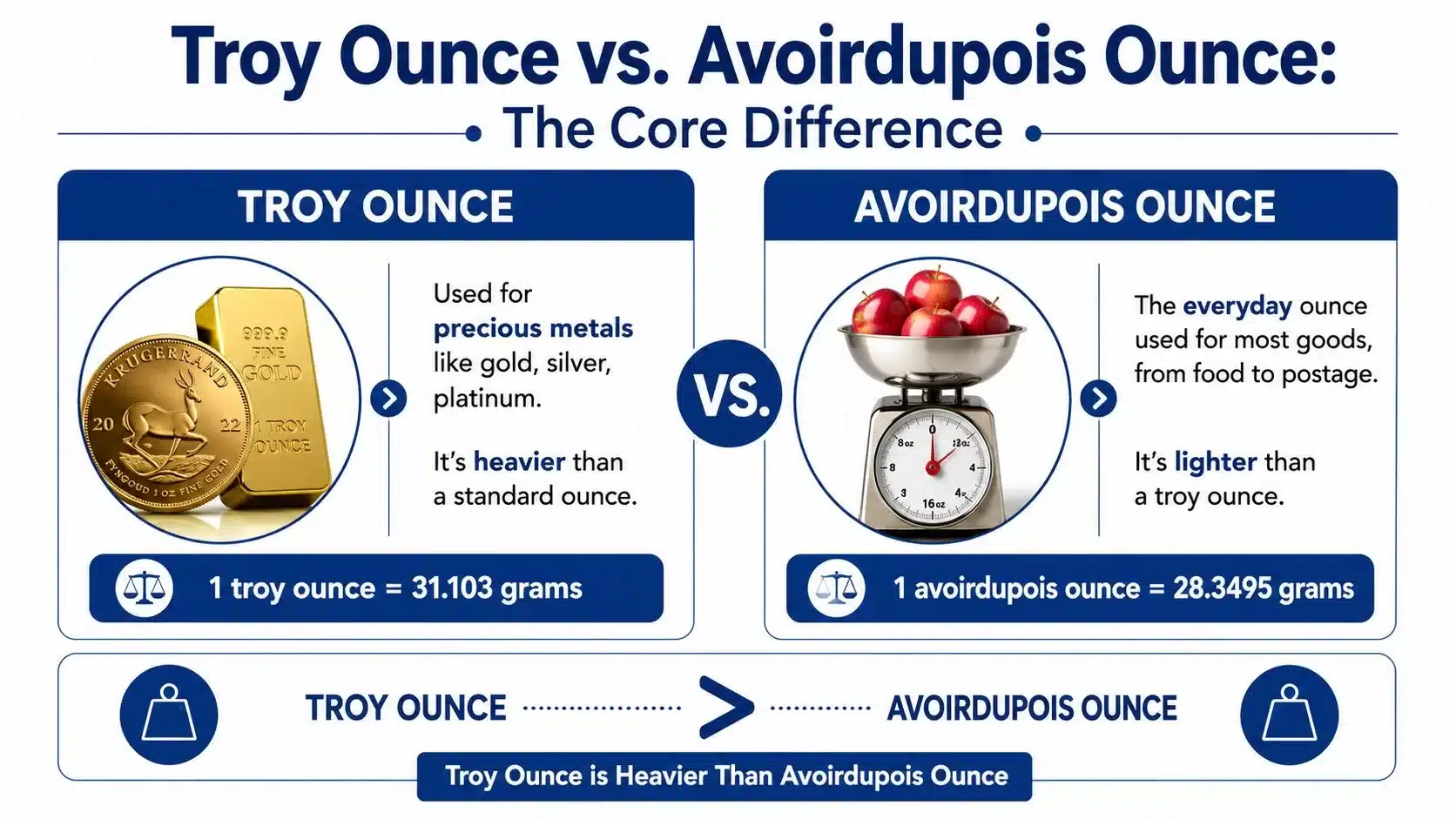
Troy Ounce vs. Avoirdupois Ounce At a Glance
| Attribute | Troy Ounce | Avoirdupois (Regular) Ounce |
|---|---|---|
| Main use | Precious metals | Everyday goods |
| Weight in grams | 31.1034768 grams | 28.3495 grams |
| Difference | Heavier by roughly 2.754 grams | Lighter by roughly 2.754 grams |
| Relative size | 1 troy ounce = 1.097 regular ounces | 1 regular ounce is less than 1 troy ounce |
The side by side comparison helps, but it is important to know that these are two different measuring systems with different histories and rules. A troy ounce is the unit used for gold, silver, platinum, and palladium. The regular ounce, called an avoirdupois ounce, is the one used for groceries, mail, and most household items.
For a retirement investor, that difference is practical, not academic. If a coin or bar is listed as "1 oz" in a bullion listing, the seller is almost always referring to the heavier precious-metals ounce.
One detail serious buyers often miss is the grain standard behind both systems. A grain is a very small unit of mass, and it acts like the common denominator that helps explain why these ounces differ in size. The troy ounce is built from 480 grains, while the regular ounce is built from a smaller grain count. That is why the names match but the weights do not.
This is also why gram weights are such a helpful reality check. If a one-ounce gold product is shown at about 31.1 grams, it aligns with the troy standard used in bullion markets. If you were expecting about 28.35 grams, you were using the everyday ounce instead.
Someone reviewing product descriptions may also benefit from understanding what counts as gold bullion, because listings often assume the buyer already knows precious metals are quoted in troy weight.
In a bullion listing, “1 oz gold” usually means 1 troy ounce.
The grain foundation also sets up the Pound Paradox discussed later. An ounce of gold is heavier in the troy system, yet the full troy pound works out differently because the two systems divide pounds into different numbers of ounces. That is the kind of detail that can confuse bulk purchase math if you rely on everyday weight assumptions.
So the safest habit is simple. Read the ounce label, then confirm the gram weight. That two-step check can save you from misreading a product, miscalculating your holdings, or recording the wrong amount in a Gold IRA.
Why Are Precious Metals Priced in Troy Ounces
A buyer reviewing a gold quote for an IRA is not just looking at a price. They are looking at a price for a very specific unit of metal. In precious metals, that unit is the troy ounce.
The reason is simple. Gold and silver trade in markets where small differences in weight can change the value of a purchase, a sale, or an account statement. A shared standard keeps dealers, mints, custodians, and depositories aligned on what “one ounce” means.
A standard built for high-value trade
Precious metals are bought partly for stability, so the measurement system has to be stable too. The troy ounce gives the market a fixed reference point tied to the grain standard discussed earlier. Since a troy ounce is defined by a set grain count, it gives everyone in the transaction the same measuring stick.
This standard wasn't adopted by accident; it was designed to support trust in high-value trades.
That trust shows up in practical ways. A quoted spot price, a bar description, a custodian report, and a depository audit all rely on the same unit. Without that shared unit, comparing products and verifying holdings would be far less clear.
Why the market does not use the everyday ounce
The everyday ounce works well for food, shipping, and household items. Bullion needs a different frame of reference because it is traded as a financial asset as much as a physical object.
A useful comparison is currency. Investors would not want one bank using a different definition of a dollar than another. The troy ounce plays a similar role for precious metals. It gives the market one accepted unit for pricing and settlement.
That choice also helps explain a point many retirement investors overlook. The troy system is not only about a heavier ounce. It is built on the grain standard, and that foundation carries through how larger weights are understood. That is one reason bulk gold calculations can confuse people who switch back and forth between everyday weight assumptions and bullion conventions.
What this means for Gold IRA investors
For retirement planning, the troy ounce should feel reassuring, not obscure. It reduces ambiguity in transactions where the metal itself is the asset.
It also helps you check listings with more confidence:
- Pricing: Market quotes refer to the bullion standard, not the kitchen scale ounce.
- Comparison: Coins and bars can be evaluated on the same weight basis.
- Custody records: Account statements can reflect a consistent unit across purchases.
- Verification: Gram weights and stated ounces can be checked against the same standard.
The troy ounce exists so every party in the transaction is measuring the same quantity of metal.
For a serious Gold IRA buyer, that clarity becomes even more important when purchases move beyond a single coin or bar. Once larger quantities enter the picture, the system behind the ounce starts affecting how pounds, totals, and compliance records are interpreted.
The Pound Paradox That Confuses Even Savvy Investors
The ounce difference gets most of the attention. The pound difference causes even more confusion.
Many investors assume that if a troy ounce is heavier, then a troy pound must also be heavier. That conclusion feels logical, but it's wrong because the two pound systems are built differently.
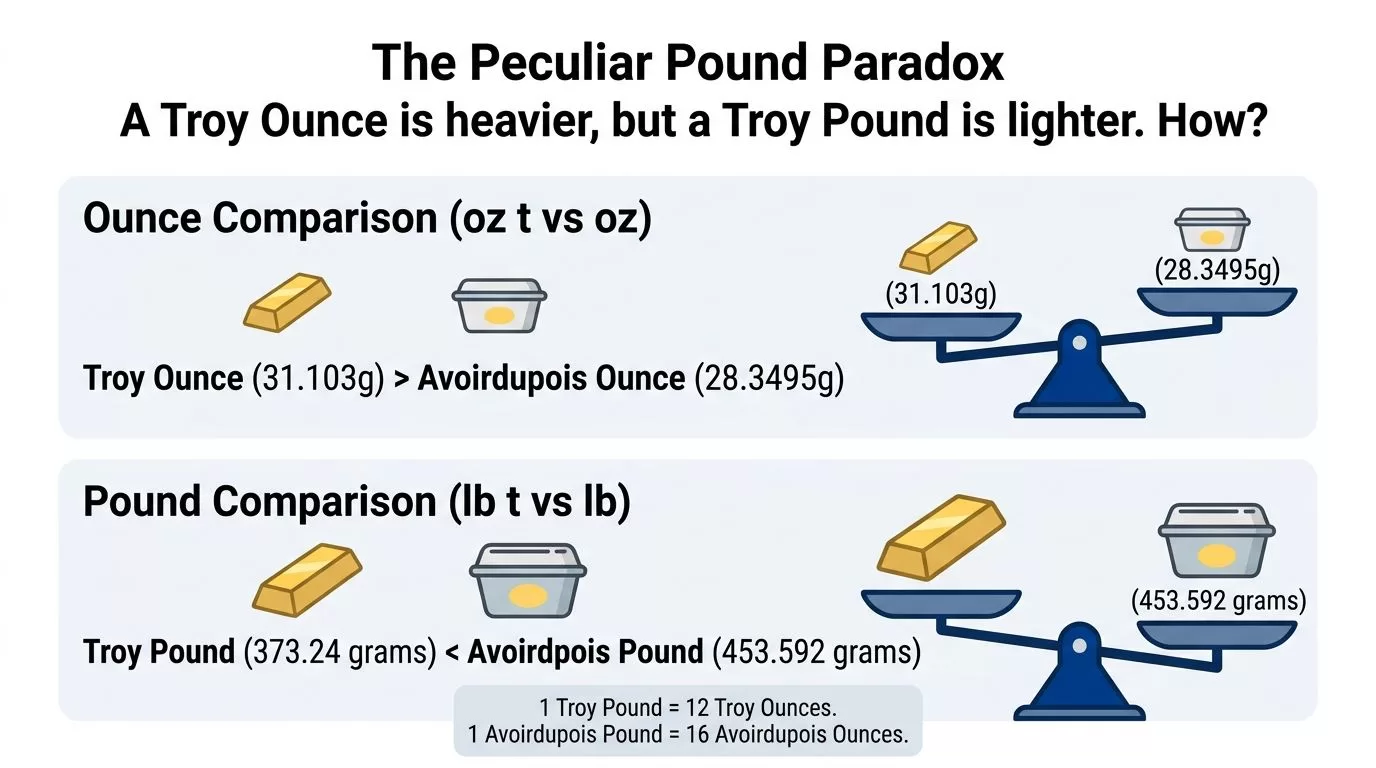
The part that feels backward
A troy pound contains 12 troy ounces. A regular avoirdupois pound contains 16 regular ounces.
That changes everything.
A simple way to see it
| Pound type | Ounces in the pound | Total grams |
|---|---|---|
| Troy pound | 12 troy ounces | 373.24 grams |
| Regular pound | 16 regular ounces | 453.59 grams |
So the troy ounce is heavier, but the troy pound is lighter. The reason isn't hidden math. It's that the systems count ounces differently at the pound level.
Why this matters in IRA planning
This issue comes up most often with larger silver allocations, where investors may think in broader quantities rather than individual coins. If someone loosely thinks “a pound is a pound,” the numbers can drift fast.
That can affect:
- Bulk purchase estimates: A buyer may misjudge how much metal a quoted “pound” represents.
- Cost-per-gram calculations: The wrong pound system can distort value comparisons.
- Allocation planning: Retirement funds may be over-committed or under-allocated.
- Statement review: Holdings can look confusing if the investor is mentally converting with the wrong standard.
A buyer who understands ounces but ignores the pound difference can still make a major calculation mistake on larger silver orders.
Why the paradox catches smart people
Many do not think in two parallel weight systems. They carry over one mental model from ordinary life and expect bullion to follow it.
That's why the pound paradox deserves attention. It explains why some bulk pricing assumptions feel inconsistent, especially when investors try to translate precious metals weights into household units. Once a person sees that troy uses a 12-ounce pound and avoirdupois uses a 16-ounce pound, the contradiction disappears.
Key Implications for Your Gold IRA
Gold IRA investing adds a compliance layer to the troy ounce vs regular ounce question. In a retirement account, precision isn't just useful. It's part of buying and holding the right kind of metal in the right way.
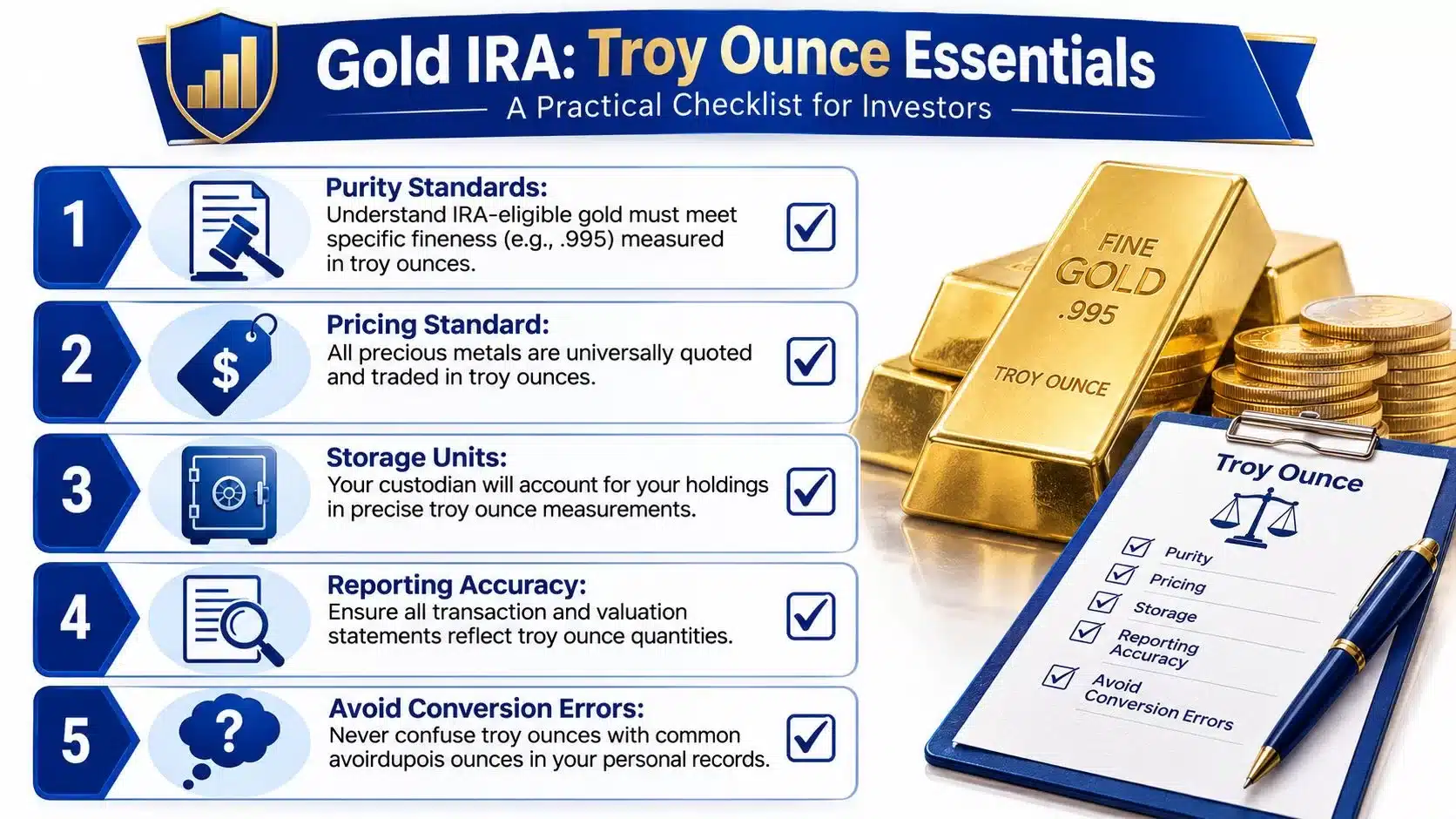
Pricing has to match the market standard
Precious metals are quoted in troy ounces. If an investor compares a dealer price using the wrong ounce in personal notes or spreadsheet calculations, the comparison can become misleading.
That doesn't just affect the initial purchase. It can also affect how the investor interprets account value over time, especially when reading statements or checking pricing against the broader market.
Weight errors can become compliance problems
A troy ounce is defined as exactly 31.1034768 grams, while a regular ounce is 28.3495231 grams. This precise difference is critical for Gold IRA investors because IRS-approved bullion must meet exact weight standards, and mistaking the units could lead to purchasing underweight metal that fails auditor verification.
That's why investors should understand the basic precious metal IRA rules before funding a purchase. The issue isn't only price. It's whether the product fits the account's requirements and whether the documentation matches what the account is supposed to hold.
Custodian and depository records depend on accuracy
A Gold IRA runs on documentation. Custodians, dealers, and storage facilities all need the same product description, weight standard, and inventory details.
When those details are clear, several things get easier:
- Transaction review: Investors can confirm that the listed product weight matches what they intended to buy.
- Statement accuracy: Holdings are easier to reconcile when all parties are using the same standard.
- Audit readiness: Clear weight records reduce the chance of confusion if the account is reviewed.
- Estate planning: Beneficiaries and family members can understand what's in the account.
Review habit: When checking IRA paperwork, confirm that the metal quantity is described in the same weight standard used in the original listing.
Small misunderstandings can snowball
One incorrect assumption at the beginning can show up later in multiple places. A buyer may misunderstand a listing, record the wrong expected weight, then question a statement that is correct. The problem started with the unit.
That's why this topic deserves attention before money moves. Gold IRAs involve specialized products, specialized custodians, and specialized rules. A clear grasp of the measurement standard helps investors ask better questions and avoid preventable friction.
How to Read Product Listings and Avoid Mistakes
Bullion listings often look straightforward. Weight, purity, and product type appear in a few short lines. The problem is that buyers sometimes read those lines with everyday assumptions.
A careful reading habit solves most of that.
What to look for first
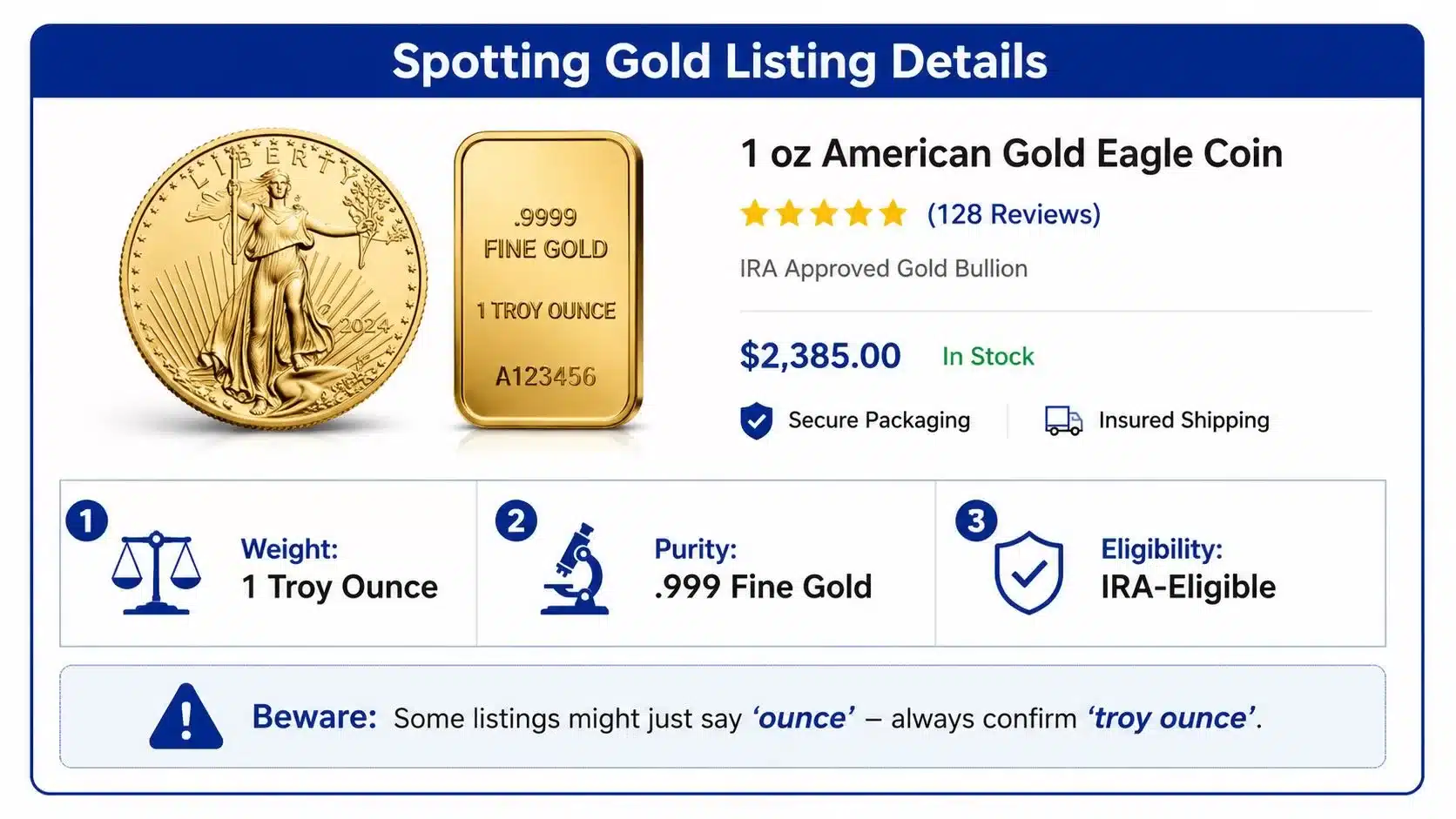
When reviewing a coin or bar listing, check these items in order:
Weight wording
Look for “troy ounce,” “ozt,” or a gram weight consistent with bullion standards. If a listing only says “ounce,” confirm what system it uses.Purity statement
Product pages usually show fineness alongside weight. Weight alone doesn't tell the full story.IRA eligibility language
A product can be genuine bullion and still not fit an IRA. Eligibility should be clear, not implied.
A buyer researching IRA-approved gold coins should pay close attention to all three together, not just the headline weight.
The overlooked grain standard
Here's a detail most retail investors never see on a product page. The troy ounce is legally defined as 480 grains, and that grain standard is the underlying basis used in the U.S. Coinage Act to mint IRS-approved coins. While investors usually see grams or ounces, custodians and auditors ultimately rely on grain-based tolerances to verify the precise weight and purity required for compliance.
That doesn't mean investors need to start thinking in grains every day. It means the familiar label on the front end rests on a more precise legal standard behind the scenes.
Red flags that deserve a second look
Some listing issues don't prove a problem, but they do justify caution:
- Missing unit clarity: If “ounce” appears without “troy” in a bullion context, ask.
- Incomplete specifications: A serious product listing should identify weight and purity together.
- Loose IRA language: “Suitable for retirement investing” isn't the same as clear eligibility.
- Confusing conversions: If grams and ounces seem mismatched, pause before buying.
If the listing feels vague, the buyer should slow down. Precious metals should be described with exactness, not guesswork.
A simple investor habit
Before approving a purchase, compare the product listing with the order confirmation and then with the account paperwork. The terminology should stay consistent from start to finish.
That one habit can prevent most avoidable misunderstandings. It also gives investors a stronger footing when they review holdings later and want confidence that the metal in the account matches what they intended to buy.
Frequently Asked Questions About Precious Metal Weights
Do jewelry and scrap gold also use troy ounces
They often do in precious-metals contexts, but buyers shouldn't assume. Jewelry can involve other pricing methods, added materials, or different conventions depending on how it's being bought or sold. The safe move is to confirm the exact weight unit before comparing values.
Does this weight issue matter for silver, platinum, and palladium IRAs too
Yes. The same core idea applies across precious metals because retirement investors still need the correct market weight standard when reviewing products, pricing, and account records. The labeling and eligibility details may vary by product, but the need for accurate unit identification doesn't change.
What happens if a Gold IRA custodian makes a weight reporting error
The investor should ask for a corrected statement and request written clarification of the recorded product description, quantity, and unit of measure. It also helps to compare the custodian statement with the original trade confirmation and depository records. Clear documentation usually resolves whether the issue is a true discrepancy or a reading mistake.
Is “oz” always enough on a bullion listing
Not always. In a bullion setting, it may refer to the expected standard, but a careful buyer shouldn't rely on assumption alone. If the listing isn't explicit, confirmation is worth the extra step.
Do investors need to memorize grains to buy gold correctly
No. Most investors can operate confidently by understanding troy ounces, checking gram weights, and reviewing documentation carefully. The grain standard matters because it explains the legal precision behind bullion measurement, even if it stays mostly in the background during everyday buying.
Gold IRA Association offers plain-English education for retirees and pre-retirees who want to understand precious metals IRAs without the sales pressure. To take the next step, readers can compare top Gold IRA companies at Gold IRA Association or talk through rollover questions with a specialist at 888-910-8386. This is not financial advice. Consult a licensed financial advisor, CPA, or tax professional before making investment decisions.