


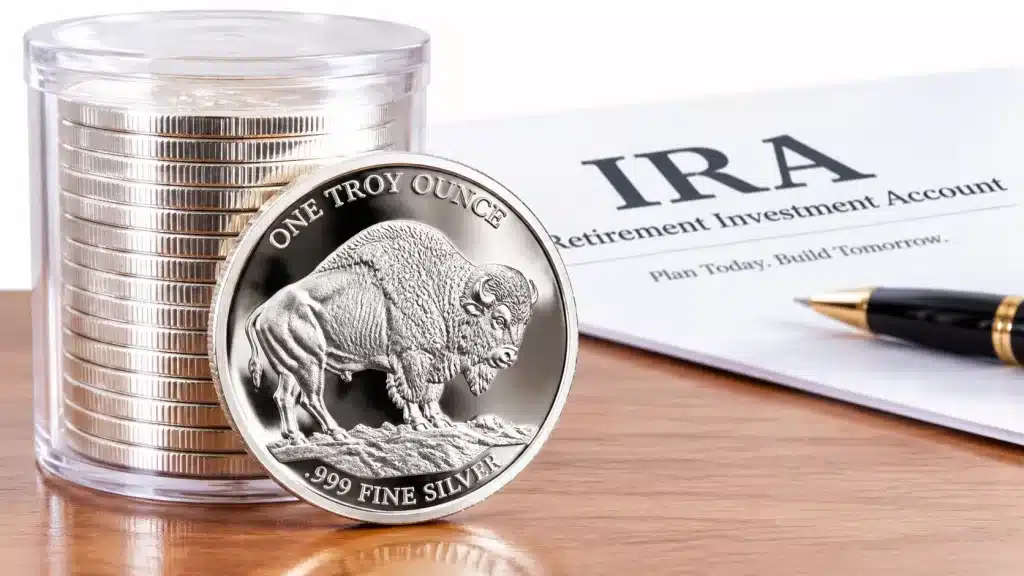
A standard Buffalo silver round contains 1 troy ounce, or 31.103 grams, of.999 fine silver, but its eligibility for a Silver IRA depends entirely on the specific mint's purity and the IRS custodian's approved list. The design is popular bullion, not automatically approved retirement-account property.
A near-retiree choosing physical silver often starts with the product that looks familiar and feels easy to understand. The Buffalo design stands out because it connects a recognizable piece of American coin history with standardized silver content. That combination can make the round appealing for diversification, but appearance alone doesn't establish IRA eligibility.
The key question isn't merely whether a round says "1 oz" or displays a buffalo. The buyer must verify its exact fineness, mint, documentation, and custodial acceptance before directing retirement funds toward it.
Introduction to the Buffalo Silver Round
A modern Buffalo silver round is a privately minted bullion product, not a government-issued coin. It typically contains 1 troy ounce of silver, equal to 31.103 grams, and is struck to.999 fine silver purity, with common specifications including an approximate 39 mm diameter and a brilliant uncirculated finish. The product carries no face value, so its market worth comes from its silver content and the terms offered by the dealer, not from legal-tender status. These standard Buffalo round specifications help explain why the format is easy for buyers and dealers to identify.
That makes the round a practical starting point for someone who wants physical silver without focusing on collectible coin grading. The familiar imagery also gives the product emotional appeal. However, a retirement account introduces a second test that a regular cash purchase may not require.
A Silver IRA generally holds approved physical bullion through a self-directed IRA structure. The investor doesn't buy a round personally and place it in a home safe. The product must satisfy applicable purity rules, the custodian must accept that specific item, and the metal must move through the approved account and storage process.
Practical rule: Treat the Buffalo design as an identification clue, not as proof of IRA eligibility.
Anyone comparing account structures should first understand how a Silver IRA works. The important distinction is between liking the product and proving that the exact product belongs in a compliant retirement account.
Physical Specifications and Classic Design
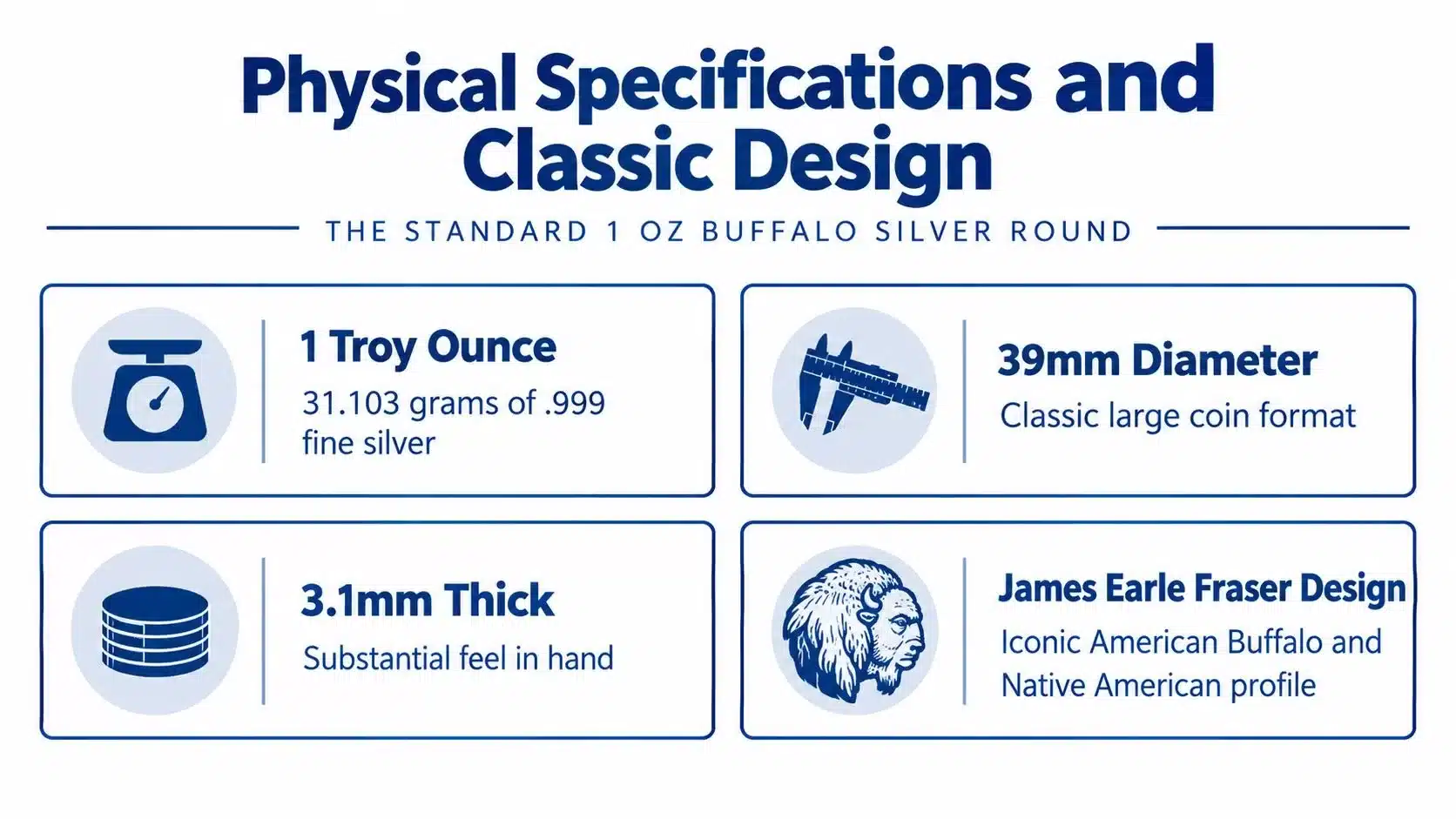
The Buffalo silver round earns attention through a familiar design, but retirement buyers must inspect the metal details before focusing on the image. A typical round contains 1 troy ounce, or 31.103 grams, of.999 fine silver, measures approximately 39 mm in diameter, and often has a brilliant uncirculated finish. These features describe a common bullion format, not proof that every Buffalo-style product qualifies for a Silver IRA.
Thickness varies by producer. Published specifications commonly place it around 2.8 mm to 3.1 mm, so a small difference does not automatically indicate a problem. Compare the item with the issuing mint's documentation, including its stated weight, diameter, thickness, and fineness. Appearance alone cannot establish authenticity or retirement-account eligibility.
Weight and measurements
For a retirement buyer, these measurements provide a practical screening tool when an item arrives. They also identify the standardized bullion format used for quoting, storage, and resale.
Check four details:
- Weight: The stated content should be 1 troy ounce, or 31.103 grams.
- Diameter: The round should be close to 39 mm, subject to the mint's published specifications.
- Thickness: The expected range is approximately 2.8 mm to 3.1 mm, depending on the manufacturer.
- Markings: The piece should clearly state its weight and fineness, with details matching the product description.
These checks do not replace professional authentication. They can expose an obvious mismatch before you accept delivery or ask an IRA custodian to record the asset. For a Silver IRA, retain the product description and documentation alongside the transaction records.
Fraser's enduring motif
The design usually adapts James Earle Fraser's imagery from the 1913 Buffalo Nickel. That original design circulated until 1938, giving the motif a documented 25-year U.S. coinage lifespan before modern bullion products revived it. Some private producers offer the design in .9999 fine silver, rather than the more common.999 format, as shown in Kitco's product information.
That difference affects the compliance review. Two rounds can look nearly identical while carrying different purity markings and different custodial treatment. The nostalgic image helps identify the style, while the mint stamp and product documentation control the compliance analysis. Verify the exact item before purchase, especially when a seller offers several Buffalo variations at different prices.
Privately Minted Rounds Versus Sovereign Coins
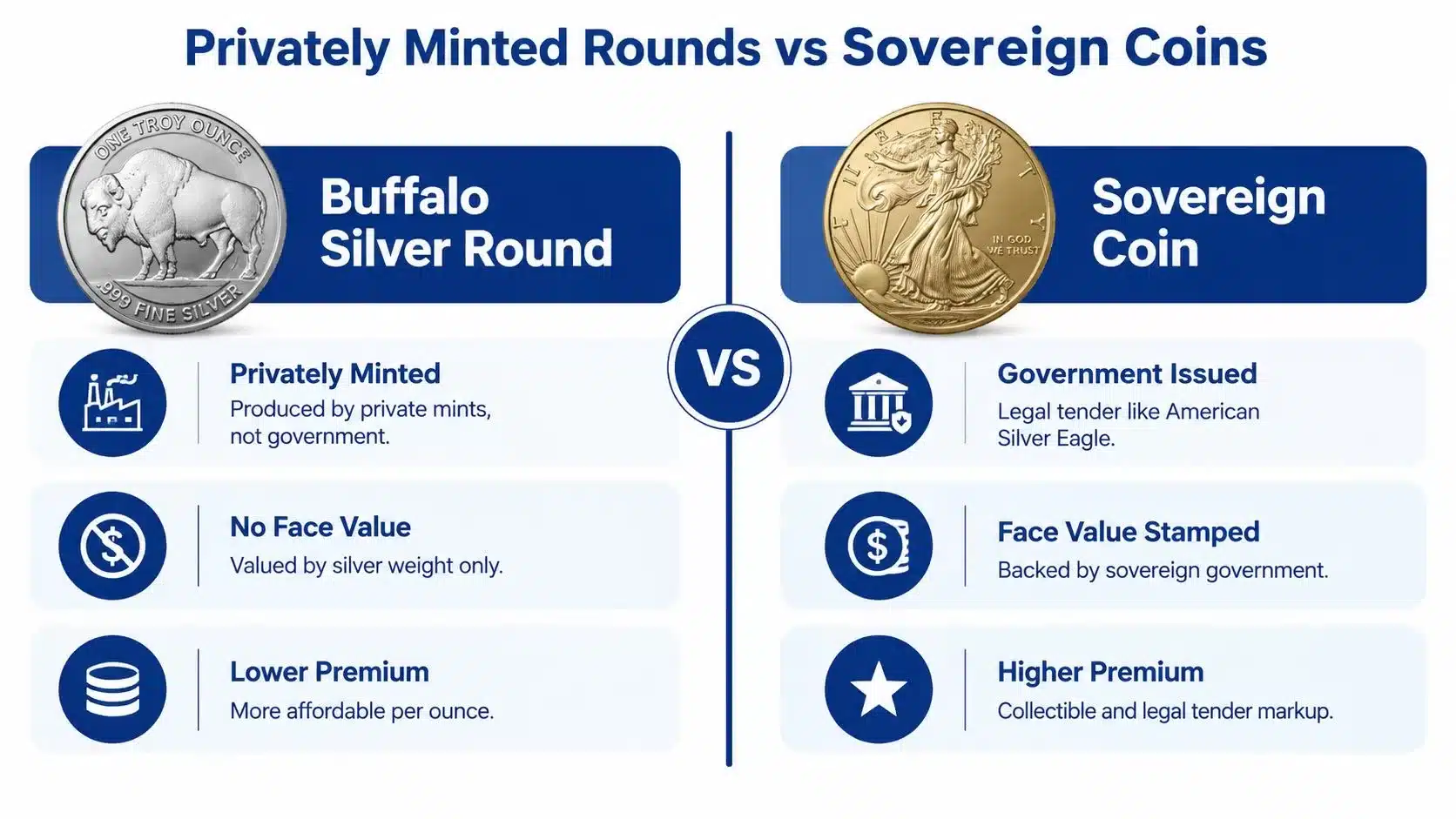
The word “coin” causes unnecessary confusion in precious metals buying. A Buffalo silver round may look like a coin, but a private mint produces it without assigning a government-backed face value. A sovereign coin, by contrast, is issued by a government and carries legal-tender characteristics.
The distinction affects pricing, recognition, and retirement-account review. Private rounds often avoid some of the premium associated with sovereign bullion because the buyer is paying primarily for metal content and manufacturing, rather than a government-issued coin program. That can make the format attractive to someone focused on acquiring silver ounces efficiently.
The practical trade-off
A sovereign coin may offer stronger immediate recognition because its issuing government and legal-tender status are clear. A private round may offer a simpler bullion proposition, but the buyer must pay closer attention to the producer, markings, and documentation.
| Feature | Buffalo silver round | Sovereign bullion coin |
|---|---|---|
| Issuer | Private mint | Government mint |
| Face value | None | Government-assigned legal-tender value |
| Primary value basis | Silver content and market demand | Silver content, market demand, and coin-program recognition |
| IRA review | Specific product and custodian approval matter | Product still must satisfy applicable IRA rules |
| Design | Often based on Fraser's Buffalo Nickel imagery | Government-approved design |
The absence of face value doesn't make a round inferior. It means the product must be evaluated as private bullion, not as a U.S. coin. Investors should also avoid assuming that a familiar design guarantees a smoother resale process. Dealers may assess private rounds according to their own buying policies, condition requirements, and documentation standards.
The following video offers a visual introduction to the round-versus-coin distinction:
For a retirement account, the right choice depends less on nostalgia than on purity, provenance, custodian acceptance, storage, and total cost.
IRS Purity Standards and IRA Eligibility
A Buffalo design can look familiar and still fail an IRA review. For a retirement account, the deciding factors are the round's silver fineness, exact identity, custodian approval, and compliant purchase process. The standard.999 Buffalo silver round meets the commonly cited minimum fineness for IRA silver, meaning .999, or 99.9% pure silver. Some private mints offer.9999 fine silver, but greater purity does not automatically make every version eligible.
The product guidance for Buffalo silver rounds explains the distinction between privately minted bullion and legal-tender coins and highlights the 99.9% purity threshold for silver bullion used in an IRA. Treat that threshold as the starting point. Confirm the specific product with the custodian before committing retirement funds.
Verify the exact item
Before ordering, document the round's complete identity:
- Identify the mint. Different private mints can use the same buffalo motif.
- Read the fineness marking. Confirm.999 or.9999 and verify the stated weight.
- Request written confirmation. Ask both the dealer and custodian whether that precise item is acceptable.
- Confirm the account route. Arrange the purchase through the self-directed IRA custodian, rather than buying personally and transferring the round informally.
- Keep records. Save invoices, product descriptions, shipping records, and written custodian communications.
Purity alone does not settle eligibility. A round may meet the fineness requirement yet raise problems if its producer, markings, or documentation do not satisfy the custodian's review. Do not rely on verbal assurances from a salesperson when written acceptance is available from the account administrator.
Compliance checkpoint: The custodian's approved product list matters more than the round's popularity.
Use this precious metal IRA rules guide to organize questions for the custodian. It does not replace advice from a licensed financial advisor, CPA, or tax professional familiar with the investor's circumstances.
Obtain approval before purchase. Correcting a personally owned purchase afterward may be difficult, costly, or inconsistent with the intended IRA structure. That discipline helps retirees avoid paying for a nostalgic design that cannot enter the account.
Storage Requirements and Packaging Standards
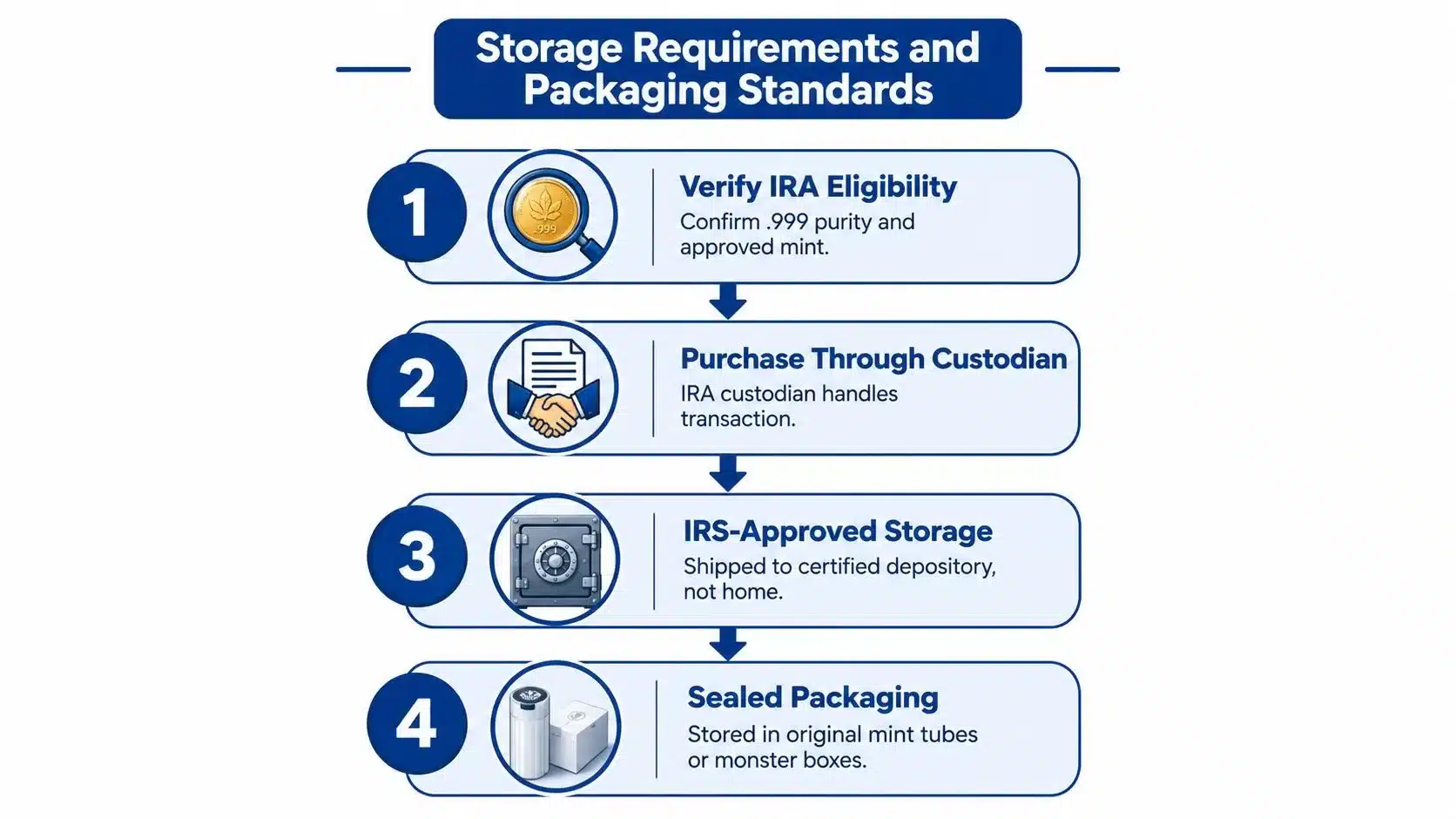
A retiree buying a nostalgic Buffalo design for a Silver IRA must separate the familiar artwork from the custody rules. IRA-owned rounds cannot sit in a home safe or personal safety deposit box. The approved custodian arranges delivery to an insured depository, where the holdings remain under controlled custody and separate from personal property. Review this precious metals storage guide before approving the arrangement.
Packaging supports inventory control, but it does not determine eligibility. Individual rounds need protective packaging for shipment and handling. Bulk quantities are commonly grouped in tubes of 20, while larger boxes can contain 500 rounds. Retail packaging information shows how standardized containers help storage facilities organize large quantities.
Why packaging affects administration
Protective containers limit unnecessary handling and help preserve the round's condition. Tubes and boxes also make inventory easier to count, reconcile, and distribute later. The custodian's records should identify the same product and quantity shown on the invoice and packing documentation.
Use these standards as an administrative checklist:
- Individual protection: Shield each round during delivery and handling.
- Tube organization: Group retail quantities in tubes of 20.
- Large-volume storage: Use boxes holding 500 rounds to simplify inventory control.
- Documentation: Match invoices, packing records, product descriptions, and custodian records.
Packaging cannot correct an ineligible round. A Buffalo motif may look familiar, yet the exact mint, markings, and approved custody process still control its IRA treatment. Confirm those details before the depository receives the metal.
Collectors and businesses handling non-IRA assets may find wholesale coin bags UK useful for general storage tasks. Those supplies do not replace the depository's procedures for retirement-account property. The investor owns the asset through the IRA, while the approved custodian and depository control its custody.
Smart Buying Considerations for Retirement Accounts
A Buffalo silver round can be a reasonable Silver IRA candidate when its purity, mint, documentation, and custodian approval all line up. It's a poor choice when a buyer selects it only because the design is recognizable or a sales representative says the product is “IRA approved” without identifying the exact mint and specification.
A disciplined purchase process protects both the account and the retirement plan.
Use a verification-first checklist
Start with the custodian. Ask for the approved product list before requesting a quote. The custodian should confirm whether the precise mint and purity are acceptable, not merely whether generic silver rounds qualify.
Compare the full cost. A lower premium can be attractive, but the investor should review dealer pricing, account fees, storage charges, transaction costs, and eventual selling terms together. A product that appears inexpensive per ounce may not be the lowest-cost choice after account expenses.
Inspect the specifications. Confirm the stated 39 mm diameter and thickness within the approximate 2.8 mm to 3.1 mm range, while remembering that legitimate manufacturer variations exist. The weight and fineness markings should match the invoice and the custodian's records.
Reject pressure tactics. Scarcity claims, countdowns, and urgent rollover demands deserve skepticism. A sound retirement decision allows time to read the custodian agreement, understand fees, and discuss tax consequences with qualified professionals.
Plan the exit. Before buying, ask how the custodian handles distributions, transfers, and liquidation. Silver can diversify a portfolio, but it doesn't eliminate price risk, storage costs, or the need for a broader retirement strategy.
Gold IRA Association offers educational guides, rollover resources, provider comparisons, and checklists focused on precious-metal IRA rules and account administration. Readers can visit Gold IRA Association to review Silver IRA information and prepare questions for a custodian or qualified professional.
This is not financial advice. Consult a licensed financial advisor, CPA, or tax professional before making investment decisions.