



A lot of near-retirees reach the same point. They want to move retirement money into a new IRA, sometimes a self-directed account for physical gold or silver, and then one question stops them cold: will this trigger taxes?
That concern is justified. IRA rollover taxes often come down to process, timing, and paperwork. A move that looks simple on paper can become a taxable distribution if the funds travel the wrong way, arrive late, or land in the wrong account structure.
Understanding IRA Rollover Taxes
A rollover tax problem usually starts with a basic misunderstanding. Many people assume that moving retirement money is automatically tax-free. It isn't.
If a retiree wants to shift assets from an old workplace plan into an IRA, or from one IRA arrangement into another, the IRS looks closely at how the money moves. The difference between a direct institution-to-institution transfer and a rollover paid to the account holder can decide whether the transaction stays tax-deferred or creates current taxable income.
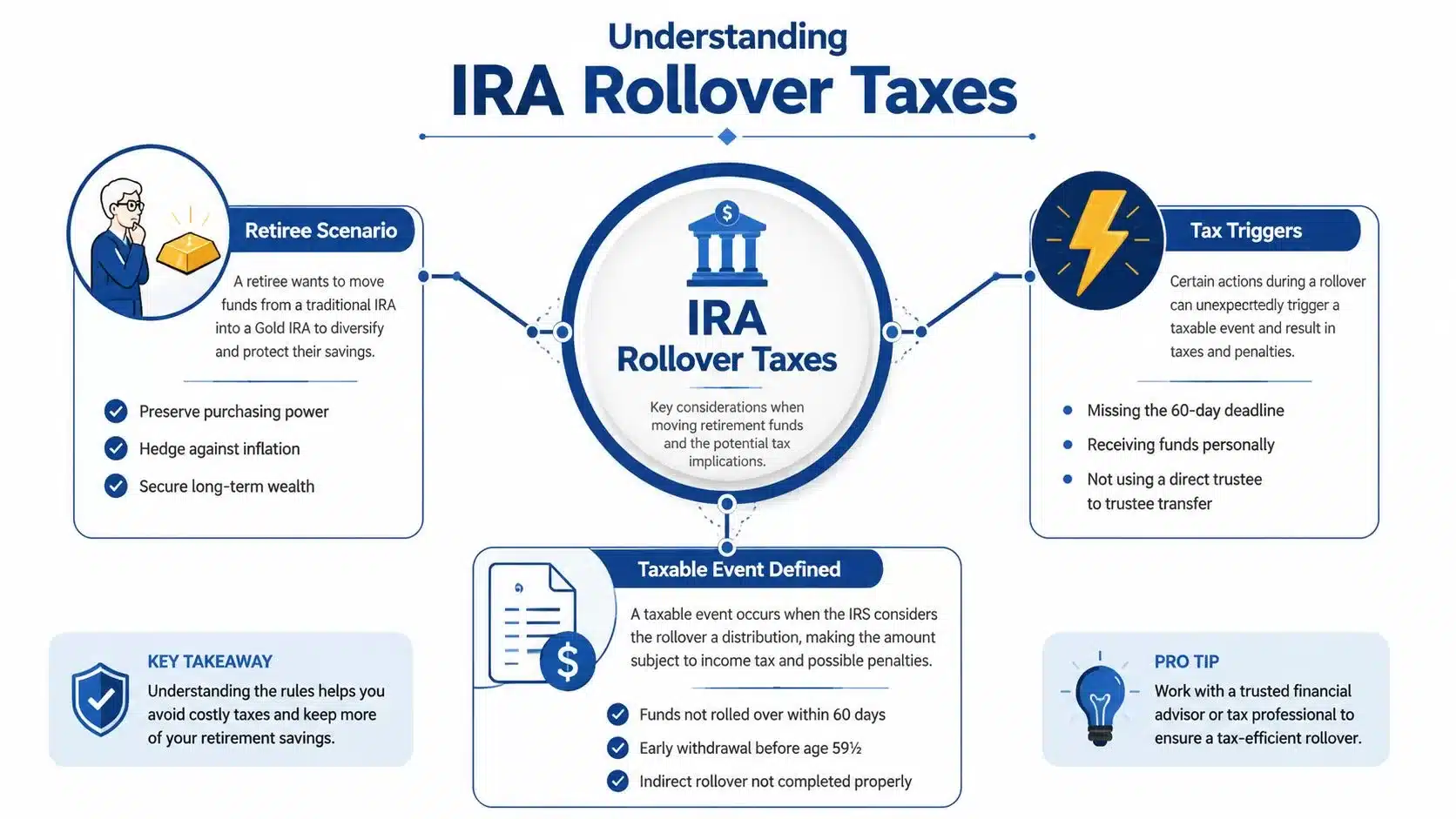
The basic terms that matter
Direct transfer or direct rollover usually means the money goes straight from one custodian or plan administrator to another. The account holder never takes possession of the funds.
Indirect rollover means the distribution is paid to the account holder first. That creates more risk, because the IRS then applies strict timing and withholding rules.
Roth conversion is different from both. It moves pre-tax retirement money into a Roth IRA, which generally means the converted amount becomes taxable in the year of conversion.
Practical rule: The more time the money spends in the account holder's hands, the more ways the transaction can go wrong.
For gold and silver IRA investors, this matters even more. The tax question isn't only about opening a precious metals IRA. It's about making sure the funding method is handled correctly before any metal purchase is made.
Rollover Types and Tax Implications
Not all rollovers work the same way. Some are built for simplicity. Others create tax exposure almost immediately.
Comparison of Rollover Types
| Rollover Type | Tax Treatment | Limitations |
|---|---|---|
| Direct trustee-to-trustee transfer or direct rollover | Typically structured to avoid current taxation when done properly | Requires coordination between institutions |
| Indirect or 60-day rollover | Can remain non-taxable only if completed correctly and on time | High risk of taxable treatment if the account holder mishandles the funds |
| Roth conversion | Generally taxable in the year of conversion because pre-tax funds move into a Roth IRA | Can increase taxable income for the year |
Direct moves tend to create fewer surprises
A direct movement of funds is usually the cleanest option. The money doesn't stop in the retiree's checking account, and there is less room for missed steps.
That matters for readers considering a precious metals IRA. Once the new IRA is open with the right custodian, a direct funding method often keeps the process orderly. It also reduces the chance that cash meant for a rollover gets mixed with personal funds or delayed by mail, bank holds, or paperwork errors.
A related planning topic appears in this guide on a direct 401(k) rollover into a Roth IRA, especially for readers comparing tax treatment across account types.
Indirect rollovers demand precision
An indirect rollover can still work, but it leaves no margin for casual handling. The check may arrive in the account holder's name. That sounds harmless, but it changes the tax mechanics.
The IRS treats that distribution differently because the account holder had control of the funds. Once that happens, the rollover becomes less like a transfer and more like a temporary withdrawal that must be repaired correctly.
A rollover isn't judged only by intent. The IRS also judges the route the money took.
Roth conversions are about timing the tax bill
A Roth conversion isn't a mistake if taxes are due. Taxes are often the point.
Some retirees convert because they want future Roth treatment and are willing to recognize income now. Others use partial conversions to manage yearly taxable income. For precious metals investors, the same logic applies. The fact that the destination IRA may eventually hold gold or silver doesn't remove the conversion tax issue.
Common Taxable Events and Penalties
A near-retiree receives a distribution check on Friday, sets it aside for paperwork on Monday, and plans to finish the rollover after choosing which gold or silver products to buy. That short delay can change the tax result.
Many IRA rollover tax problems stem from common handling errors rather than deliberate tax strategies. The IRS looks closely at what happened to the money, when it moved, and whether the full amount reached the right retirement account.
Missed deadlines
The easiest way to trigger taxes is to miss the rollover window after receiving the funds personally.
Once that deadline passes, the distribution can be treated as taxable income instead of a completed rollover. If the account holder has not yet reached age 59½, the failed rollover can also lead to an additional early distribution penalty unless an exception applies.
A rollover deadline works like an expiration date on a claim ticket. If the funds are not returned to a qualifying account in time, the tax treatment changes.
Partial rollovers
Another common problem is replacing only the amount that arrived in hand.
For example, a retiree may receive a check that is smaller than the original distribution because part was withheld for taxes. If the retiree rolls over only the check amount and does not add other funds to make up the difference, the missing amount can be treated as a taxable distribution.
That surprise often catches people who believed they had rolled over everything.
Under-age penalties
Age adds another layer. A failed rollover can create two tax issues at once. The distribution may be included in taxable income, and the early distribution rules may apply if the account holder is under 59½ and no exception fits the facts.
Precious metals specific confusion
Gold and silver rollovers add a separate point of confusion. Some investors focus first on coins, bars, or storage, then treat the funding step as routine paperwork. The order matters.
The rollover has to be completed correctly before the IRA buys metals. If retirement funds are paid to the individual and then used to purchase precious metals outside the IRA, that is generally not the same as an IRA investment. It can become a taxable distribution followed by a personal purchase.
That is why the funding path matters just as much as metal selection. A gold IRA rollover guide with step-by-step funding details can help readers confirm the account is funded properly before any gold or silver purchase is placed.
Red flags to catch early
- A check is made payable to the account holder. That often means the transaction is being handled as an indirect rollover.
- The deposited amount is lower than the original distribution. The shortfall may be taxable if it is not replaced.
- Two IRA-to-IRA rollovers are attempted too close together. Annual limits can turn the later move into a problem.
- Metals are purchased before the IRA funding is clearly complete. Buying gold or silver personally is different from having the IRA buy eligible metals through the custodian.
- Paperwork focuses on the asset choice but not the cash trail. For precious metals IRAs, the tax issue usually starts with how the money moved, not with whether gold or silver was selected.
Reporting Requirements for IRA Rollovers
Even a properly completed rollover still leaves a paper trail. That's normal. The key is making sure the forms match what occurred.
The two forms most people will see
The distributing institution typically issues Form 1099-R to show the outgoing distribution. The receiving IRA custodian typically reports the incoming rollover contribution on Form 5498.
Those forms don't mean the rollover was taxable. They mean the transaction was reportable.
How to review the paperwork
Readers often assume the custodian handles everything and that no review is needed. That's risky.
Use a simple process:
- Read the distribution form carefully. Confirm the amount shown matches the retirement funds that left the original account.
- Watch for the receiving account report. The receiving custodian's reporting helps confirm the rollover contribution was recorded.
- Match the tax return entry to the transaction. The return should reflect that a distribution occurred and that qualifying funds were rolled over.
- Keep the confirmation trail. Save account statements, deposit confirmations, and any rollover election paperwork.
A step-by-step overview in this Gold IRA rollover guide can help readers organize the funding side before tax filing season arrives.
Why errors happen
A common problem is that the account holder sees a 1099-R and assumes tax is automatically due. Not always.
Another issue is failing to notice that the receiving custodian coded the deposit incorrectly or posted it late. That doesn't always mean the rollover failed, but it does mean the records should be checked promptly.
Keep every document from the first distribution request through the final IRA funding notice. If a question comes up later, the paperwork usually tells the story.
Gold and silver IRA reporting mindset
The tax reporting for a rollover is about the money movement, not the metal itself. That's an important distinction. Investors can spend hours comparing bullion options while overlooking the distribution record that the IRS will see first.
Timing Rules and IRS Exceptions
A retiree requests a rollover check on a Friday, sets it aside while comparing Gold IRA custodians, and assumes a few extra days will not matter. The calendar treats that assumption harshly. Rollover tax problems often start with timing, not intent.
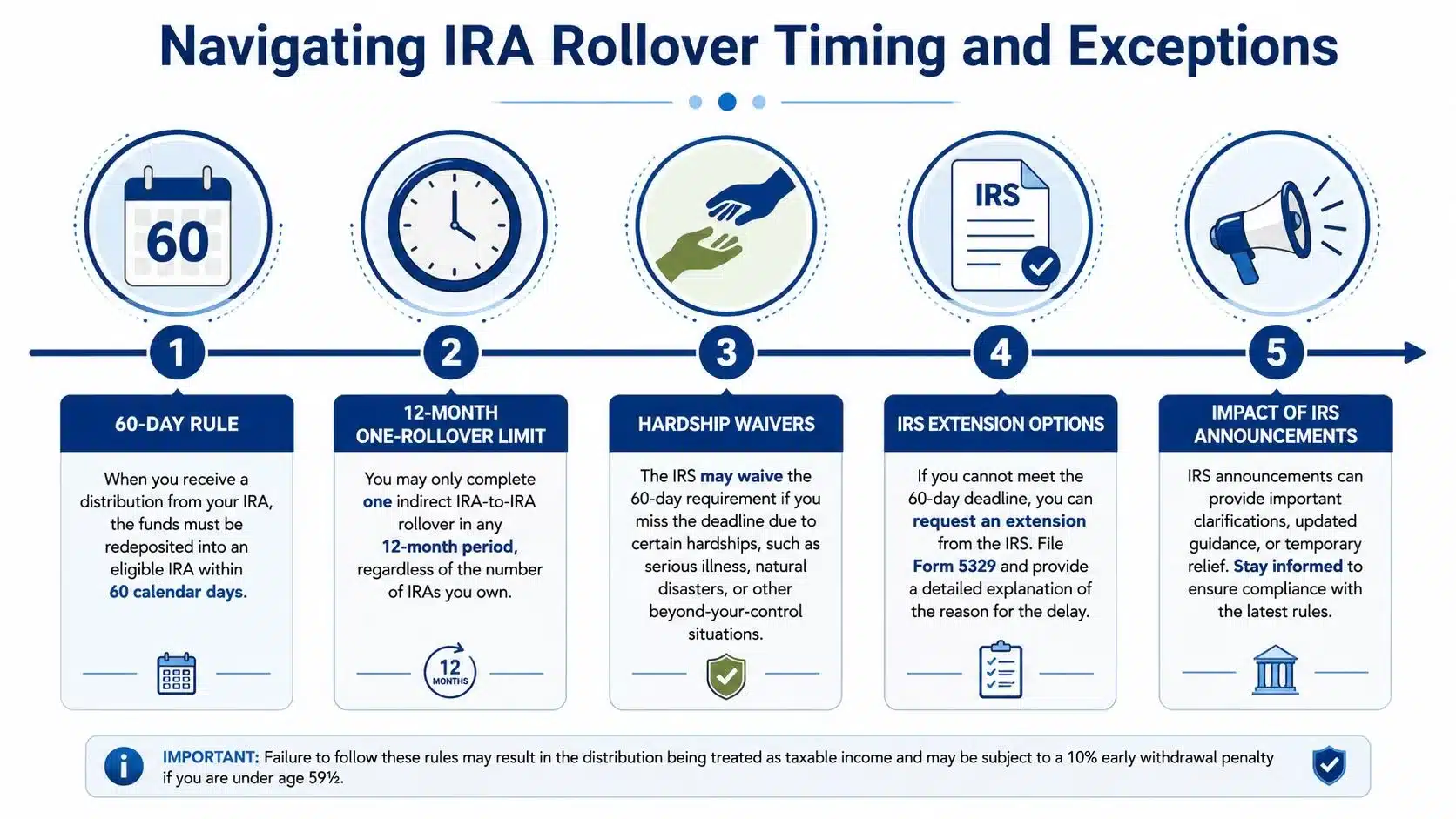
The 12-month rule that changed rollover planning
Since 2015, the IRS has applied the one-rollover-per-12-month rule on a per-person basis for indirect IRA-to-IRA rollovers. The practical point is easy to miss. Owning several IRAs does not create several rollover windows.
That rule changed old habits. Some investors once moved money between separate IRA accounts more than once in a year and assumed each account stood on its own. The IRS now looks at the individual first.
For near-retirees considering a move into a self-directed IRA for gold or silver, this matters more than it may seem. If you take possession of the funds from one IRA and later try another indirect IRA-to-IRA rollover within the same 12-month period, the extra transaction can be treated as taxable. If you are under age 59½, an early distribution penalty may also apply.
Direct transfers work differently. If the money moves straight from one custodian to another, the one-per-year limit generally does not apply in the same way. That is one reason many precious metals investors prefer direct funding when opening a gold or silver IRA. It reduces the number of tax traps created by the calendar.
Why people misread the rule
The phrase "one rollover per year" sounds simple, but the details trip people up. The 12-month period is not tied to the tax year. It is measured from the date you receive the distribution.
A kitchen-timer analogy helps here. Once the funds reach you, the timer starts running on that transaction. Opening another IRA, changing your investment choice, or deciding to buy approved bullion later does not reset the clock.
For precious metals IRAs, that confusion often shows up during research delays. An investor may spend weeks reviewing storage arrangements, coin eligibility, or silver versus gold allocation, while the rollover deadline continues to run in the background. The IRS focuses on the money movement first. The metal purchase comes after the account is funded.
For a quick explainer, this short video helps visualize the timing issue:
When life interrupts the plan
Real problems are rarely dramatic at first. A check sits in the mail. A hospital stay disrupts paperwork. A sending or receiving institution posts a transaction later than expected.
The IRS does allow relief in some late-rollover situations, but relief is not automatic. The facts matter, and the paper trail matters just as much. If the delay involved a gold or silver IRA setup, keep records that show the sequence clearly, including the distribution date, account opening documents, wiring instructions, and any notices from the custodian or dealer involved in the purchase process.
A good rule is to pause before trying a fix on your own. A rushed second distribution, redeposit, or account change can turn one timing problem into two.
Use this checklist if a deadline may be at risk:
- Mark the date you received the funds. That date controls the rollover clock.
- Save every delay record. Keep envelopes, email threads, wire notices, and custodian messages.
- Confirm the receiving IRA can accept the rollover before sending money. That step matters for self-directed accounts intended to hold IRS-approved gold or silver.
- Wait to buy metals until the rollover cash is properly inside the IRA. Buying personally first can create a different tax issue.
- Get tax guidance quickly if the deadline may be missed. Late relief depends on the facts and documentation.
Timing rules are strict, but they are manageable when the account holder treats the rollover like a handoff with a stopwatch attached.
Withholding and State Tax Considerations
A retiree can do everything right on the rollover paperwork and still get tripped up by one practical problem. The amount that arrives may be smaller than the amount that must be redeposited.
Why the check can come up short
With an indirect rollover from an employer plan, federal withholding can reduce the cash paid to the account holder. As noted earlier, that withholding does not reduce the amount that generally must reach the new IRA if the goal is a fully tax-free rollover.
A simple way to view it helps. The withholding works like a slice taken out before the money reaches your hands, but the rollover target usually stays tied to the full distribution amount. If the missing portion is not replaced from savings or other non-retirement funds, that gap can become taxable.
That cash-flow problem matters more than many near-retirees expect.
Why withholding causes rollover mistakes
Confusion often starts with a reasonable assumption. If money was already sent to the government, many people assume it should still count toward the rollover total. The IRS does not usually treat it that way for purposes of completing the rollover. The receiving IRA needs the full intended amount, not just the net check the retiree deposited.
That matters most for households that are asset-rich but cash-tight. A person may have a large former 401(k), yet limited funds in a bank account to replace the withheld amount on short notice.
Direct custodian-to-custodian movement usually avoids that problem. For retirees comparing providers before starting that process, this guide to best IRA rollover companies can help frame what to ask about transfer handling and account setup.
State taxes can complicate the handoff
Federal withholding gets the attention, but state rules can still affect the transaction. Some states have their own withholding practices on distributions. Others may apply different reporting steps or forms. The result is the same practical issue. Less cash may reach the retiree than expected.
That can create a second shortfall on top of the federal one.
For a precious metals IRA, timing and funding need to stay in order. The rollover cash should arrive inside the IRA before the custodian places an order for IRS-approved gold or silver. If withholding leaves the account underfunded and the retiree cannot replace the missing amount, part of the distribution may end up taxable, and the metals purchase plan may need to be resized or delayed.
A safer way to handle the withholding question
Start by asking whether the move can be processed as a direct transfer rather than an indirect rollover. Then ask both custodians how federal and state withholding would apply if a check were made payable to you instead of to the new IRA custodian.
For gold and silver IRAs, add two more questions. Confirm that the self-directed IRA is open and ready to receive funds before any distribution is issued. Confirm that no bullion purchase will be submitted until the rollover money is fully credited to the IRA.
That order matters because retirement funds inside the IRA and metals purchased personally are treated very differently for tax purposes.
Practical Examples and Rollover Checklist
A rollover can look simple on paper and still go wrong in one small step. The easiest way to see the tax risk is to follow a few real-world paths from start to finish.
Example one with an indirect employer plan rollover
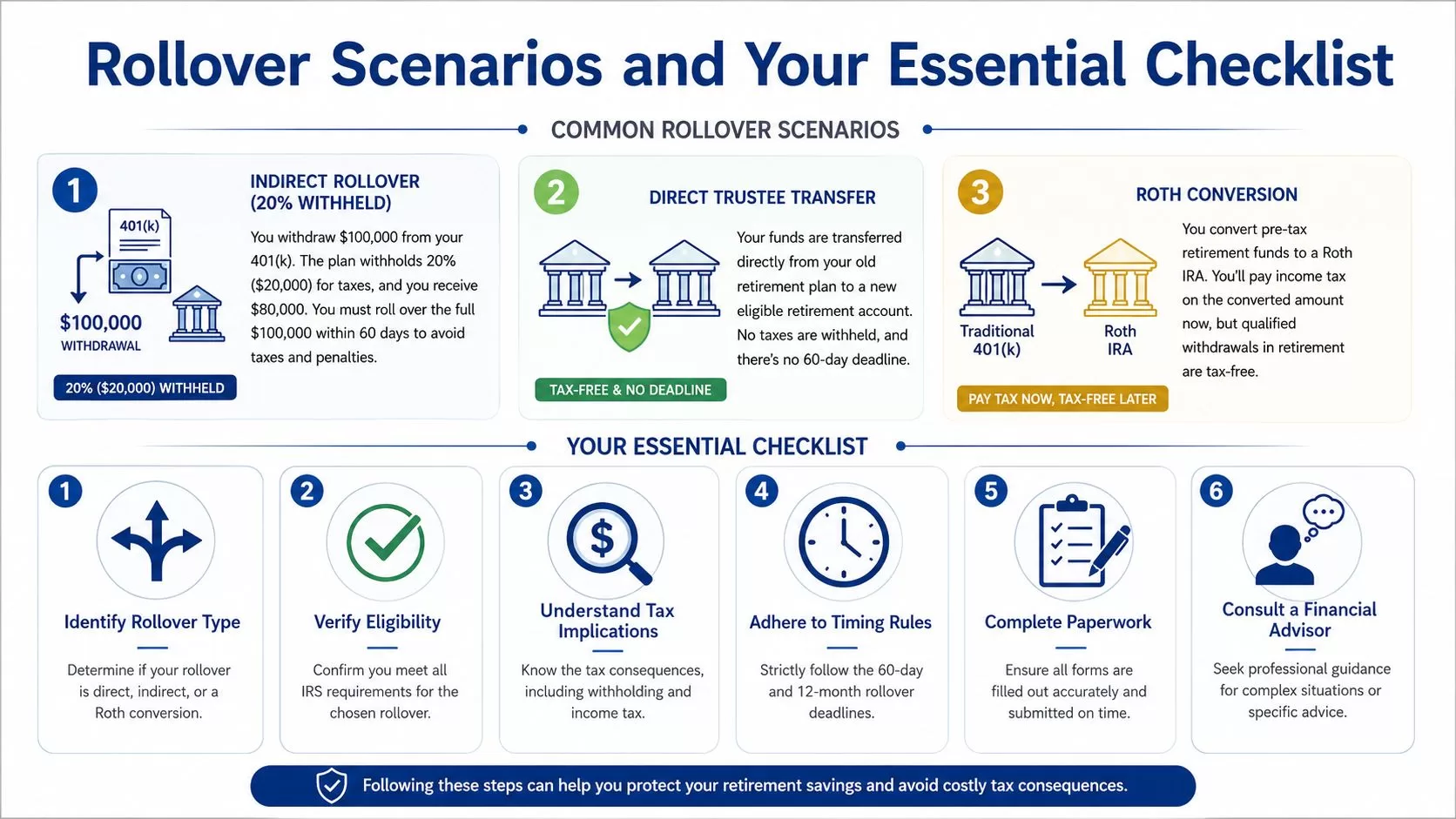
A retiree leaves a job and requests a $100,000 distribution from a former 401(k), planning to move it into an IRA. Because the payment is sent to the retiree instead of directly to the new account, federal withholding applies. The retiree receives $80,000 in hand, and $20,000 is sent out for taxes.
Here is the part that surprises people. The rollover is measured by the full distribution amount, not just the check that arrived. To keep the move fully tax-free, the retiree must deposit the entire $100,000 into the new IRA within 60 days. If only $80,000 goes back in, the missing $20,000 is generally treated as a taxable distribution.
For a gold or silver IRA, that shortfall can cause a second problem. If the new self-directed IRA only receives part of the intended funding, the metals order may need to be reduced, postponed, or reworked. It works like arriving at a closing table with less cash than expected. The transaction may still happen, but not on the original terms.
Example two with a direct transfer
A retiree opens a self-directed IRA that is set up to hold IRS-approved precious metals. The old custodian sends the funds straight to the new custodian.
That route usually creates fewer tax traps because the money never passes through the retiree's personal account. There is no need to replace withheld funds from savings, and there is less room for a timing mistake.
For precious metals investors, one more detail matters. The IRA should be fully funded before any gold or silver purchase is placed. Retirement cash inside the IRA and coins or bars bought personally are treated under different tax rules, so keeping the order of operations clean helps avoid confusion later.
Example three with a Roth conversion
A retiree moves pre-tax IRA money into a Roth IRA. That changes when the tax bill is paid, not whether tax exists.
The amount converted is generally included in taxable income for that year. The gold or silver angle does not remove that tax result. What changes in a precious metals Roth IRA is the asset held inside the account after the conversion, along with the custody and product rules that still need to be followed.
A practical checklist for a tax-safe gold or silver IRA rollover
- Choose the right path first: Decide whether the move is a direct transfer, a direct rollover from an employer plan, an indirect rollover, or a Roth conversion.
- Open the receiving IRA before money moves: The new self-directed IRA should be ready to accept funds before the old account sends anything out.
- Confirm how the payment will be made: A check payable to the individual raises different tax and timing issues than a transfer sent custodian to custodian.
- Ask about all withholding in advance: If any amount will be withheld, know whether you can replace it from other funds to complete a full rollover.
- Wait to buy metals until cash is credited to the IRA: Approved gold and silver should be purchased inside the funded IRA, not with distributed money outside the account.
- Confirm the metals are IRA-eligible: Product choice matters. The account can hold only approved bullion and coins that meet IRA rules.
- Review the tax forms after the transaction: The distribution record and the receiving account record should match the story of what happened.
- Keep every document together: Save forms, account statements, confirmations, and order records in one file until the return is filed and the rollover is fully reconciled.
Readers who want to compare custodians, process quality, and account support can review these best IRA rollover companies before choosing where to begin.
FAQ
Is an IRA rollover always tax-free?
No. A rollover can be tax-free if it is structured correctly and completed on time, but a missed step can turn part or all of it into a taxable distribution.
Is a direct transfer better than an indirect rollover?
In many cases, yes. Direct movement usually reduces withholding issues, deadline pressure, and the chance that funds are mixed with personal money.
Do gold and silver IRAs change the rollover tax rules?
The rollover tax rules still govern how money moves into the account. Precious metals add separate rules about approved products, custody, and purchase handling inside the IRA.
Can someone do more than one IRA rollover in a year?
Indirect IRA-to-IRA rollovers are subject to a one-per-12-month limit, as noted earlier. Direct transfers are handled differently.
For readers who want help sorting out the next step, Gold IRA Association offers educational resources to compare top Gold IRA companies, request a free Gold IRA kit, or speak with a specialist at 888-910-8386 before starting a rollover. This is not financial advice. Consult a licensed financial advisor, CPA, or tax professional before making investment decisions.