


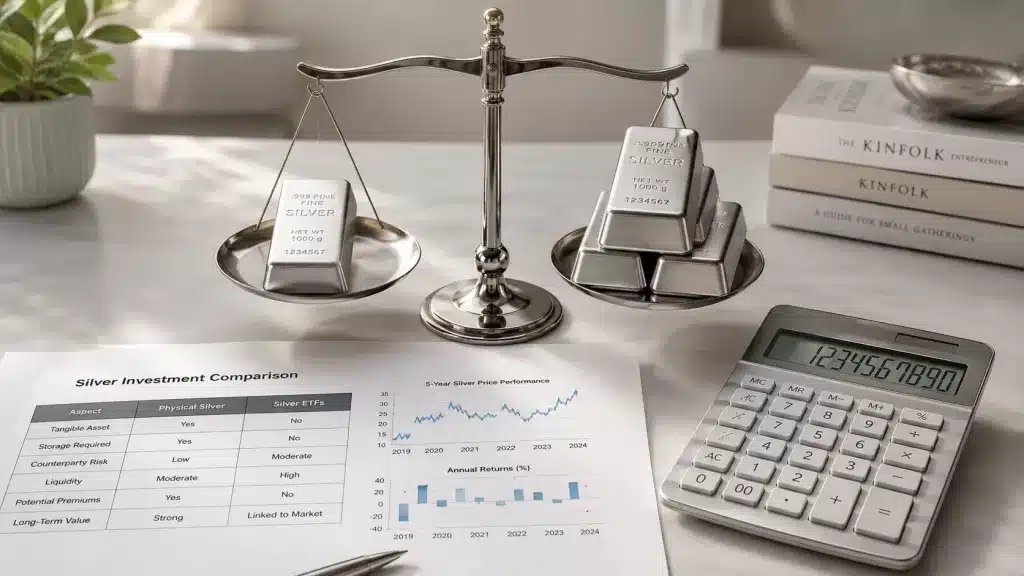
High star ratings make a silver IRA look simple. They are not. A strong rating can sit beside opaque spreads, weak buyback pricing, or a fee structure that punishes smaller accounts, so the true test in Silver IRA Reviews is whether the economics hold up after the account is funded.
| What to compare | Why it matters | What to look for |
|---|---|---|
| Review volume | More feedback usually gives a clearer trust picture | Third-party reviews across multiple platforms |
| Setup and annual fees | Fixed costs hit smaller accounts harder | Written fee schedules, not call-center quotes |
| Dealer spread | The spread decides how much silver the account actually buys | Spot price comparison and written retail pricing |
| Buyback terms | Exit costs can erase a decent entry price | Explicit buyback policy and pricing method |
| IRS compliance | A pretty website does not make an account valid | Approved custodian, depository, and eligible silver |
The most useful reviews do not stop at star counts. They test whether the provider explains IRS compliance, rollover mechanics, and the full cost of ownership before money moves. That is the difference between a marketing score and a usable retirement account.
Why Star Ratings Do Not Tell the Full Story
A five-star badge can hide bad economics. In this category, the better question is whether a provider shows compliance, pricing clarity, and exit terms in writing, because those are the variables that determine whether the account works in real life. A strong rating means little if spreads are wide, storage and administration costs are opaque, or the buyback desk leaves retirees with less metal value than they expected.
Review volume matters more than a single rating
Broad review samples are more useful than a polished score. Independent market roundups often rely on large pools of third-party feedback and multiple review platforms, which makes it harder for marketing alone to shape the story. That matters because depth exposes patterns in service, documentation, and follow-through that a handful of testimonials can easily conceal.
The practical test is straightforward. Reviews should show enough breadth to reveal recurring issues in fees, rollover support, and how clearly a provider explains the buyback process. A provider can still have problems with a large review base, but those problems are easier to see when the sample is wider and the comments are specific.
Practical rule: Treat review volume as context, not proof. A strong rating with thin detail is weaker than a slightly lower rating backed by consistent feedback about fees, rollover support, and buyback clarity.
Compliance is the baseline, not a bonus
A silver IRA is a self-directed IRA that holds physical precious metals through an approved custodian and depository, and the silver must meet the IRS purity standard of .999 fine silver or better. Any review that skips those requirements misses the main issue.
That is why the better reviews focus on execution. They ask whether a provider clearly supports IRS-approved silver, documents the custody workflow, and explains how storage works before anyone places an order. If a provider cannot show those steps in writing, the rating is a surface signal, not a reliable guide to the account itself.
How a Silver IRA Works
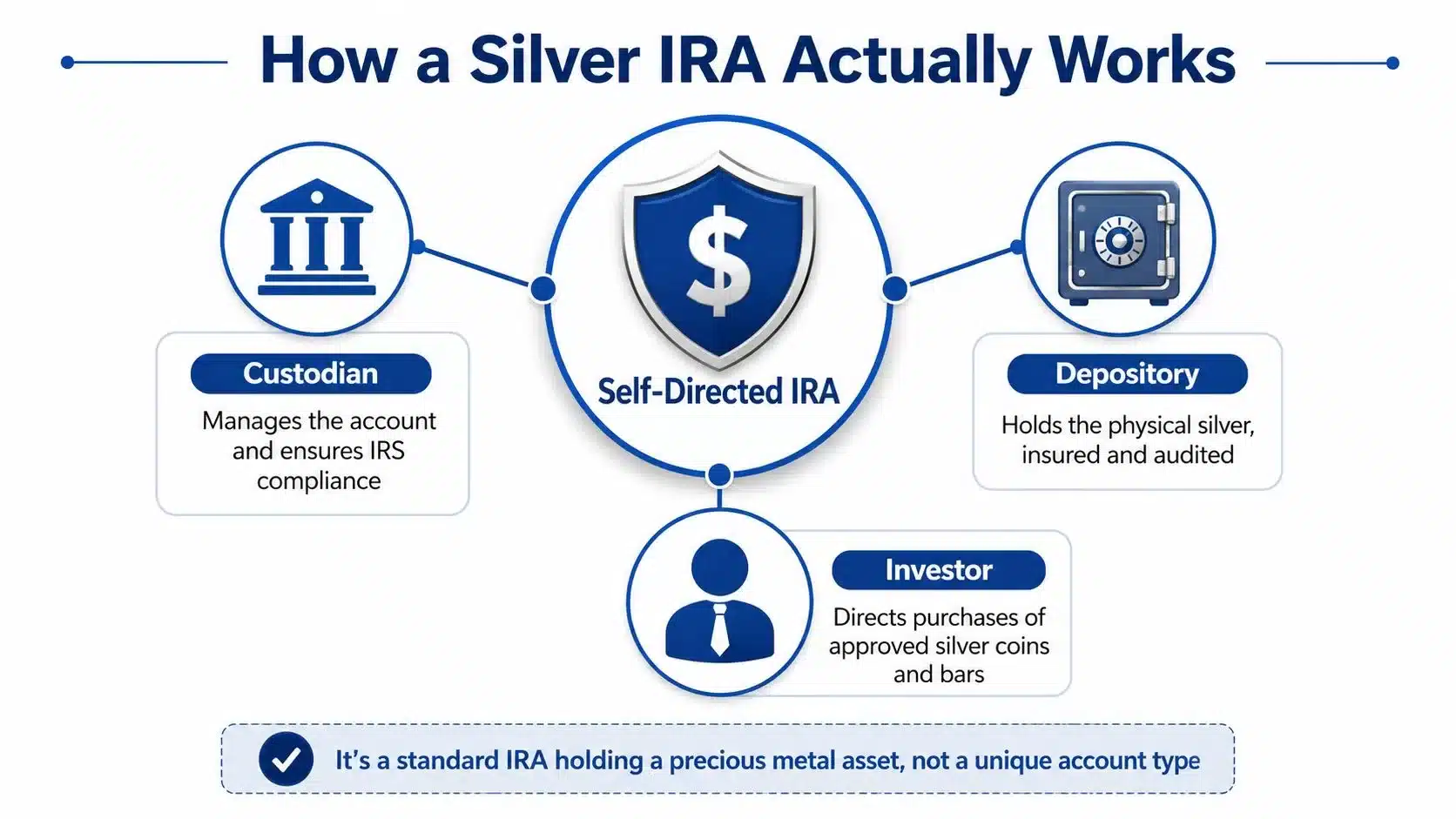
A silver IRA starts with a self-directed IRA, not a special silver-only account. The account still follows retirement wrapper rules, so the investor does not buy silver personally and keep it at home. The IRA buys physical silver inside the retirement structure, while an approved custodian and depository handle the administration and storage.
The custody chain is required
The investor directs the purchase. The custodian administers the IRA and keeps the account compliant. The depository holds the physical silver, because the metal cannot be stored personally while it remains inside the IRA structure.
That step is where many casual reviews lose the thread. A provider's product menu matters only if the metals can be held in a compliant way and the paperwork matches what was bought, which is why execution deserves more attention than the headline pitch.
For a plain-English explanation of how retirement assets can move at death, a useful companion read is the Law Office of Bryan Fagan PLLC guide. It helps readers separate account ownership questions from storage and rollover questions.
Eligible silver has a narrow lane
Market guides commonly point to familiar products such as 1 oz silver bars and American Silver Eagles when discussing IRA-eligible silver, but only if the purity and custody rules are satisfied. The product label alone is not enough. The account structure has to be right too, and what qualifies as IRA-eligible silver should be checked before any order is placed.
Contribution mechanics add another layer. In 2026, the annual IRA contribution limit is $7,500, with an additional $1,000 catch-up contribution for investors age 50+. For many savers, that makes annual contributions too slow to build a meaningful metal position, which is why rollovers often become the main funding route. As noted in the earlier silver IRA basics, the funding path matters as much as the metal selection.
Storage style changes the investor experience
Providers often describe storage in terms of segregated or commingled arrangements. Segregated storage keeps a buyer's metals separate, while commingled storage places them with similar assets in a shared system. The distinction is not just academic, because it affects how the holdings are handled, how clearly ownership is documented, and how much control the investor can expect over the account's logistics.
Breaking Down the True All-In Cost of Ownership
The headline fee is rarely the whole story. A silver IRA's real cost comes from a stack of charges, and the dealer premium over spot often does more damage than the setup fee people fixate on first.
The five cost buckets that matter
Independent fee summaries commonly break silver IRA costs into five categories, setup, annual custodian/admin, storage, insurance, and dealer spread or markup. Another consumer guide reports typical published ranges of about $0–$100 for setup, $0–$50 for transfer, $75–$150 annually for administration, and roughly $100–$200 or 0.5%–1.0% for storage, with the dealer spread added on top.
| Silver IRA Fee Categories and Typical Ranges | Typical Range | Notes |
|---|---|---|
| Account setup | $0–$100 | One-time opening cost |
| Transfer fee | $0–$50 | Often tied to funding mechanics |
| Annual administration | $75–$150 | Recurring custodian or admin charge |
| Storage | $100–$200 or 0.5%–1.0% | Depends on facility and storage type |
| Dealer spread or markup | Variable | Added above spot on purchase, and usually below spot on sale |
The critical issue is that these costs hit small accounts differently. A published schedule can look fair on paper, yet the same fixed fees create a much heavier burden on a modest account than on a larger one.
Why small accounts feel fee drag faster
Independent 2026 comparison data shows published minimum investments ranging from $5,000 to $50,000, while typical annual fees cluster around $225–$275. That gap matters because a $5,000 account absorbs the same style of fixed cost with far less metal behind it.
Bottom line: A fee schedule isn't “good” or “bad” in isolation. It becomes expensive when the account is small and the spread is wide.
The CFTC's guidance is blunt on the pricing issue. Buyers should compare the charged retail price against spot by multiplying the metal's weight by the current spot price, and they should insist on all fees, costs, commissions, and the agreed retail price in writing before signing anything (CFTC advisory). That advice is especially useful in silver IRA reviews because the spread, not the star rating, often determines how much silver the IRA receives.
For a broader breakdown of retirement-account charges, see IRA rollover fees, since transfer mechanics can add their own layer of cost.
Comparing Top Silver IRA Providers Side by Side
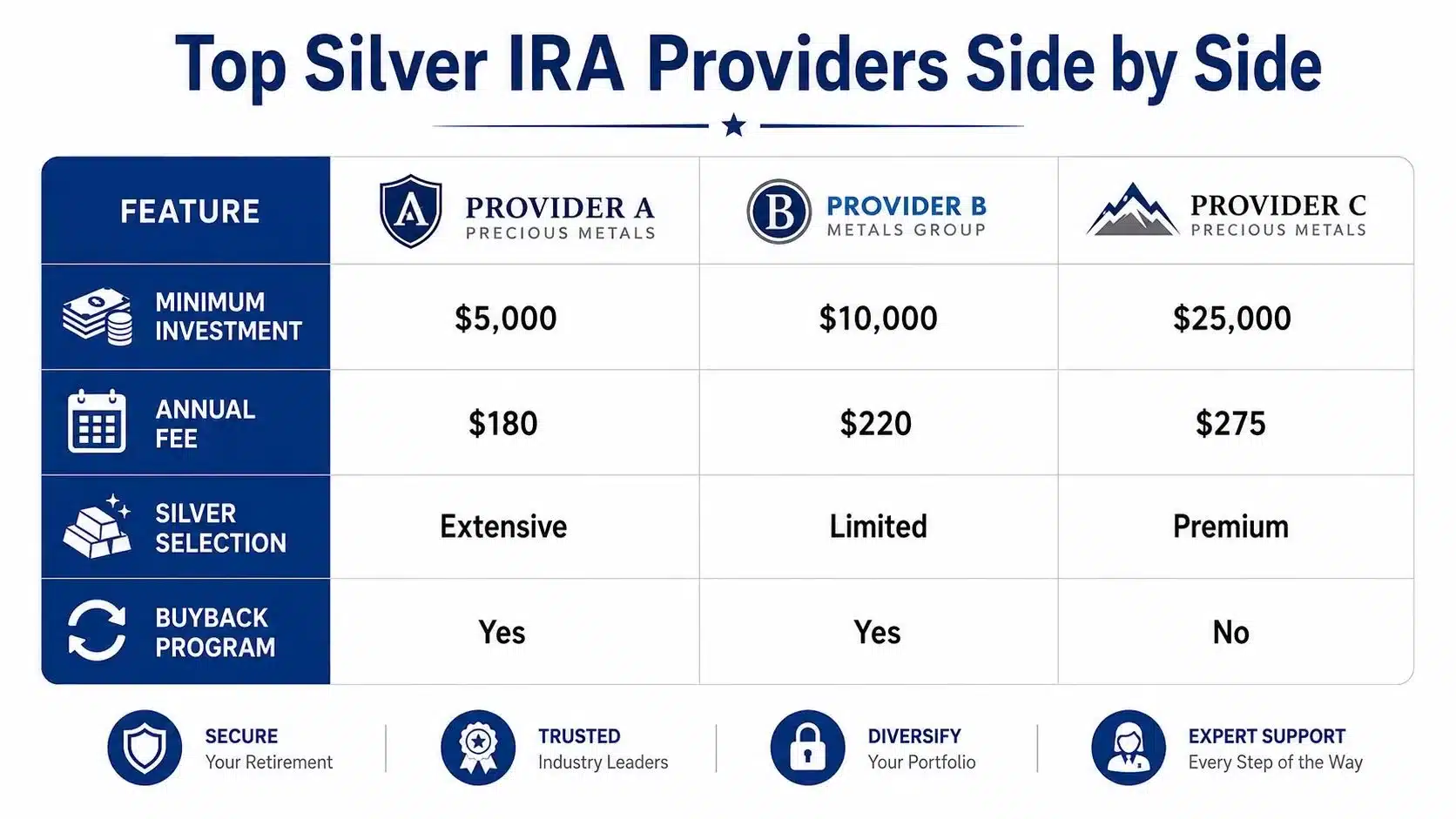
A strong silver IRA comparison starts with the economics that sit below the headline. The right provider is the one that keeps entry threshold, fee disclosure, review depth, and buyback clarity aligned without adding avoidable friction to the rollover.
How the field separates in practice
The clearest separation shows up in the size of the fixed charges and how openly they are presented. One widely cited consumer guide shows a provider with a $50 setup fee, a $125 annual administration fee, and storage costs of $100–$150 per year, which puts the first-year outlay at $275–$325 and recurring annual costs at $225–$275. That fee pattern is useful because it shows how a modest account can lose more ground to fixed charges than the marketing page suggests. The same roundup also gives a sense of review depth and minimums, which helps explain why some firms look stronger on paper than they do in a real rollover.
| Top Silver IRA Providers at a Glance | Minimum Investment | Fee Snapshot | Review Volume |
|---|---|---|---|
| Goldco | Noted in review roundups as a major provider | $275–$325 first-year cost, with recurring annual costs of $225–$275 | 4,589 reviews |
| American Hartford Gold | $10,000 | Published fee disclosure varies by setup | 2,091 reviews |
| Noble Gold | $0 | No single published first-year figure in the cited roundup | 1,324 reviews |
That table is useful, but only if it is read as a starting point, not a verdict. A published minimum investment tells you how easy it is to open an account, yet it does not tell you how much silver the IRA acquires after spreads, storage, and admin charges. A provider with a higher minimum can still be the better practical fit for a larger rollover if its cost structure is cleaner and its buyback process is easier to verify.
Review depth also matters, but for a narrower reason than most rating summaries suggest. A large number of reviews can indicate visibility and customer activity, yet it does not by itself tell you whether the company discloses dealer premiums clearly or explains how liquidation works when the time comes to sell. The better question is whether the firm gives a retiree enough written detail to compare the quoted price against spot, understand the storage arrangement, and see how the buyback spread may affect the final value.
A fair comparison therefore starts with transparency, then moves to execution. If a company can explain its fees, storage, and rollover support before the first call ends, the review deserves more weight. If the conversation gets vague the moment premiums or repurchase terms come up, the rating is probably flattering the wrong part of the business.
Matching Providers to Investor Profiles
No silver IRA company fits every retiree. The right match depends on whether the account is modest or large, whether the investor wants education first, and whether fee efficiency matters more than hand-holding.
For smaller accounts, simplicity beats flash
A first-time investor with a modest rollover should care most about low entry friction and clear pricing. That profile usually benefits from providers that publish their minimums, explain the storage setup, and avoid turning the first conversation into a sales pitch.
A small account needs transparency more than marketing. If the fee schedule is vague, the account can lose ground before the first ounce is stored.
For larger accounts, fee efficiency becomes the priority
A bigger rollover can tolerate some fixed administrative costs more comfortably, so the main question becomes whether the provider keeps the overall cost structure disciplined. The cited data showing first-year costs around $275–$325 at one major provider and annual fees around $225–$275 across the category helps explain why larger balances can make a provider's pricing look better in practice (industry report, comparison data).
That doesn't mean the largest account should automatically chase the highest-rated name. It means the investor should look for the clearest written fee structure, the cleanest buyback explanation, and the least confusing custody arrangement.
For education-heavy buyers, process matters most
Some retirees are still deciding whether silver belongs in the portfolio at all. They need a provider that slows the decision down, documents the storage and rollover steps, and can explain why a self-directed IRA is required instead of trying to rush them into a purchase.
The best fit here is often the company that answers questions plainly and doesn't treat hesitation as a problem. That usually shows up in reviews as patience, not pressure.
Navigating the Rollover and Setup Process
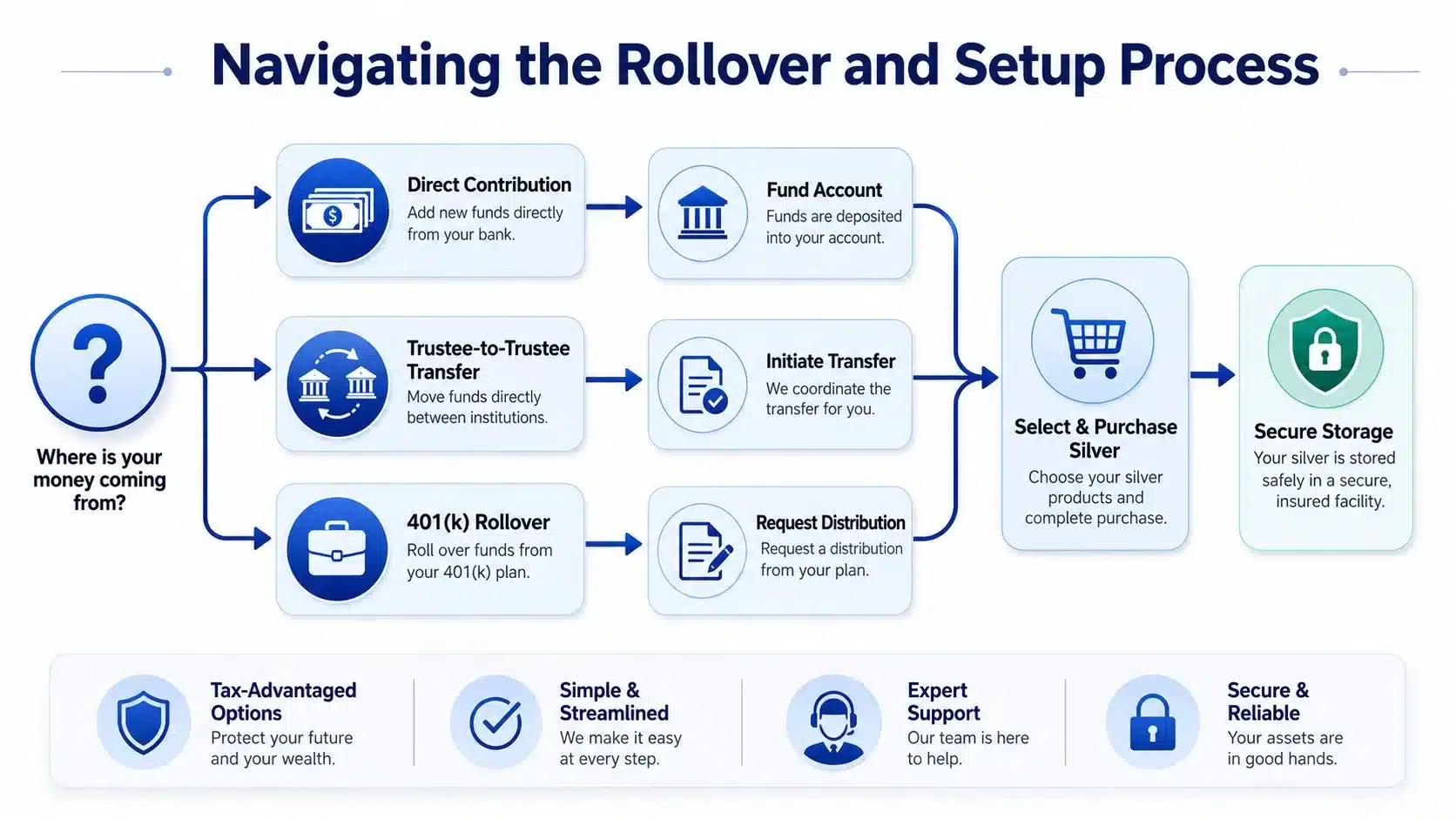
Funding a silver IRA usually begins with deciding where the money will come from, then moves through account setup, metal selection, and secure storage. The first rule is simple. Retirement money should never pass through your hands during the transfer, because that can create avoidable tax problems.
The funding paths are different
A new contribution, a trustee-to-trustee transfer, and a 401(k) rollover each follow a different paperwork path. Annual contribution limits are capped, so many retirees use transfers or rollovers instead of trying to build the position one contribution at a time (silver IRA basics).
That is why rollover support matters in reviews. A good provider should spell out who sends what, when the custodian approves the order, and how the silver is titled before anything ships.
For a fuller explanation of retirement-plan movement, the 401(k) to Gold IRA rollover guide covers the account mechanics that also apply when silver is the target asset.
The clean sequence is straightforward
The process should follow a clear sequence.
- Open the self-directed IRA. The custodian creates the account and confirms the funding path.
- Fund the account. The money arrives through contribution, transfer, or rollover.
- Choose IRS-eligible silver. The purchase must fit the .999 fine standard and the approved product list.
- Send the metal to storage. The depository receives the silver and holds it under the IRA structure.
- Keep paperwork organized. The account file should show the exact product, the storage arrangement, and the funding trail.
A provider that skips over those steps creates avoidable risk. As noted earlier in the article, the cost of a silver IRA is not limited to headline fees. It also includes dealer spreads, buyback pricing, and the way commissions are built into the transaction. If those points are not explained before funding starts, the account can become expensive before the first ounce is stored.
Short version: If the rollover conversation stays vague, stop it and demand the paperwork before any funds move.
Is a Silver IRA Worth the Complexity
A silver IRA can make sense, but only for the right balance of horizon, account size, and tolerance for friction. The structure offers physical metal exposure inside a retirement account, yet it also adds custody rules, storage costs, and a spread that can bite harder than people expect.
The case for it is real, but not automatic
A silver IRA may help diversify retirement assets because it holds a tangible asset outside the usual stock and bond mix. It can also fit savers who want metals exposure without buying and storing bullion personally.
The trade-offs are just as real. Annual contribution limits are capped, storage is mandatory, and the dealer spread can reduce how much silver ends up in the account. That combination makes the strategy slower and more expensive than many retirees assume.
Liquidity and exit pricing deserve more attention
The CFTC warns that dealers usually charge more than spot when you buy and pay less than spot when you sell back, so the spread can materially affect whether an investor ever makes a profit (CFTC metals advisory). That warning matters most when the account is small, because fixed fees and wider spreads consume a bigger share of the total.
Silver IRAs also compete with simpler hedges such as TIPS or broad commodity funds. Those alternatives don't hold physical metal inside a self-directed IRA, but they may offer easier liquidity and less administrative friction. The better choice depends on whether the retiree wants direct metal ownership inside a tax-advantaged account or a more flexible inflation hedge.
The right question isn't whether silver sounds defensive. It's whether the account's rules, costs, and exit terms still make sense after the enthusiasm fades.
For many readers, that answer will depend on how much of the portfolio they're moving and how soon they may need cash flow. Small balances and near-term withdrawals usually argue for caution. Larger, longer-horizon allocations can justify more complexity if the investor understands the fee drag upfront.
This is not financial advice. Consult a licensed financial advisor, CPA, or tax professional before making investment decisions.
Gold IRA Association publishes plain-English guides, fee breakdowns, and provider reviews so retirees can compare silver IRA options with fewer surprises. If this analysis helped clarify the role of spreads, custody, and rollover mechanics, visit Gold IRA Association to compare more educational resources and take the next step with confidence.