



A 1 oz Gold Maple Leaf typically trades at spot plus a 3% to 6% dealer premium, and recent U.S. buy quotes have ranged roughly from $4,190 to $4,583 across dealers, while resale values often run 97% to 99% of spot. That spread is why two people can look at the same coin and still walk away with very different costs and different returns.
For retirement investors, the confusing part isn't the gold itself. It's the fact that the headline gold price is only the starting point, and the decision comes down to premiums, resale spread, storage, and how much of your money turns back into metal you can later sell or distribute.
Understanding the True Cost of Gold Maple Leaf Coins
A buyer can see two quotes for the same 1 oz Maple Leaf and assume one dealer is overpriced. The difference usually comes from inventory pressure, shipping, dealer margin, and the size of the coin more than any change in the coin itself. The more useful question is what this specific coin costs all in, and what comes back at resale.
The Canadian Gold Maple Leaf has long been a benchmark bullion coin because it launched in 1979 and reached its modern 99.99% purity in 1983, making it one of the earliest widely traded ultra-fine gold coins in the market. Its early scale also mattered. The 1 oz version debuted with a mintage of 1 million coins in 1979 and rose to 1.215 million in 1980, which showed how quickly international demand could build in a new bullion product. Market-tracking pages that follow Maple Leaf price movement connect those production details with how buyers and sellers have valued the coin over time.
Practical rule: A Maple Leaf quote is only useful after the buyer separates metal value from dealer markup and then asks about the resale side too.

A useful way to think about the coin is simple. Spot price is the base gold value, while the premium is the added amount needed to cover fabrication, distribution, dealer profit, and market tightness. For retirement savers, that premium matters because it changes how much gold gets purchased with the same dollar amount, especially when buying in smaller increments or inside a Gold IRA. The same idea shows up when comparing troy ounces versus regular ounces in our guide to troy ounces versus regular ounces.
How Spot Prices and Dealer Premiums Shape Maple Leaf Costs
A Maple Leaf quote makes more sense once you separate the price into two layers. The first is the international spot gold price, the wholesale value of one troy ounce of gold. The second is the dealer premium, the extra amount added for fabrication, distribution, and the dealer's margin.
That extra layer is where many buyers misread the actual cost. A premium can be normal in one market and excessive in another, and that difference changes the outcome for a retirement buyer. If the coin is later sold back at a bid near 97% to 99% of spot, part of the upfront premium may never return. The result is a wider gap between what you pay and what you can realistically recover, so the true all-in cost matters more than the headline quote.
Why the 1 oz format often gives the best value
The 1 oz Maple Leaf usually offers the best value because its fabrication cost is spread across the most gold content. Smaller coins such as 1/2 oz, 1/4 oz, 1/10 oz, and 1/20 oz make sense for buyers who want flexibility, since they can sell in stages instead of all at once. The tradeoff is simple. Fractional coins usually carry more overhead per ounce, so the buyer pays more for that convenience.
That pattern is easier to see once you compare the standard bullion format with its smaller sizes. A 1 oz Maple Leaf is defined by a 31.1035 g weight, 30.00 mm diameter, 2.87 mm thickness, and 999.9 fine gold composition, while the smaller denominations keep the same purity and shrink in scale. The troy ounces versus regular ounces guide helps explain why a coin priced by the troy ounce should not be confused with everyday household ounce measurements.
Practical rule: If the goal is the lowest cost per ounce, the 1 oz coin usually wins. If the goal is staged selling, smaller pieces can still make sense.
For retirement math, the spread is the part that often gets overlooked. A buyer may pay a premium at purchase, then receive a resale bid that sits close to spot later. That means the premium has to be recovered through gold's price movement before the position feels profitable. In that sense, the buying spread and the selling spread work together, like two sides of the same ledger, and the true all-in cost gives a clearer picture than a single quote.
Where to Check Live Gold Maple Leaf Prices Across Markets
Live quotes vary because dealers do not source, ship, or hold inventory under the same conditions. A Canadian buyer, a U.S. buyer, and a European buyer may all see different numbers for the same coin on the same day. Currency conversion, shipping, insurance, and local demand can all move the final ticket price.
A smart buyer checks more than one market view. Licensed bullion dealers, precious metals price charts, and live market quote pages can show whether the premium is sitting near the usual range or has moved higher because inventory is tight. The goal is not to chase the absolute lowest headline number. The goal is to find a quote that still makes sense after shipping, insurance, and storage are added.
How to judge a quote without getting lost in the noise
A clean way to review offers is to ask three questions.
- What is the coin's price relative to spot? If the dealer is far above the usual premium range, the buyer should understand why before proceeding.
- What is included in the quote? Some prices look low until shipping or payment fees are added.
- How easy is the coin to resell? A lower purchase price can still be expensive if the buyback spread is wide.
The point is to compare apples to apples. A quote that looks a bit higher may be better if it includes more favorable fulfillment terms or a tighter buyback spread later. That's especially true in the bullion market, where the difference between a convenient quote and a bargain quote can be smaller than it first appears.
A general bullion overview is helpful here, since the Maple Leaf is only one type of physical gold product. For a simple explanation of bullion itself, see this basic guide.
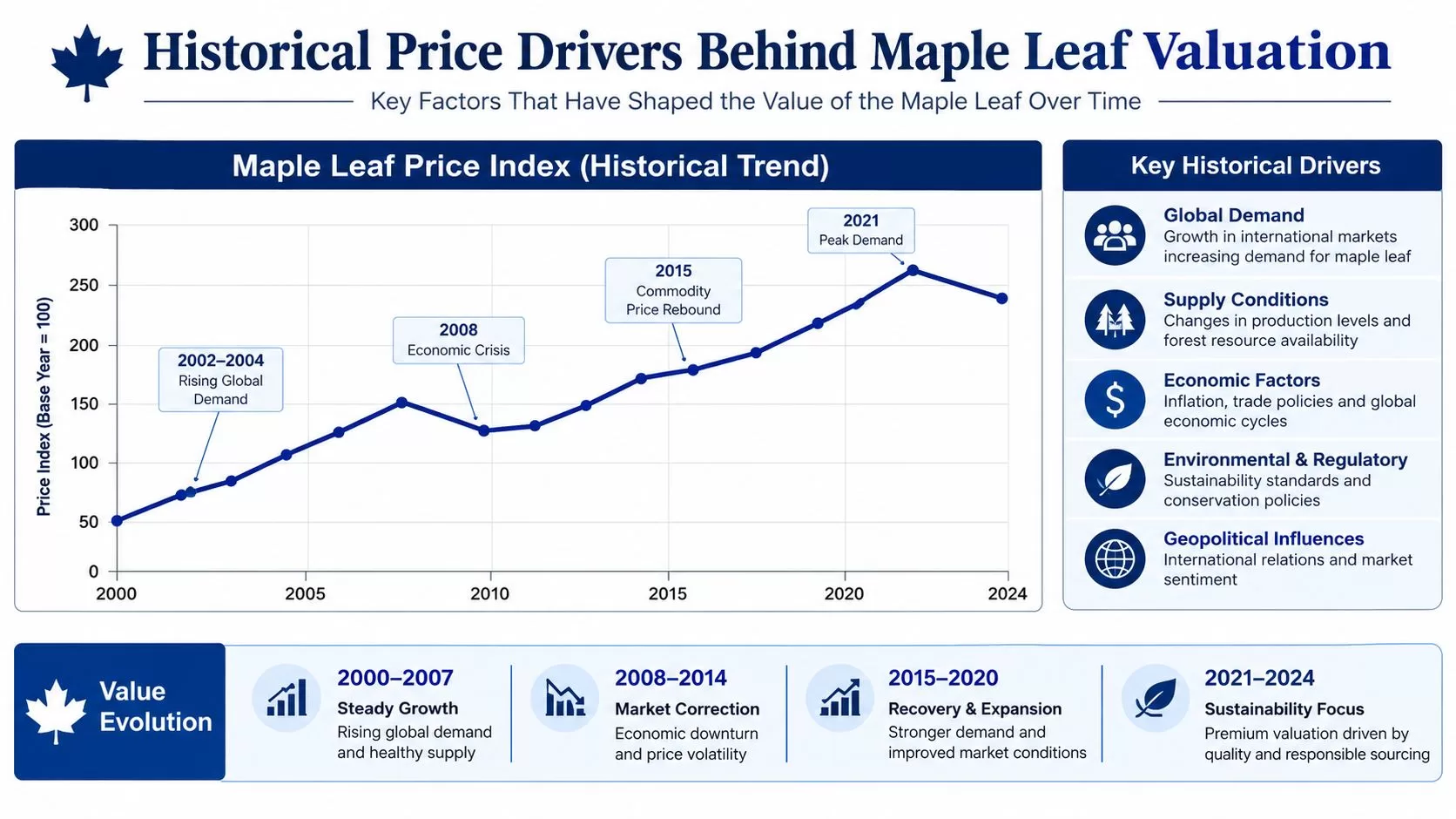
Historical Price Drivers Behind Maple Leaf Valuation
A Maple Leaf coin is priced like the gold it contains. Its value rises and falls with the same broad forces that move bullion everywhere, including inflation expectations, dollar strength, geopolitical stress, and central bank buying patterns. For a retirement buyer, the key point is simple. The coin is usually a direct reflection of the metal market, not a separate collectible market with its own pricing logic.
That makes the core question less about where gold is headed in the abstract and more about what a buyer pays above spot and what a seller gives up on the way back out. A coin can trade near the metal price in one period and carry a noticeably wider premium in another, especially if supply is tight or dealer inventory is thin. The all-in cost matters because it shapes the return hurdle from day one. If a buyer pays a strong premium and later sells back at 97% to 99% of spot, the spread can erase a meaningful part of the gain that spot alone appears to show.
Why premiums can widen or shrink
Premiums are not fixed. When demand rises or supply tightens, dealers often ask more over spot because replacement coins are harder to source. When the market calms down, that extra layer can shrink. Two investors can buy the same Maple Leaf close to the same spot price and still end up with different total costs if they buy in different supply conditions.
That is why a quote should be judged as a full package, not just a headline number. A small premium can still be expensive if the buyback spread is wide later, while a higher purchase price can be reasonable if the coin is easier to resell and the gap back to spot stays narrow. Retirement investors often miss that second half of the equation. The purchase premium is only part of the story, the resale discount is the other part.
Historical gold charts help explain why those swings keep happening. Long-run price records show that gold moves in cycles rather than on a straight line, so Maple Leaf pricing follows a changing bullion backdrop instead of sitting still. Monex also notes gold's all-time high near $5,590 per ounce on 2026-01-28, which is a reminder that the metal environment can reprice quickly when market stress builds. A coin price that looks high by yesterday's standards can still be a normal reflection of a stronger gold market.
The main takeaway is that Maple Leaf valuation has two layers, the gold market cycle and the coin's premium layer. Buyers who keep both in view are less likely to focus only on the spot chart and more likely to judge the true cost of entry, plus the likely resale haircut later.
Comparing Maple Leafs to Other IRA-Eligible Gold Coins
The Maple Leaf is often compared with the American Gold Eagle because both are widely recognized, sovereign-minted bullion coins. The main difference is purity. The Maple Leaf is .9999 fine gold, while the American Gold Eagle is .9167 fine gold. That does not mean the Eagle contains less gold in its standard size, but it does mean the coins are built around different design priorities.
The Maple Leaf's higher purity makes it simpler to verify and aligns with the IRS fineness threshold for bullion held in retirement accounts. The coin was first introduced by the Royal Canadian Mint in 1979 as a .999 gold bullion coin and upgraded to .9999 fine gold in 1982, which made it one of the earliest major bullion coins to push purity to the modern 24-karat standard. Wikipedia's Canadian Gold Maple Leaf page notes that upgrade and the coin's place in bullion history.
What higher purity changes in practice
Higher fineness brings real tradeoffs. A softer coin can show more surface wear if handled carelessly, which matters to buyers who care about condition and resale appearance. The other side of that coin is clearer fineness and a straightforward bullion profile, which many retirement savers appreciate because it is easy to document and explain.
The American Gold Eagle has a different appeal. Its 22-karat alloy is designed for durability, which can make it a better fit for buyers who expect frequent handling outside professional storage. The Maple Leaf, by contrast, tends to attract buyers who want maximum purity and an internationally recognized bullion format.
A retirement buyer should think less about which coin is “better” in the abstract and more about which one matches the intended holding pattern, storage setup, and resale plan.
The pricing comparison also matters. Maple Leafs are often competitively priced against other bullion coins, but the best value can shift depending on dealer inventory and demand. That's why purity alone should never be the only filter. Liquidity, spread, and handling risk belong in the same conversation.
Holding Gold Maple Leafs in a Gold IRA
A Gold IRA buyer who wants Maple Leafs is usually looking for a coin that fits cleanly under bullion rules and is easy to recognize in storage. The Maple Leaf does that because its .9999 purity clears the common IRS fineness threshold for bullion. Its sovereign-minted format also helps custodians identify what is being held, which is one reason retirement savers often prefer it over a generic bar.
Eligibility is only the first step. The more important factor for retirement buyers is total ownership cost. Storage fees, custodian arrangements, dealer spread, and the gap between buy and sell prices all shape the all-in result, even when the coin itself is fully compliant. A buyer who focuses only on purity can miss how much return is lost to those ongoing costs.

What IRA buyers should check before funding
- Purity documentation: The Maple Leaf's fineness is one reason it fits cleanly within bullion rules, but the paperwork still has to match the coin being stored.
- Storage method: Segregated and commingled storage can affect both cost and how the metal is identified later.
- Handling risk: Softer gold can pick up marks if it is moved around too much, which matters if the investor ever takes distribution.
- All-in timing: Buying during periods of high premium can reduce how much metal gets acquired for the same contribution amount.
The coin's standard measurements keep the discussion concrete. A 1 oz Maple Leaf is a 31.1030 gram bullion coin with a 50 Canadian dollar face value and 30 mm diameter, according to its specification details and Gold IRA Association's guide to IRA-approved gold. Those details matter because retirement buyers should know exactly what they are asking a custodian to store.
The short version is that the Maple Leaf can be a sensible Gold IRA asset, but only if the buyer is comfortable with premium levels, storage costs, and resale planning. Purity alone does not make a purchase efficient.
Frequently Asked Questions About Maple Leaf Pricing and IRAs
Are Maple Leafs worth the premium compared with gold bars?
Sometimes, but not always. Bars can carry lower fabrication costs, while coins often offer easier recognition and flexibility at resale. The better choice depends on whether the buyer values lower entry cost or easier staged liquidation.
Do fractional Maple Leafs make sense for smaller retirement allocations?
They can. Fractional coins are useful when the buyer wants to build a position gradually or keep some flexibility for later sales. The tradeoff is that smaller sizes usually cost more per ounce, so the buyer pays more for convenience.
How much value might be recovered on resale?
Independent bullion commentary in the brief notes 97% to 99% of spot for standard bullion coins. That range is useful because it shows why the buy premium has to be considered alongside the expected sell spread, not in isolation.
Should a buyer wait for gold price peaks to pass before buying?
Not necessarily. If the goal is long-term diversification, the more important question is whether the current premium is reasonable and whether the allocation size fits the overall retirement plan. A near-retiree who buys in stages may reduce timing risk without trying to guess the top.
What matters more inside an IRA, purity or spread?
Both matter, but spread often gets overlooked. A compliant coin with a wide dealer margin can still be more expensive than a lower-premium alternative, even if the metal content is the same. That's why the true all-in cost should stay front and center.
The broader lesson is simple. A Maple Leaf can be a clean, reputable way to own physical gold, but the investor still needs to compare spot, premium, storage, and resale spread before deciding.
Gold IRA Association publishes plain-English guides that help retirement investors compare bullion, understand IRA rules, and avoid hidden costs. For more educational resources on Maple Leaf pricing and Gold IRA strategy, visit Gold IRA Association and review the options with a licensed financial advisor, CPA, or tax professional before making any investment decision.