


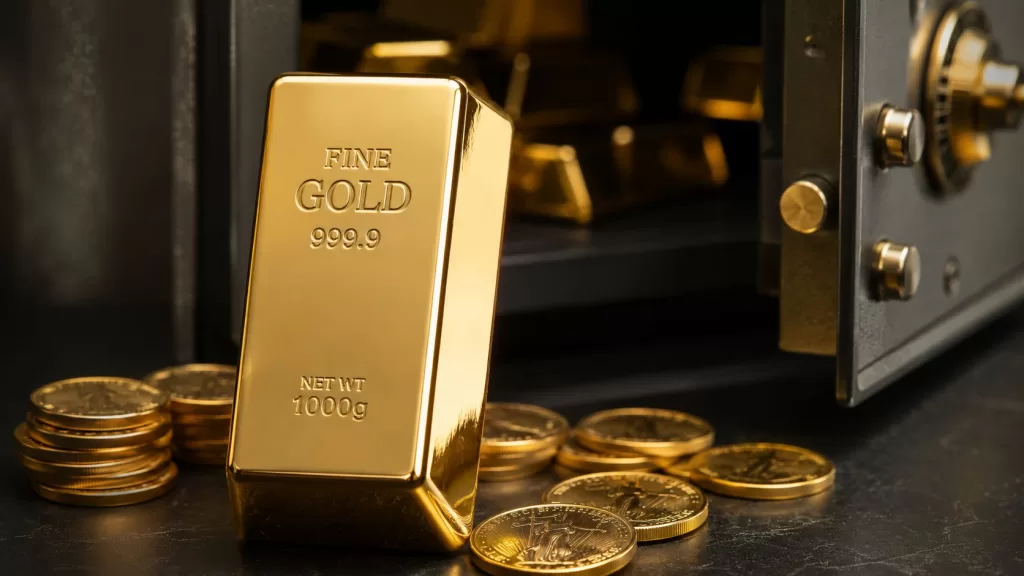
Bullion is precious metal valued by weight and purity, not rarity or design, and for a Gold IRA the key question is whether it meets the IRS purity rule, usually 99.5% for gold. That's where a lot of near-retirees get tripped up, because not every gold coin or bar is treated the same way once retirement-account rules enter the picture.
A lot of people hear the word bullion in Gold IRA marketing and picture a shiny bar locked away somewhere. Others think any gold coin must count if it's real metal. The matter is more specific, and that detail matters when someone is trying to protect retirement savings without accidentally buying the wrong product.
What Is a Bullion in Plain English
People usually run into the word bullion when they're comparing gold bars, silver coins, or retirement-account metals, then realize the term doesn't always mean the same thing in every setting. In plain English, bullion is precious metal, most commonly gold, silver, platinum, or palladium, valued mainly for its metal content rather than artistic design or collectible rarity. In market terms, it's often refined into standardized bars, ingots, rounds, or certain coins, and its price is tied to the metal's spot price rather than to a collector premium Britannica's bullion definition.
Bullion lives in two worlds. In everyday investing, it means physical metal that can be weighed, tested, and traded efficiently. In retirement planning, the same word only becomes useful if the product also fits the IRS rules for a self-directed IRA, which is where many readers get confused.
Practical rule: if the price is driven mostly by weight and fineness, it's acting like bullion. If the price is driven by rarity, grade, or collector demand, it's drifting into a different category.
That difference is why bullion is often described as the foundation of precious-metal ownership. It's standardized, widely recognized, and easier to value across major markets than jewelry or highly collectible coins Britannica on bullion. It's also why the phrase what is a bullion tends to come up for retirees who are trying to separate the metal itself from the packaging, artwork, or brand story around it.
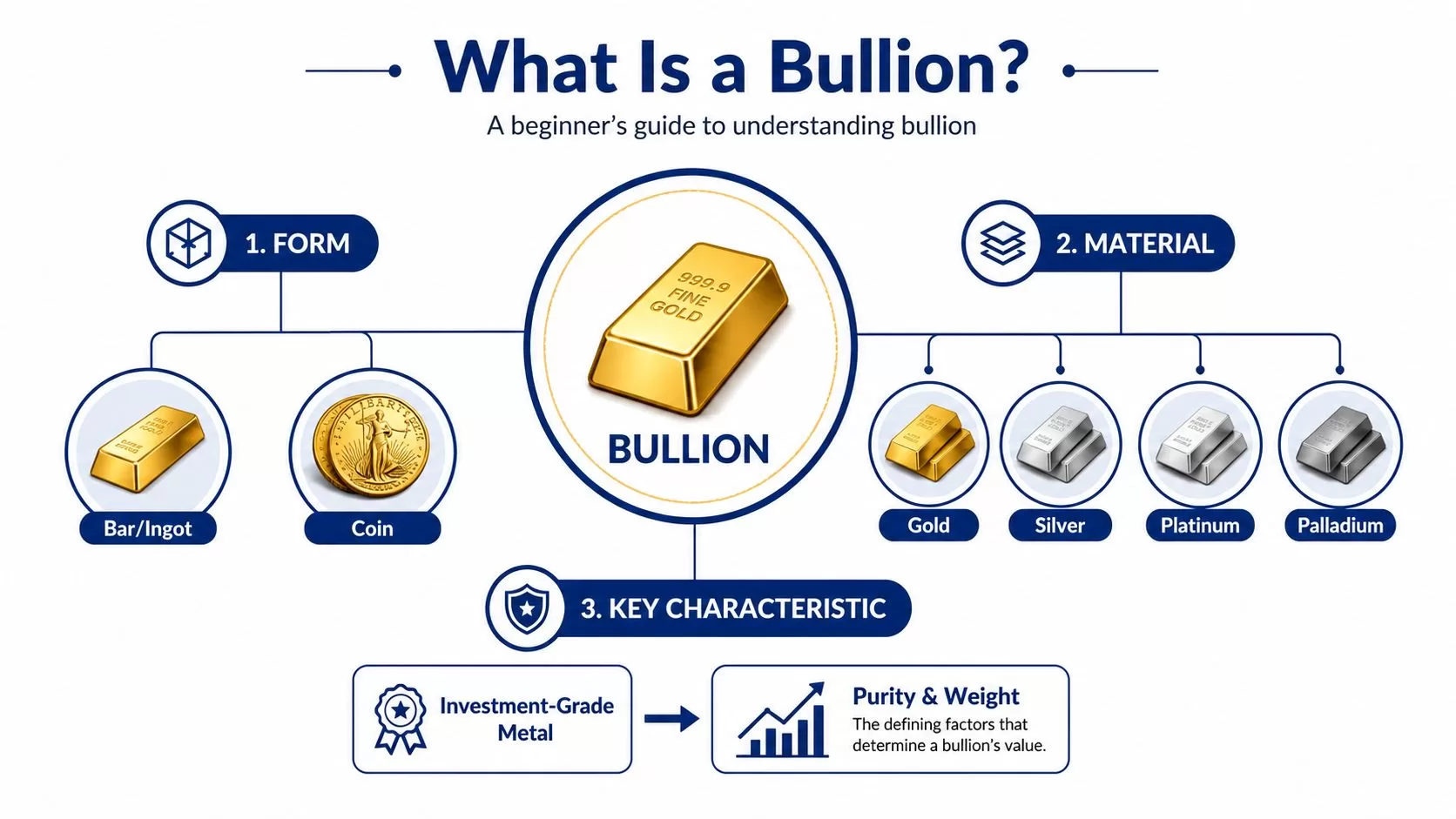
The simplest way to remember it is this, bullion is the metal first, the form second. A bar, coin, or round can all be bullion if the item's main value comes from the precious metal inside it.
Common Forms of Bullion
A retiree can walk into a shop and see several pieces of metal that all seem to count as bullion, and that is where confusion usually starts. The main forms are bars, coins, rounds, and ingots, and each one is built around the same basic idea, standardized precious metal that can be counted, tested, and stored with less friction than handmade or one-off objects Provident Metals on bullion forms.
Bars, rounds, and coins serve different buyer habits
Bars are often the most straightforward form of bullion. They can come as minted ingots or cast bars, and they appeal to buyers who want compact storage and simple valuation. Rounds look like coins, but they are not issued as legal-tender currency, so they usually appeal to buyers who want bullion without the government-coin premium.
Coins sit in the middle. Some are government-minted bullion coins, while others are collectible issues that happen to contain precious metal. Retirement buyers need to slow down here and check the details instead of assuming all coins are interchangeable.
A useful comparison is this, a 1-ounce silver bar from one refinery and a 1-ounce silver round from another may look different, but if they share the same fineness and weight, their resale logic is still driven by the metal content. The market may prefer one brand over another for recognition, but the underlying value story stays anchored to the same bullion basics. If you need a reminder about how ounce measurements affect buying decisions, this guide to troy ounces versus regular ounces helps clear up a common source of confusion.
Good buying habit: choose the form that fits storage and resale preferences, but let standardization, weight, and purity drive the valuation.
Why form matters less than consistency
For long-term holders, form is mostly a preference question. Some people like bars because they stack neatly. Others prefer coins because they are easier to handle and recognize. Bullion stays bullion across those formats as long as the metal content is clear and the product is consistently manufactured.
That consistency is what matters when a piece of metal may later need to fit retirement-account rules. An item can look familiar and still fail the standards for a Gold IRA if its specifications are unclear or if it does not meet the IRS requirements for approved metal and storage. The American Gold Eagle is a useful example of how form and tax treatment can separate, since some coins receive special treatment even when they do not match the same fineness pattern as other gold products.
Keep the focus on what can be verified. Weight, fineness, and clear manufacturing standards tell you far more than the shape alone, and they also make it easier to sort everyday bullion from metal that can sit in an approved depository.
How Purity and Spot Price Determine Value
A bullion price starts with fineness, the parts-per-thousand measure of how much pure metal a piece contains. A coin marked .999 is 99.9% pure, while a .9999 piece is 99.99% pure. Gold bars often use the higher benchmark, and silver bullion is commonly associated with .999 purity Britannica on bullion purity and pricing, Chards on bullion purity.
Spot price is the metal baseline
The other side of the equation is spot price, the live wholesale price for the metal itself. Dealers usually charge spot plus a premium, and that premium covers fabrication, distribution, and demand. The buyer pays more than spot upfront, then later sells back into a market that mostly cares about the same weight and fineness.
Spot price sets the baseline, and the dealer adds a premium on top. If a 1-ounce.9999 gold bar is being sold in a market where the metal's live price is the baseline, the buyer pays that baseline plus the dealer's premium. The exact premium changes by product and market conditions, so the point is not the dollar figure. The point is that the bar's value is built from the same two elements every time, weight and purity.
Resale lesson: premiums matter most when buying, but weight and fineness matter most when selling.
That is why bullion can feel different from jewelry. Jewelry may contain gold, but the workmanship and brand can distort the price. Bullion strips the product back to the metal, which makes the pricing logic much cleaner for investors who care about liquidity.
| Metal | Typical Purity | Fineness | Common Form |
|---|---|---|---|
| Gold | High-purity investment grade | Often .9999 on bars, and some industry guides describe 99.5% as a common investment threshold | Bars, coins |
| Silver | High-purity investment grade | Commonly .999 | Bars, coins, rounds |
| Platinum | High-purity investment grade | Typically described by fineness standards tied to bullion products | Bars, coins |
| Palladium | High-purity investment grade | Typically described by fineness standards tied to bullion products | Bars, coins |
For readers comparing ounces accurately, the difference between a troy ounce and a regular ounce matters. A separate guide on the site explains that distinction in plain English, and it is worth reviewing before comparing product labels, especially in a piece like troy ounce vs regular ounce.
Bullion Coins vs Numismatic Coins
The biggest mistake many retirement buyers make is paying for rarity when they thought they were buying metal. Bullion coins are designed to track precious-metal content, while numismatic coins are driven by scarcity, condition, and collector demand Golden State Mint's bullion vs proof overview.
The price driver changes everything
A bullion coin's value usually follows the metal inside it. A numismatic coin can carry a much higher price because buyers want the date, grade, history, or limited availability. That means two coins with similar metal weight can behave very differently in resale.
A 1-ounce American Gold Eagle is a good example of a bullion-style coin, because investors typically value it as a precious-metal vehicle. A graded pre-1933 gold coin of similar weight may also contain gold, but part of its price can come from collector demand, not just the metal. That creates extra variability, since the coin can move for reasons that have nothing to do with the gold spot price.
Why that matters for retirement accounts
For a Gold IRA focused on preserving metal value, bullion coins and bars are usually the cleaner choice. They're easier to price, easier to explain, and more straightforward to compare across dealers and vaults. Numismatic coins belong to a different strategy, one where the collector market matters as much as the metal market.
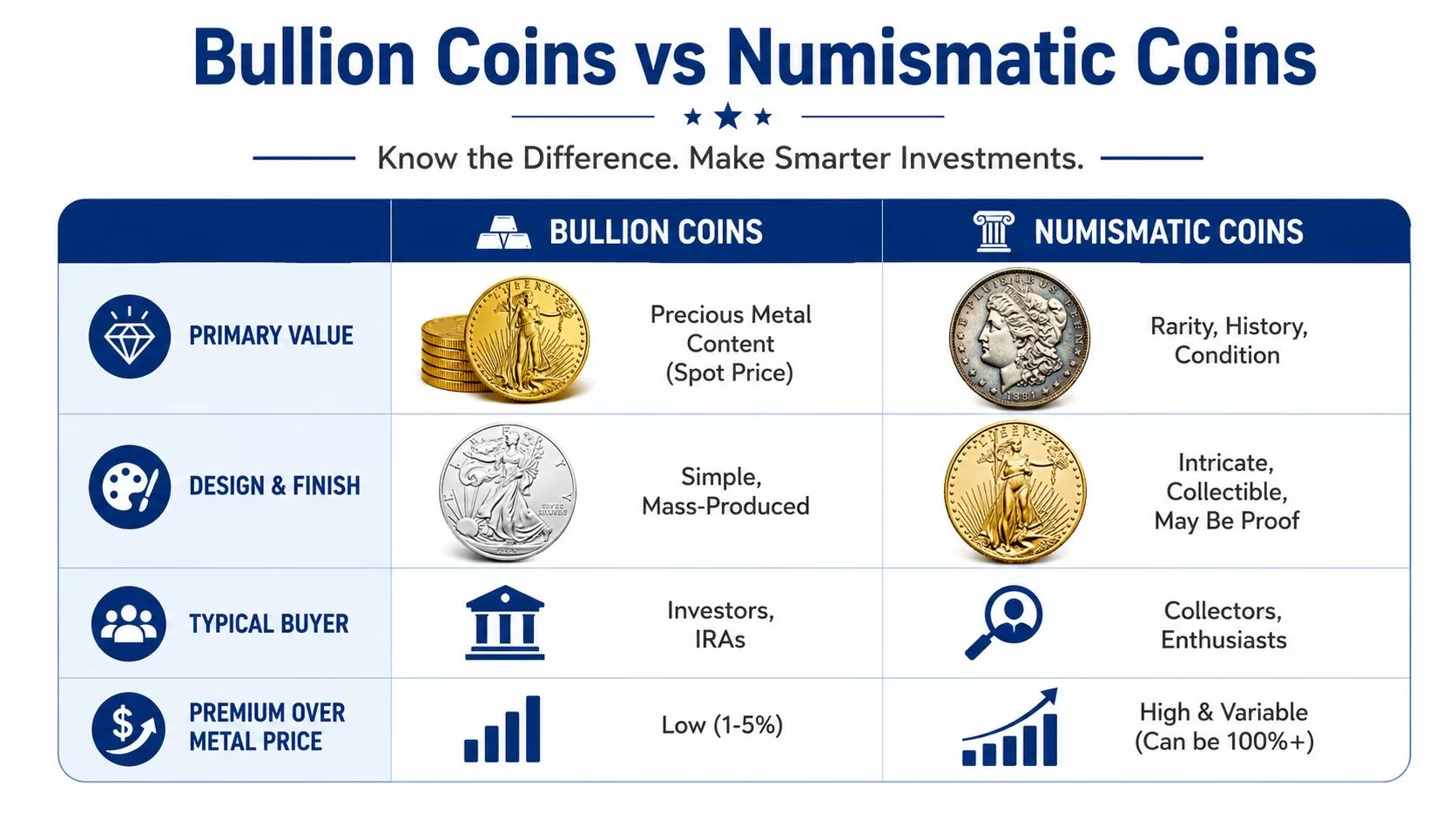
Bullion coins are about metal first. Numismatic coins are about story first.
The difference also shows up in liquidity. Bullion coins are widely recognized because dealers can value them quickly by weight and purity. Numismatic coins usually require a narrower buyer base, which can make the sale process slower and more price-sensitive. For a retirement investor, that extra complexity is usually a reason to stay with bullion unless the collector angle is intentional.
Bullion and the Gold IRA Eligibility Rules
A retiree can own gold in two very different ways. A coin or bar can be a personal holding, or it can be an IRA asset that has to meet IRS rules before it can sit inside a tax-advantaged account. For gold IRAs, gold bullion generally must meet a minimum fineness of 99.5%, while silver, platinum, and palladium each have their own qualifying standards under IRA rules Cedar Gold Group glossary on bullion. That is the line between genuine physical metal and authentic precious metal that the retirement account can hold.
The American Gold Eagle exception matters
One exception often confuses new buyers, the American Gold Eagle. Even though it does not meet the same fineness as some other gold bullion products, it still qualifies because Congress specifically authorized it. That exception shows why purity alone does not decide eligibility.
A practical retirement checklist looks like this:
- Check the metal type. Gold, silver, platinum, and palladium each have their own compliance lane.
- Check the fineness. Gold usually needs 99.5% minimum purity for IRA treatment, except where a statutory exception applies.
- Check the product category. Some government-minted coins and certain bars are commonly accepted, but not every attractive-looking coin qualifies.
- Check storage rules. IRA-owned bullion must stay under approved custody, not in a personal safe.
Custody is part of eligibility
Many near-retirees get surprised at this point. Even if the metal itself qualifies, the account still needs an IRA custodian and an approved depository. Taking personal possession can trigger distribution treatment, which is a very different outcome from properly held IRA assets Merriam-Webster's bullion overview for the broader definition gap. The issue is not only what was bought, it is where it is held and who controls it.
For readers evaluating the retirement-account side of bullion, a separate guide on IRA custodian for gold walks through that structure in more detail.
Storage, Custody, and the Real Cost of Owning Bullion
A retiree buys a gold coin and then asks the obvious question, can it just sit in the home safe because the account name says IRA? The answer is no for IRA-owned bullion, because the IRS expects qualified assets to stay with an approved custodian and in an approved depository. Home storage may be possible for bullion owned outside an IRA, but that is a different arrangement with different tax treatment.
Why the storage rule changes the ownership experience
The storage decision isn't only about safety, it's also about compliance. Once bullion is bought inside a retirement account, the metal is no longer a casual personal possession. It becomes a regulated asset, and the custody chain matters just as much as the metal itself.
That chain also adds costs. A typical ownership structure can involve setup fees, annual custodian administration, different storage pricing for segregated versus commingled arrangements, and transaction costs when buying or selling. The metal price is only one line item. The overall expense picture includes the services needed to keep the account compliant and properly recorded.
Model the full cost first. The cheapest-looking metal price can turn into a more expensive retirement asset once custody and storage are added.
Compliance choice first, cost choice second
Storage is a compliance choice first and a cost choice second. A person who wants direct possession is usually talking about taxable physical ownership, not IRA custody. A person who wants the tax wrapper of a Gold IRA has to accept the depository structure that comes with it.
That's why fee comparisons should happen before a rollover, not after. A retiree who understands the custody rules is in a better position to choose the right mix of storage type, account structure, and long-term holding plan.
Buying and Authenticating Bullion as a Retirement Investor
A strong bullion purchase starts with a simple habit, verify the metal before thinking about the marketing. Good authentication usually means checking weight, dimensions, mint marks, hallmarks, assay cards, and tamper-evident packaging from recognized refiners. If any of those pieces look off, the buyer should slow down rather than guess.
A practical purchase checklist
Use a repeatable process before buying:
- Verify weight. Compare the item to official specifications, including the correct troy-ounce label.
- Check dimensions. Measure diameter and thickness, because counterfeit pieces are often slightly off.
- Inspect mint marks and purity marks. Look for sharp lettering, clear hallmarks, and expected fineness markings.
- Examine the assay card. If the item is packaged, the serial number and card should match the piece.
- Buy from transparent sources. Reputable dealers and established retirement-account providers tend to make sourcing and documentation clearer.
Buying channel matters because it affects both authenticity and IRA acceptance. A metal piece can be genuine and still fail the retirement-account test if the custodian won't accept it. That's why the question isn't only, “Is this real gold?” It's also, “Will this product fit the account structure?”
If a custodian would reject the item, it's the wrong item for a Gold IRA, even if the metal is authentic.
For readers mapping the next step, the site's buying guide explains how to approach bullion purchases inside an IRA context how to buy gold in IRA. The simplest way to avoid expensive mistakes is to confirm both authenticity and eligibility before money moves.
This is not financial advice. Consult a licensed financial advisor, CPA, or tax professional before making investment decisions.
A smart bullion decision starts with the metal, but it ends with the rules. If a retiree wants the cleaner path, the next step is to compare IRA-focused options, confirm which products are eligible, and request a free information kit before buying anything. Gold IRA Association can be a helpful place to begin that review.